Meloni plans school burqa ban: what Italy already regulates
The government wants to prohibit face coverings in class. The move still has to pass parliament and runs up against existing security and fundamental-rights rules.
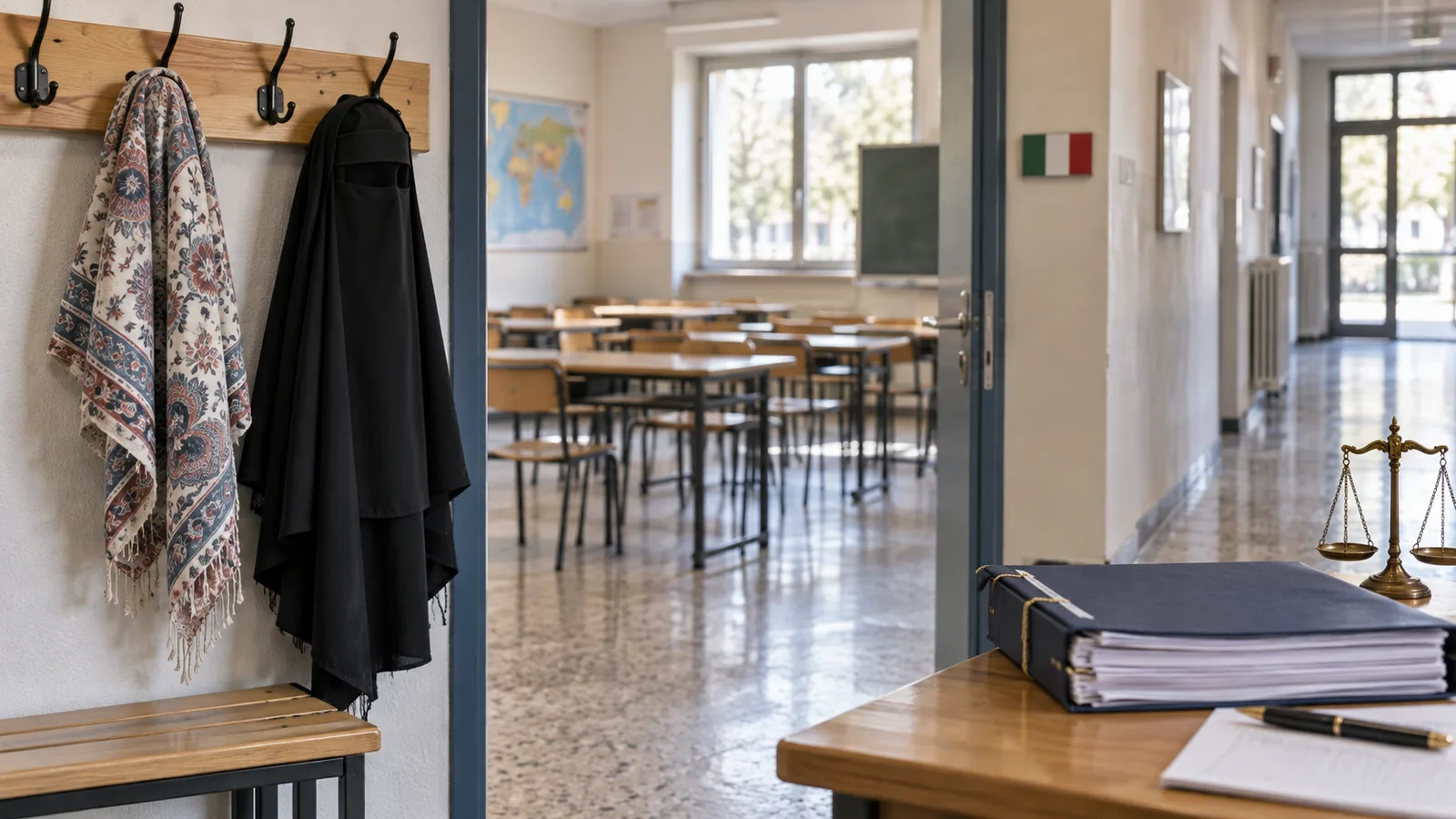
Italy's prime minister, Giorgia Meloni, has announced that she will ban burqas and niqabs in schools. The political message is clear; the legal situation is less simple. An announced decree is not yet a law in permanent force, and Italy already has rules against covering the face in public. What will prove decisive is how a new ban is justified and defined, and how parliament scrutinises it.
The proposal is not yet final law
According to a report by Al Jazeera, the government is to put forward a decree banning face-covering garments in schools. An Italian law decree can enter into force quickly, but parliament must convert it into a law within 60 days. During that window, members of parliament can amend or reject the text.
The announcement covers the burqa and the niqab, garments that cover the face entirely or all but the eyes. A headscarf that leaves the face free does not fall under the term. That distinction is central both to legal certainty and to the public debate.
Italy already has a ban on covering the face
A law from 1975 prohibits hiding the face in public places without a justified reason. The rule emerged in the context of internal security and is not explicitly aimed at religion. Courts and authorities therefore had to weigh when religious motivation can amount to a justified reason and when identification may be required.
A 2008 ruling by Italy's Council of State held that religiously motivated veiling cannot be equated across the board with criminal intent, but that identity must be establishable during a check. A specific ban for schools would tighten the general norm and reorder that balancing exercise for one particular area.
Schools are a special legal space
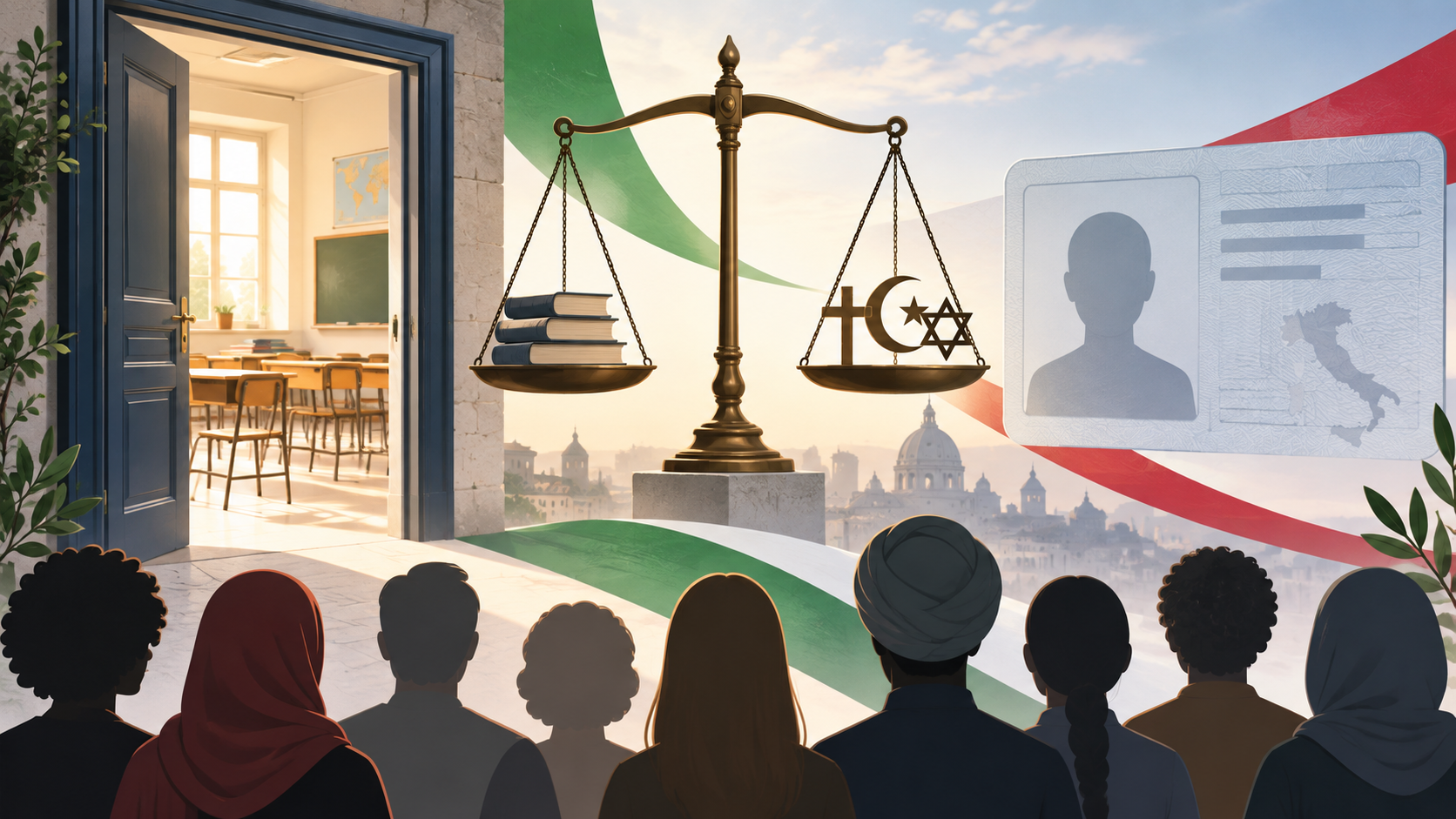
Schools may set rules that safeguard communication, safety and teaching. Visible facial features can matter for identity checks, examinations or pedagogical interaction. A ban can therefore be justified by concrete school functions.
At the same time, the Italian constitution and the European Convention on Human Rights protect freedom of religion and equal treatment. Any interference must be provided for by law, pursue a legitimate aim and be proportionate. A very broad ban, or one justified on symbolic grounds, could become legally vulnerable, especially if milder means such as temporary identification would be enough.
The European Court of Human Rights has accepted national bans on full face covering in individual cases, while granting states a margin of appreciation. That creates neither an obligation to ban nor a guarantee that any specific rule is lawful.
Integration is being tied to school policy
Meloni's government links the plan to a broader debate about integration. Rules already in force cap the share of foreign pupils at 30 percent in some schools, with exceptions possible. According to the figures cited in the report, foreign nationals make up roughly twelve percent of the pupil population.
Such quotas measure nationality, not religious practice or language skills. They can prevent concentrations, but they can also create new inequalities if residential segregation, resources and support provision are left out of the picture. A clothing ban does not solve these structural questions.
What has to be examined now
A sound assessment requires the final wording: Which schools are affected? Does the rule apply to staff and visitors? How are medical, occupational or cultural face coverings treated? What sanctions are foreseen, and who decides on exceptions?
Only those details will show whether the government is setting a narrow identification requirement or a far-reaching signal in religious policy. Until parliament has decided, Meloni's move remains a political promise, not a settled legal position.