Munitions shortages: The DoD report and the open questions
The audit report is at the centre of the debate; the original is not yet available
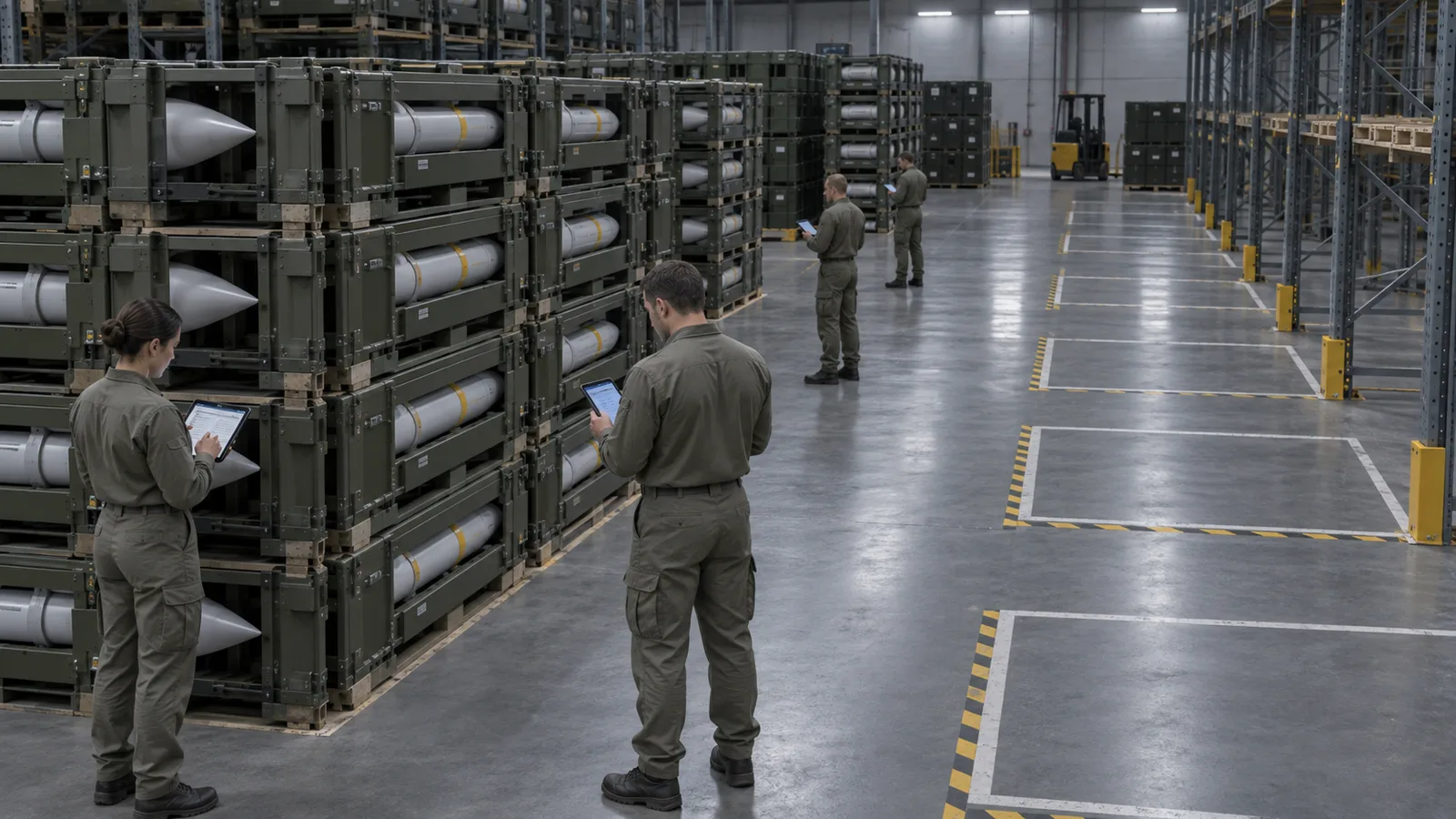
In the debate over munitions stocks after the Iran war, a report by the DoD Office of Inspector General plays a key role. In the discussion it is treated as evidence that stocks of precision munitions and air-defence weapons ran down faster than expected. The editorial submission cites the name «Operation Epic Fury» and refers to a report page of the Inspector General. Whether that name comes from the document itself and which conflict is officially meant by it remains open.
The material provided does not support these statements. It consists of twelve addresses from the Google News RSS service. The retrieved content of these pages is identically structured and consists exclusively of minified JavaScript of the Google interface, including scripts of the Closure Library and the splash interface. It contains no article text, no document title, no publication date, no report number and no quotation. The review notes: «None of the twelve sources delivered contains usable content.»
No text, no number, no basis
For reporting, this means: no details have been adopted. Neither consumption volumes nor stock figures, neither production rates nor delivery deadlines, neither system names nor damage details can be derived from the material. Naming individual munitions or air-defence systems would be an invention and is therefore omitted. Nor can the distinction between losses, damage and assessments that the topic requires be made, because no report text is available. It also remains open whether the paper explicitly admits a bottleneck or merely sets out risks, procurement recommendations and audit reservations.
Official audit reports are the most important type of source in security reporting, because they separate findings, audit standards and reservations in a traceable way. That very separation cannot be achieved without the document. As long as only secondary references are available, any attribution to the paper remains a claim about a source that nobody has examined in the original.
What shapes the procurement debate
Regardless of the individual document, the underlying question remains relevant: how long do stockpiles last when precision strikes and air defence consume large quantities of expensive munitions in an operation? What needs to be examined is how consumption, production capacity and reorder volumes relate to one another, and which figures are officially documented and which are merely third-party estimates. It must also be clarified how allies, NATO bodies and European procurement authorities react publicly to such situations. As long as no reliable source is available, these points remain questions and are not presented as findings.
What must be clarified before publication
Before any publication, the primary documents must be obtained directly from the issuing bodies and examined in the original. These include:
- the report of the DoD Office of Inspector General: existence, exact title, publication date, reporting period and report number;
- the wording of the relevant passages, in particular the definition of «shortage» as a bottleneck affecting individual munition types or as depleted stock;
- the classification level of the report and the extent of any redactions, notably of stock figures;
- the existence, title and date of the CRS report mentioned on munitions stocks and production capacities;
- documented damage to materiel, infrastructure and personnel, separated into losses and assessments;
- public reactions from allies, NATO bodies and European procurement authorities;
- a robust Swiss angle via armasuisse, SECO or security policy documents.
Such a Swiss angle is entirely absent from the material. None of the sources delivered comes from a Swiss authority or contains information on Swiss procurement or security policy. That chapter is therefore omitted until a verifiable source is available.
The review concludes: «The draft is not ready for publication.» This assessment is itself the content of the present text. Once the report is available in the original and reliable secondary reporting exists, it will be possible to assess objectively what the paper actually documents and what lessons follow for deterrence, allies and European procurement.
Sources
- news.google.com (secondary source, researched on 2026-09-15)
- news.google.com (secondary source, researched on 2026-09-15)
- news.google.com (secondary source, researched on 2026-09-15)
- news.google.com (secondary source, researched on 2026-09-15)
- news.google.com (secondary source, researched on 2026-09-15)
- news.google.com (secondary source, researched on 2026-09-15)
- news.google.com (secondary source, researched on 2026-09-15)
- news.google.com (secondary source, researched on 2026-09-15)
- news.google.com (secondary source, researched on 2026-09-15)
- news.google.com (secondary source, researched on 2026-09-15)
- news.google.com (secondary source, researched on 2026-09-15)
- news.google.com (secondary source, researched on 2026-09-15)
- DoD Office of Inspector General (cited in the editorial submission, not contained in the material) (primary source, researched on 2026-09-15)