New EU Air Passenger Rights: What Swiss Passengers Can Expect
Europe strengthens assistance and compensation for flight issues. However, the changes do not automatically apply in Switzerland – the bilateral path is crucial.
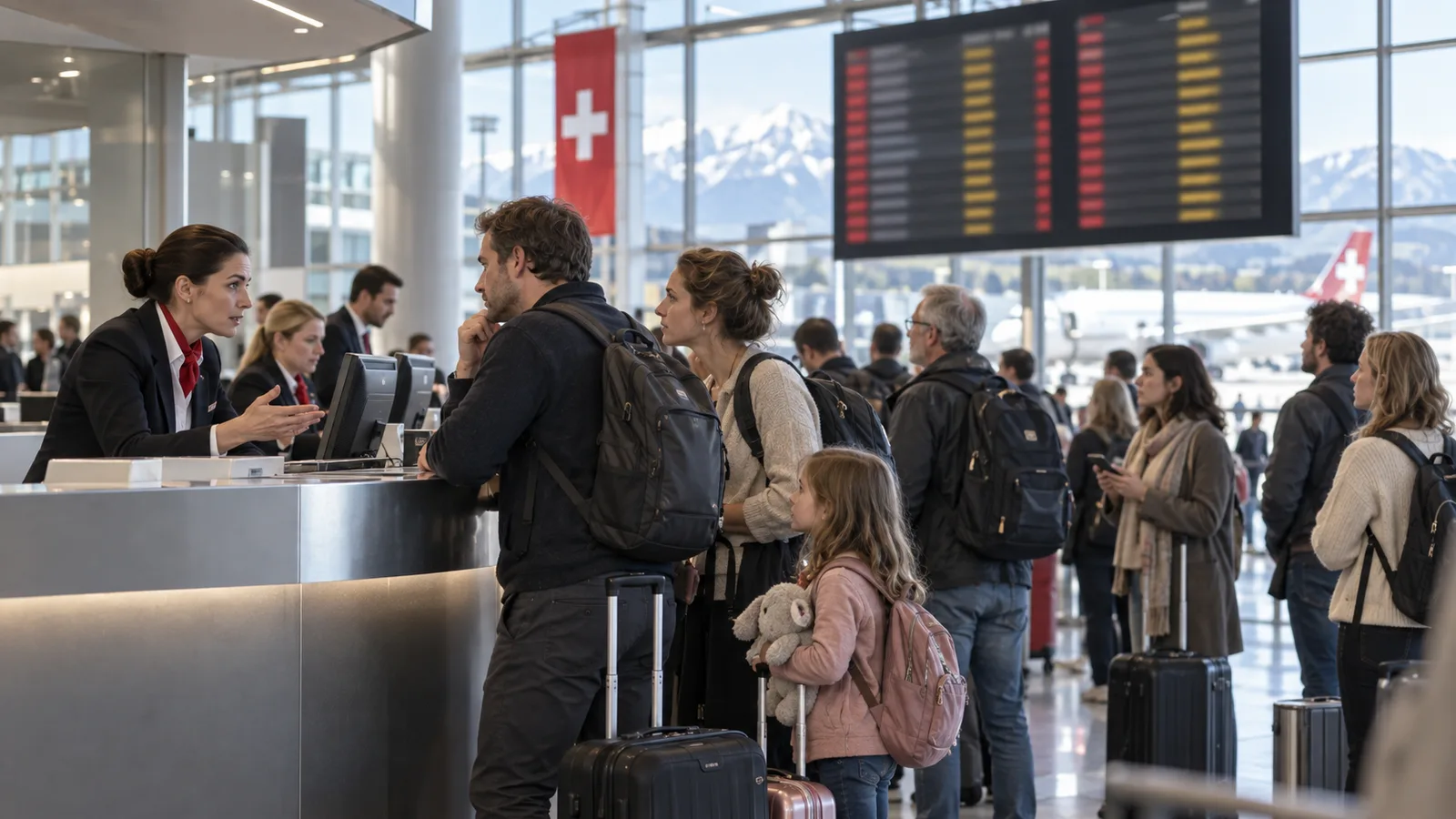
Delayed flight, long queues at the counter, unclear information: Passengers often find it difficult to know their rights in such situations. In July 2026, the European Union finally approved a comprehensive reform of air passenger rights. It aims to clarify existing rules and close individual loopholes.
The first important clarification: The changes are not yet immediately applicable. In the EU, they will become effective 12 months and 20 days after publication in the Official Journal, likely in summer 2027. An additional step is required for Switzerland, as EU law does not automatically apply.
The Three-Hour Threshold Remains
The central question in the political debate was when a delay becomes compensable. The outcome: If a flight arrives at its final destination at least three hours late and no extraordinary circumstance exists, a claim generally remains.
Fixed compensation amounts continue to depend on the distance: 250 Euros for flights up to 1500 kilometres, 400 Euros for longer intra-European connections or routes between 1500 and 3500 kilometres, and 600 Euros for other long-haul flights. For certain very long journeys, compensation may be halved if an offered alternative connection reaches the destination with a delay of no more than four hours.
Extraordinary circumstances – such as specific weather conditions or security risks – can exclude payment. However, the airline must still provide assistance and onward travel arrangements. Whether a specific case is extraordinary depends on the circumstances; a general statement at the gate is not sufficient.
Airport Assistance Becomes More Specific
The reform more precisely describes when drinks, meals, and communication options must be offered. Refreshments are to be provided at regular intervals, a meal after a longer waiting period, as well as internet access and two means of communication. If an overnight stay becomes necessary, the airline generally owes hotel accommodation and transfer.
If the airline fails to provide assistance despite a claim, passengers may incur reasonable expenses themselves and seek reimbursement. Receipts therefore remain crucial. Luxury expenses are not automatically reimbursed.
Rebooking also becomes clearer. If the airline does not arrange suitable onward travel within three hours, affected passengers should be able to book an alternative themselves and claim back costs up to a specified maximum. Before making an expensive booking, it is advisable to document the request to the airline and its response.
Better Protection for Families and Missed Outbound Flights
Children under twelve years of age should be seated next to an accompanying adult without extra charge. Furthermore, the so-called no-show practice is restricted: Passengers who miss or intentionally do not use an outbound flight should not lose their return flight solely for this reason.
More transparency is also planned for hand luggage. Airlines must more clearly indicate which services are included in the price. However, this does not mean that every piece of luggage becomes free; permitted dimensions and fare components remain relevant.
Persons with reduced mobility receive additional protection if an accompanying person is necessary or if mobility aids are damaged. Here too, the reform strengthens information and support rights.
What Applies Today to Flights from Switzerland?
Switzerland has adopted the existing European air passenger rights regulation via the bilateral Air Transport Agreement. Current law applies, among other things, to flights departing from Switzerland, the EU, Norway, or Iceland. For arrivals from third countries, the operating airline's domicile also plays a role.
The Federal Office of Civil Aviation (FOCA) is the Swiss enforcement body. It can review complaints and impose sanctions for violations. However, it does not conclusively award individual monetary claims; for this, passengers must take civil legal action if necessary.
Whether and when the revised rules apply to flights involving Switzerland will be decided by the Joint Committee of the Air Transport Agreement. Adoption is likely, but as of September 9, 2026, it has not yet occurred. Travellers should therefore not argue with future provisions until they are incorporated into Swiss law.
How Passengers Can Secure Their Claims
In case of a problem, the operating airline should first be contacted in writing. A boarding pass, booking confirmation, communications, photos of the display, and all receipts are helpful. The crucial factor is the delay at the final destination, not just the delayed departure time.
If the airline does not respond satisfactorily, filing a complaint with FOCA may be advisable. It is important to distinguish: assistance, reimbursement, alternative transport, and flat-rate compensation are different claims with different prerequisites.
The reform makes many things clearer. However, it does not replace the need to consider the departure location, airline, cause, and timing. For Swiss passengers, the most important rule is therefore: document the specific itinerary – and check which law actually applies at the time of the flight.
Sources
- Council of the EU: Final approval of new air passenger rights
- Council and Parliament: Details of the agreement
- Federal Office of Civil Aviation: Air Passenger Rights
- FOCA: Air Transport Agreement with the EU
As of: September 9, 2026.