Electric Delivery Vans Allowed to Drive Faster from October
New Rules Remove Disadvantages for Heavy Battery Vehicles up to 4.25 Tons
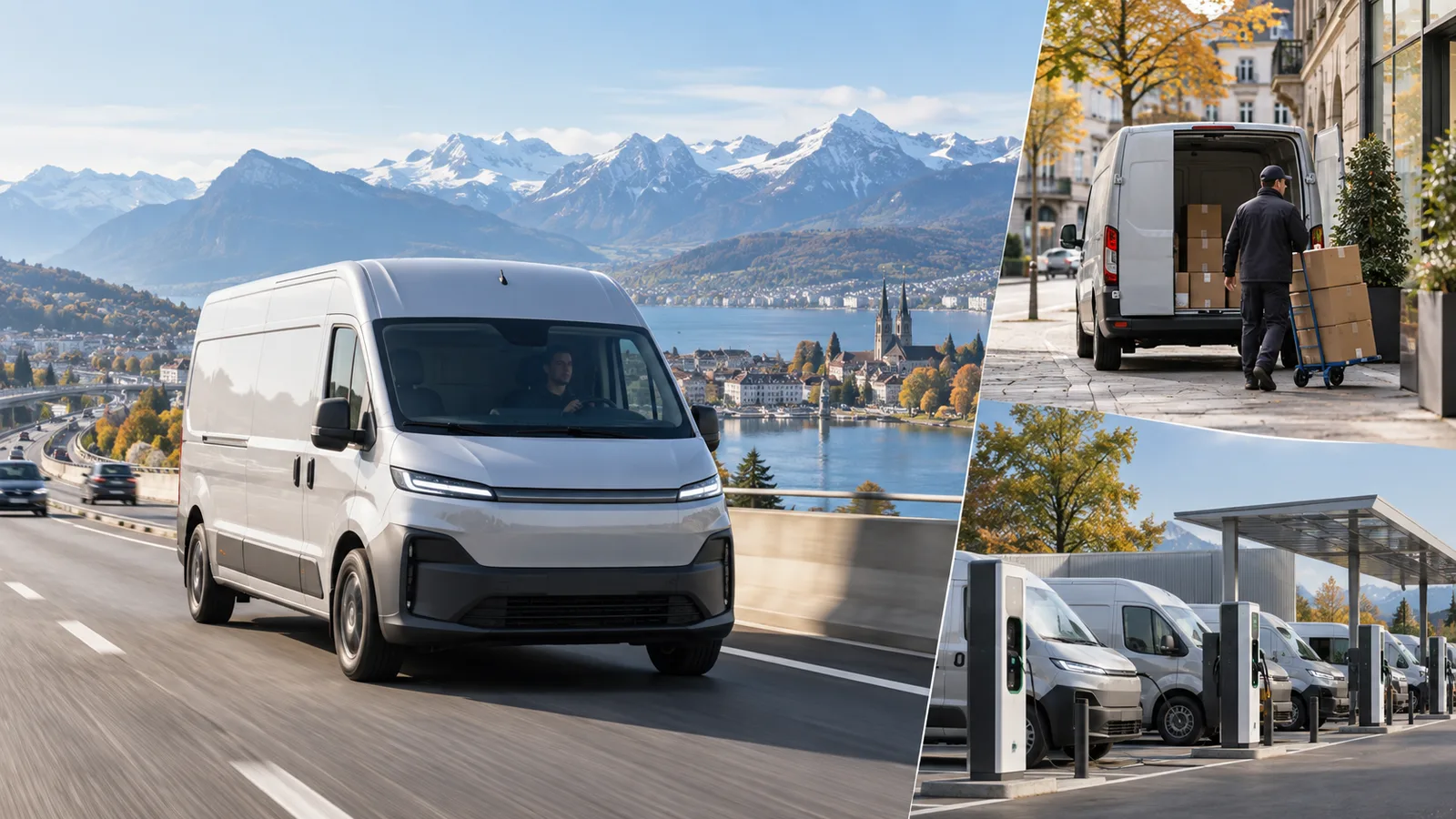
A battery saves emissions but adds weight. This has legally pushed electric delivery vans into an unfavorable category until now. Vehicles weighing more than 3.5 tons due to their alternative powertrain sometimes had to comply with truck regulations – even though their payload and use correspond to a regular delivery van. From October 1, 2026, the Federal Government will change these rules.
Electric commercial vehicles with a total weight of up to 4.25 tons will largely be treated like delivery vans with internal combustion engines. On motorways, they will be allowed to drive up to 120 kilometers per hour. The "No Trucks" sign no longer applies to these vehicles. In addition, the tachograph requirement is removed, and drivers in domestic transport are exempted from special working, driving, and rest time regulations.

A Competitive Disadvantage Disappears
For craft businesses, retailers, and parcel services, this change is more than a technical footnote. Previously, the additional weight of the battery could reduce the usable payload or trigger extra obligations. Companies choosing electric powertrains sometimes had to plan routes differently and impose more administrative burden on staff. The new limit offsets this disadvantage.
This could accelerate last-mile electrification. Delivery vans often drive predictable routes and return to the depot in the evening – ideal conditions for overnight charging. In cities, electric vehicles reduce local emissions and, at low speeds, engine noise. However, purchase price, winter range, charging capacity, and available infrastructure remain crucial for businesses.
Operational Costs Determine Profitability
An electric delivery van is usually more expensive to purchase but can be cheaper in terms of energy and maintenance. Whether it is profitable depends more on the usage profile than for a passenger car. Many short stops and high annual mileage tend to favor electric drives; long motorway stretches with full loads or frequent trailer operation can be more demanding. Companies should therefore compare not only the purchase price but also costs per kilometer, residual value, charging losses, and potential downtime.
The grid connection at the depot can also become a bottleneck. Ten vehicles charging simultaneously after work require intelligent load management. This allows available power to be distributed and expensive peak loads avoided. Companies renewing a fleet should treat vehicle procurement, charging infrastructure, and route planning as a single, integrated project.
Higher Speed Demands More Attention
Equivalence does not mean that a 4.25-ton vehicle physically transforms into a passenger car. Higher weight can extend braking distances and increase impact energy depending on the situation. Load securing, tire pressure, and axle loads therefore remain crucial. Businesses should specifically train drivers, even if the law requires fewer special rules.
The exemption from tachograph and special rest period regulations also needs careful handling in daily work. It reduces bureaucracy but must not lead to excessively long tours and time pressure. Labor law, general duty of care, and corporate responsibility still apply.
Inspections Will Be Adapted
Longer intervals are also planned for periodic vehicle inspections. Cantons will apply the new deadlines from February 1, 2028. Anyone purchasing such a vehicle should first clarify whether their driving license, insurance, and cantonal registration are suitable for the specific model. The 4.25-ton limit is not a blanket waiver for every vehicle combination.
What This Means for Switzerland
Road freight transport will not disappear just because cities want to become more climate-friendly. Parcels, tools, food, and care aids must still reach homes. The rule change addresses where regulation unnecessarily penalized technical progress. It makes electric delivery vans more economically attractive without increasing subsidies.
For consumers, the impact will likely be invisible at first. In the long term, more efficient fleets can stabilize delivery costs and improve air quality in densely populated areas. Municipalities must also consider charging zones, depot connections, and power grids. Thus, the new rule does not solve all urban logistics problems. However, it removes an obstacle that specifically made the weight of the battery a disadvantage for a lower-emission technology.