PERMA Model: Five Steps to Greater Mental Resilience
How Positive Psychology Aims to Help Against Increasing Stress
Mental burdens are increasing in Switzerland. According to the Federal Office of Public Health, about 18 percent of the population reported high levels of psychological stress in 2022. The PERMA model promises a remedy: It aims to strengthen mental resilience and lead to greater well-being.
Five Pillars for Greater Well-being
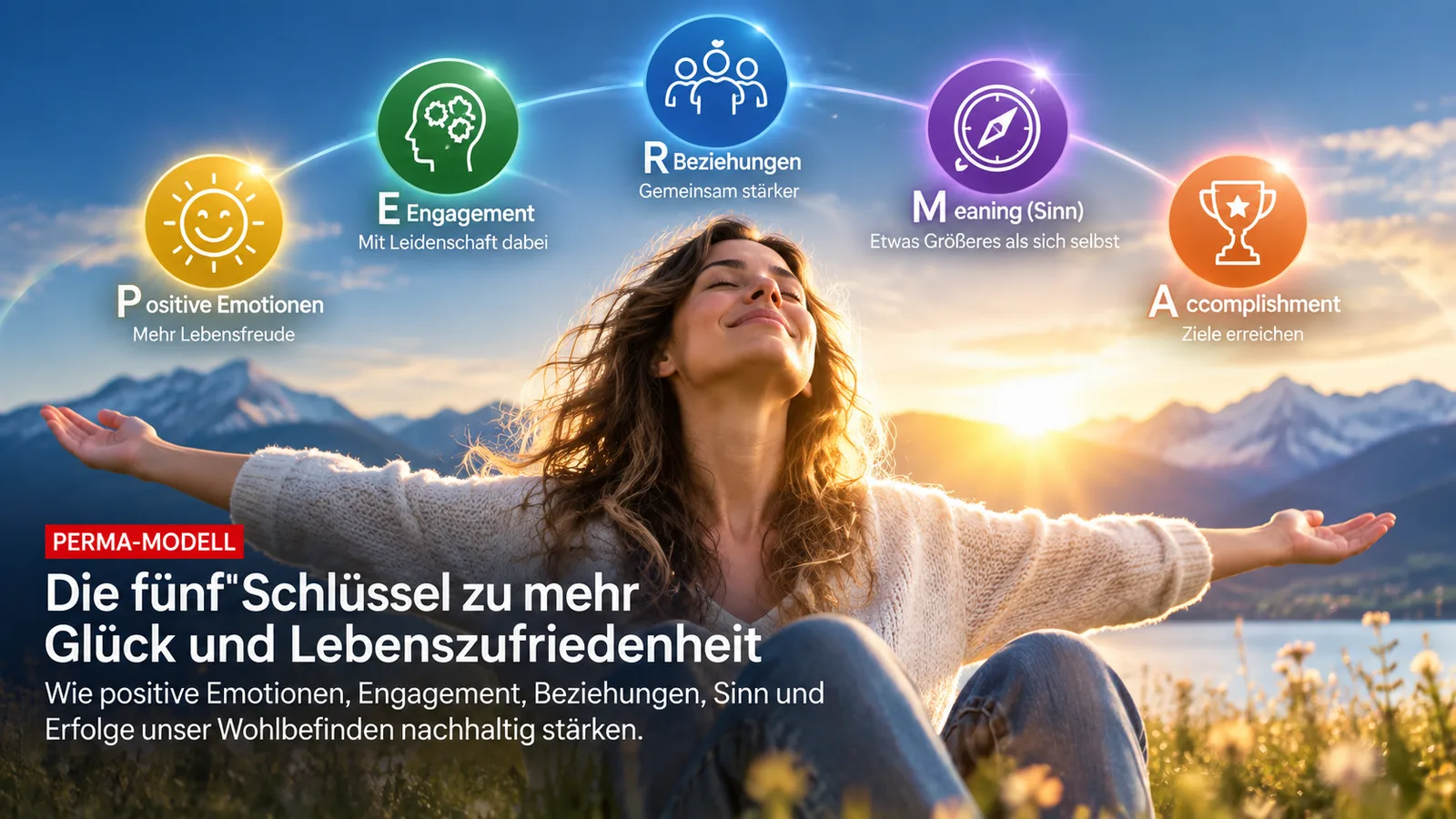
American psychologist Martin Seligman developed the model in 2011. PERMA stands for five areas: Positive Emotions (positive emotions), Engagement (engagement and flow), Relationships (relationships), Meaning (purpose), and Accomplishment (goal achievement). Each pillar can be specifically trained.
Positive Emotions means consciously cultivating gratitude, joy, or hope. Engagement refers to being absorbed in an activity, the so-called flow state. Relationships emphasize the importance of supportive social connections. Meaning calls for giving purpose to one's actions. Accomplishment refers to achieving self-set goals.
Scientific Basis and Practical Application
The model is based on positive psychology. This field of research investigates what makes people flourish – not just what makes them ill. The PERMA model offers a structured approach to activate resources. Studies show: Those who nurture these five areas report higher well-being and better stress management.
In practice, PERMA can be implemented individually. A gratitude journal promotes positive emotions. Hobbies and challenging tasks create engagement. Regular interaction strengthens relationships. Voluntary engagement can create meaning. Small, achievable goals enable a sense of accomplishment.
Limitations and Critical Assessment
Experts warn against exaggerated expectations. The PERMA model does not replace therapy for mental illnesses. Experts emphasize that it is a preventative tool, not a cure. Professional help is required for depression or anxiety disorders.
Critics note that the model relies heavily on individual responsibility. Structural problems like increased work intensity or economic uncertainty remain unaddressed. Furthermore, the concept originated in the North American cultural sphere – whether it can be transferred to other contexts is partly unclear.
Nevertheless, PERMA is gaining importance in Switzerland. Companies use it in corporate health management. Schools integrate elements into their curriculum. For many people, the model offers a practical framework to actively maintain their mental health – especially during stressful times.