PISA 2025: Strong Country, Unequal Opportunities
Swiss Youth Above OECD Average – But Reading and Math Skills Decline
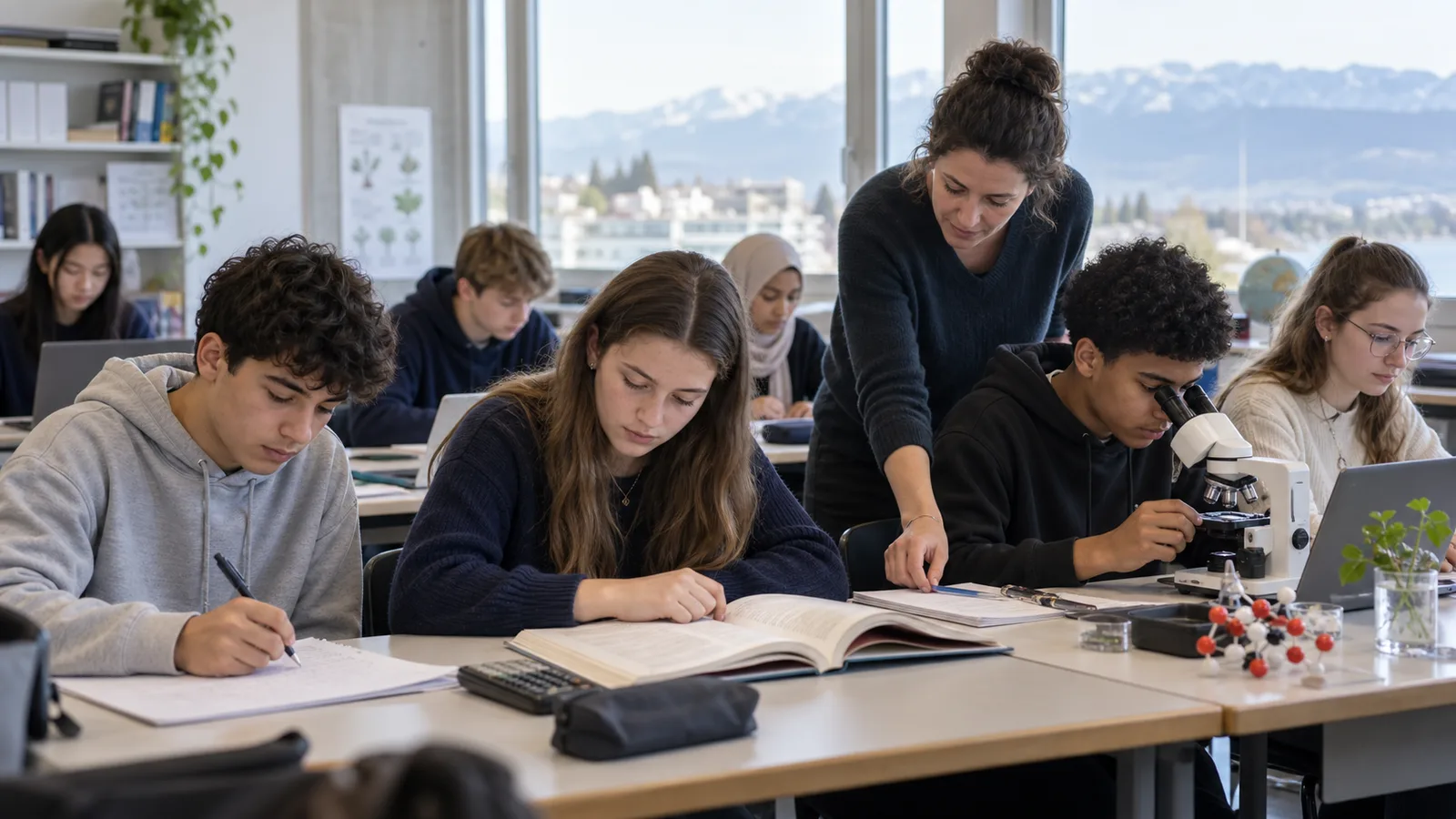
Swiss 15-year-olds continue to perform above the OECD average in science, mathematics, and reading. Approximately 7600 young people from 275 schools in Switzerland participated in the PISA 2025 survey. This result is good news, but not a reason for complacency.
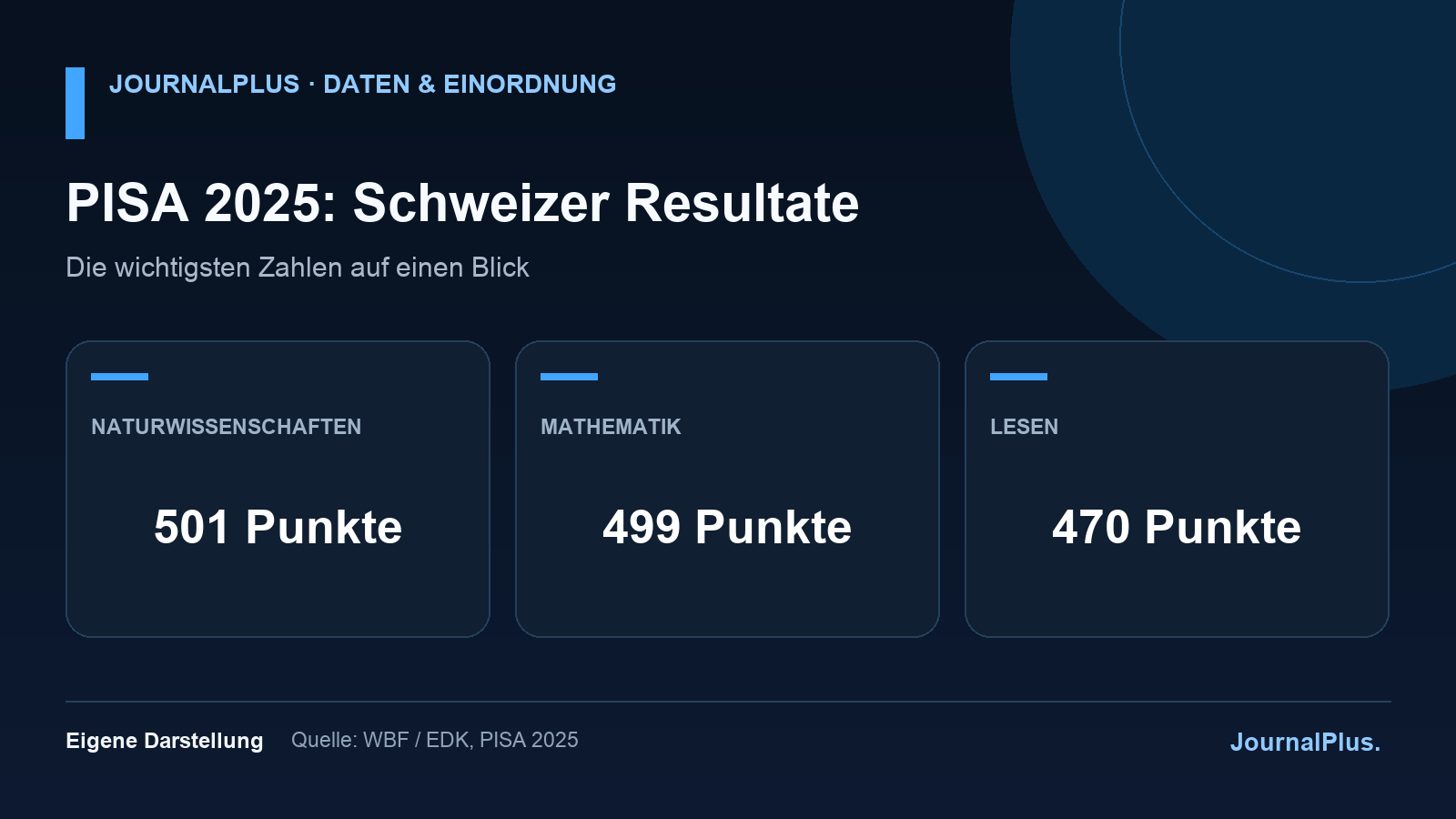
In the main domain of science, Switzerland scored 501 points compared to the OECD average of 482. In mathematics, it scored 499 points compared to 463; only three OECD countries performed better. In reading, Switzerland also scored significantly above the OECD average of 461 with 470 points. In the newly assessed model-based problem-solving, it achieved 520 points compared to 500.
Average Conceals Long-Term Trend
Science performance has remained stable for about ten years. In mathematics and reading, however, the trend is downward. Part of this development is international: the OECD average is also declining. This offers no comfort for Switzerland. Reading literacy forms the basis for almost all subjects, vocational training, and political participation.
PISA does not measure individual school grades and does not allow for a ranking down to the last country. Sampling, translations, and differing education systems introduce uncertainties. Nevertheless, the study is valuable because it uses comparable tasks over many years and assesses the application of knowledge, not just curricula.
Social Background Remains Crucial
In Switzerland, no significant gender differences are evident in science. Social background, language spoken at home, and migration background are considerably more important. Young people from the lowest socio-economic quartile achieve significantly lower average performance than peers from other groups.
This does not mean that background determines every child's destiny. It indicates a statistical barrier. Families with time, money, and education can more easily provide tutoring, books, quiet study spaces, or career choice support. Schools do not have to completely eliminate these differences, but they should minimize their reinforcement.
AI Has Arrived in the Classroom
Digital media are used for learning activities in Swiss schools about as frequently as the OECD average. However, young people in Switzerland use artificial intelligence more often for school assignments. This offers opportunities for individualized explanations and languages – and risks through superficial copying, incorrect answers, and unclear data usage.
A ban alone would be too short-sighted. Schools need assignments where thought processes, source verification, and oral explanations are valued. Teachers require further training and reliable tools. Young people should learn when AI helps, where it deceives, and why their own reading and calculation cannot be delegated.
What This Means for Parents and Politics
Parents do not need to turn PISA into a private exam season. More effective approaches include regular reading, discussions about content, sufficient sleep, and realistic limits on screen time. According to PISA, almost half of respondents spend between one and three hours daily on social networks on weekdays; one-third spend more than three hours. This figure does not prove a cause for poorer performance, but it shows how strongly attention is contested.
For education policy, the mandate is: maintain good top scores without losing sight of minimum competencies. Early childhood education, language support, and attractive apprenticeships are less spectacular than a ranking, but more crucial. Swiss quality education is not only reflected in how high the average is, but also in how few young people are left behind at the lower end.
The federal structure makes comparisons within Switzerland particularly important, but also challenging. Measures should not be copied according to political preference, but rather accompanied and evaluated. If a canton expands reading promotion, early language education, or new assessment forms, data is needed on which groups benefit. Thus, PISA becomes a starting point for learning instead of a quadrennial headline ritual.