Sourdough is a process, not a health promise
Microorganisms change bread. How much depends on flour, time and processing – and cannot be read from the word sourdough alone.
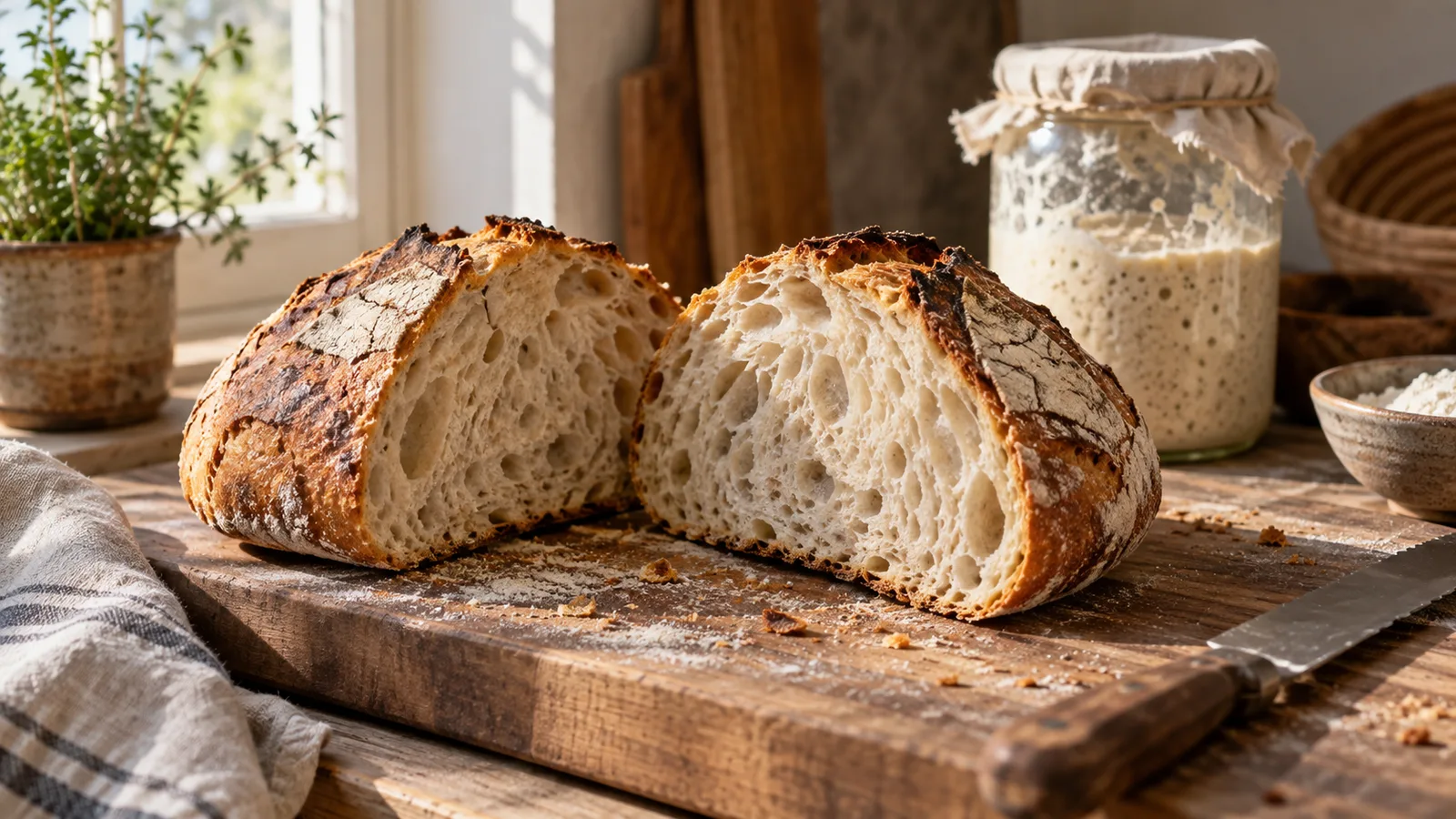
A robust crust, an irregular crumb, a faintly sour aroma: sourdough bread makes a good craft story. It gets harder when that story turns into a general health claim. For sourdough first of all denotes a production process. What ends up in the bread depends on far more than the name.
For Sunday breakfast, that distinction is quite practical. It shifts attention to questions a bakery can answer concretely: Which flour is used? How is the dough managed? And which property is the process supposed to improve?
A community at work in the dough
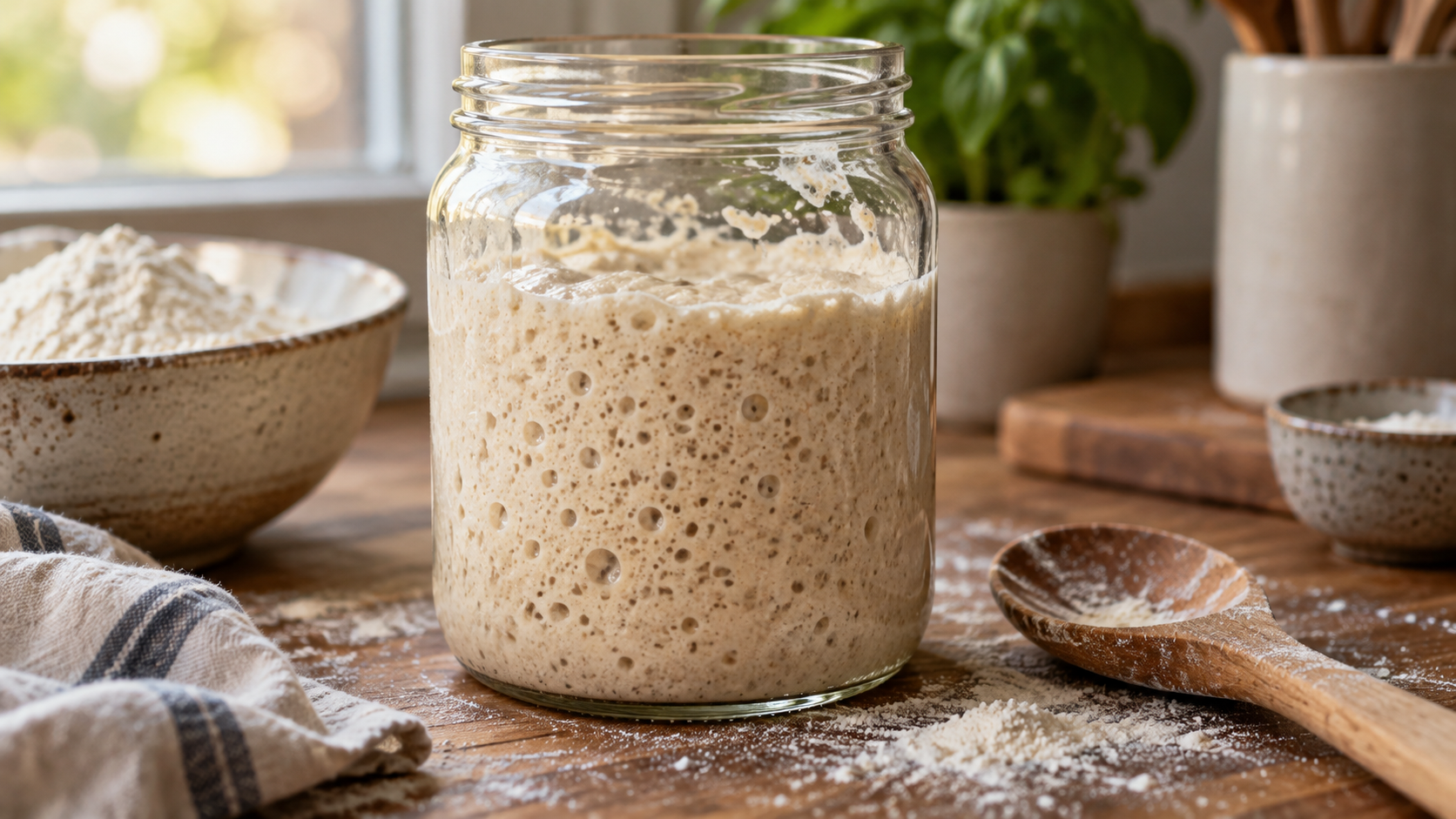
Agroscope describes sourdough as a microbiological system in which yeasts and bacteria interact. The composition is not the same everywhere. Flour, water content, temperature and the way the starter is maintained influence which microorganisms develop and which metabolic products are formed.
That helps explain why different sourdough breads taste different and can differ in their texture. It also explains why a result from one particular trial does not automatically apply to every bread that carries this name. The conditions of production are part of the statement.
The Agroscope specialist publication accordingly carries the question of simplicity or complexity in its very title. For consumers, the important consequence is this: traditional craft and scientific description are not in contradiction. It is precisely the exact control of the process that constitutes the craft.
More time alone does not explain the result
One example comes from research by the University of Hohenheim from 2020. Wheat varieties and baking methods close to practice were examined, including dough fermentations of two and 25 hours respectively. The study also looked at FODMAPs, a group of fermentable carbohydrates.
Even with the shorter method, these substances were clearly reduced. Under the conditions studied, the long dough fermentation did not simply deliver a correspondingly larger additional reduction. The differing amount of yeast and the cooling also played a role. So «longer» was not an isolated quantity but part of an altered process.
The University explained furthermore why FODMAPs should not be regarded across the board as undesirable substances. No reliable prediction for individual tolerance can be derived from a laboratory value alone. The trial examined bread and processing, not the guaranteed benefit of every bread for every person.
Flour and fermentation serve different purposes
A further Hohenheim publication from the Betterwheat project reported in 2025 on the influence of baking methods on phytic acid. This can bind minerals. Among the methods studied, the combination of long dough fermentation with sourdough proved particularly effective at breaking it down.
At the same time, the researchers stressed the importance of the flour used. Valuable components are often found in the outer layers and in the germ of the grain. If these are removed in the production of white flour, the subsequent fermentation cannot simply put them back. The choice of raw material and the processing are therefore two separate levers.
Here too the limit of the statement applies: a measured reduction of phytic acid is first of all a finding about the food. It does not automatically follow that there is a proven health benefit for every person in everyday life. A bread cannot be fully assessed on the basis of a single substance.
The better question at the counter
So instead of searching for the healthiest buzzword, it is worth asking about the concrete production. A sourdough bread made from white flour and a wholemeal bread are not comparable merely because both were fermented for a long time. Likewise, taste, shelf life and individual preferences can justify different purchasing decisions.
Anyone who likes to bake at home can record time, temperature and flour choice and compare the results. A nicer crumb or a more pleasant taste is a traceable observation. An improved nutrient uptake in one's own body, by contrast, cannot be measured this way.
Sourdough needs no exaggerated promises to be interesting. It combines raw materials, living microorganisms and careful processing. For a good Sunday bread, that is already a rich story. The scientifically honest version begins where the limits of the label are also explained.