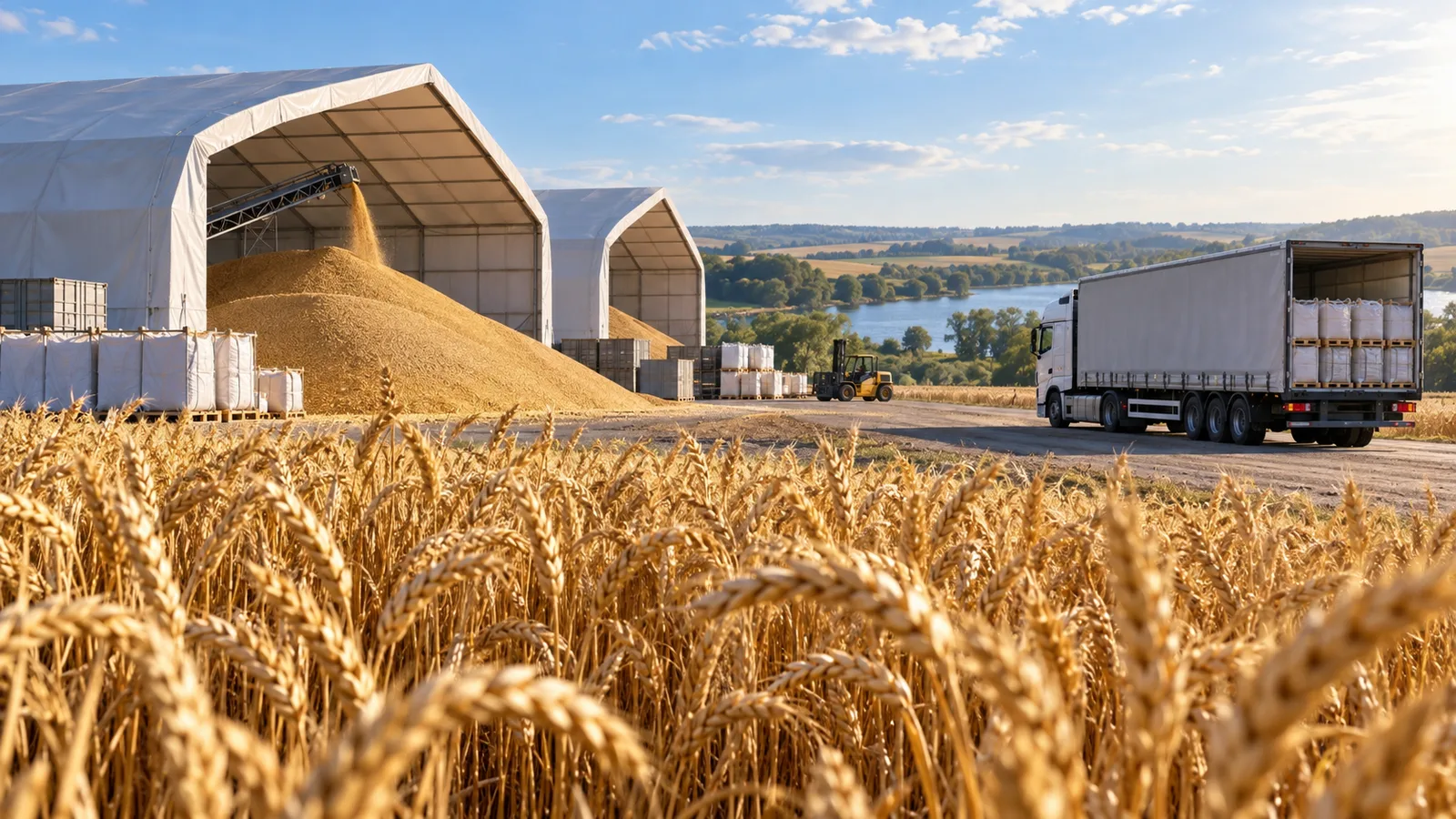
Three million for Ukraine's harvest: why storage space matters now
The Confederation is funding temporary storage and seed support through the FAO. What matters is not only the export route, but whether the harvest can be kept safe until then.
Ukraine remains one of the important producers of grain and oilseeds. But a harvest is only economically secure once it can be stored dry, sold or transported after threshing. A new Swiss contribution addresses precisely this unassuming point: the Confederation is providing three million francs for a project run by the United Nations Food and Agriculture Organization (FAO). It is intended to create temporary storage capacity and to support smaller farms with the next sowing.
Three million francs for storage and the next sowing
The Swiss contribution was announced during a visit to Kyiv by Jacques Gerber, the Federal Council's delegate for Ukraine. According to the Confederation, the aid is aimed at farms that cannot safely store grain and oilseeds. Alongside storage solutions, the project includes support for the coming sowing period.
That sounds technical, but it is a decisive link in the food chain. Freshly harvested grain cannot lie on fields, trailers or open ground indefinitely. Moisture, pests and a lack of ventilation reduce quality and market value. If regular silos are full, damaged or logistically hard to reach, part of the harvest may be lost before any decision on export is even taken.
Storage space buys time
Since 2022, the FAO and its partners have built storage capacity for around 8.3 million tonnes on Ukrainian farms, according to their own figures. The current programme operates in nine regions. The figure describes capacity provided, not an additional quantity of grain produced. It does, however, show the scale of the problem: temporary silo bags, containers and smaller facilities can give farms weeks or months to find a buyer or a transport route.
That time is especially valuable when seaports are temporarily out of action, insurance and freight costs rise, or overland routes through neighbouring states are congested. Storage aid does not remove such bottlenecks. At best, it prevents a short-term transport problem from immediately becoming a permanent loss of harvest.
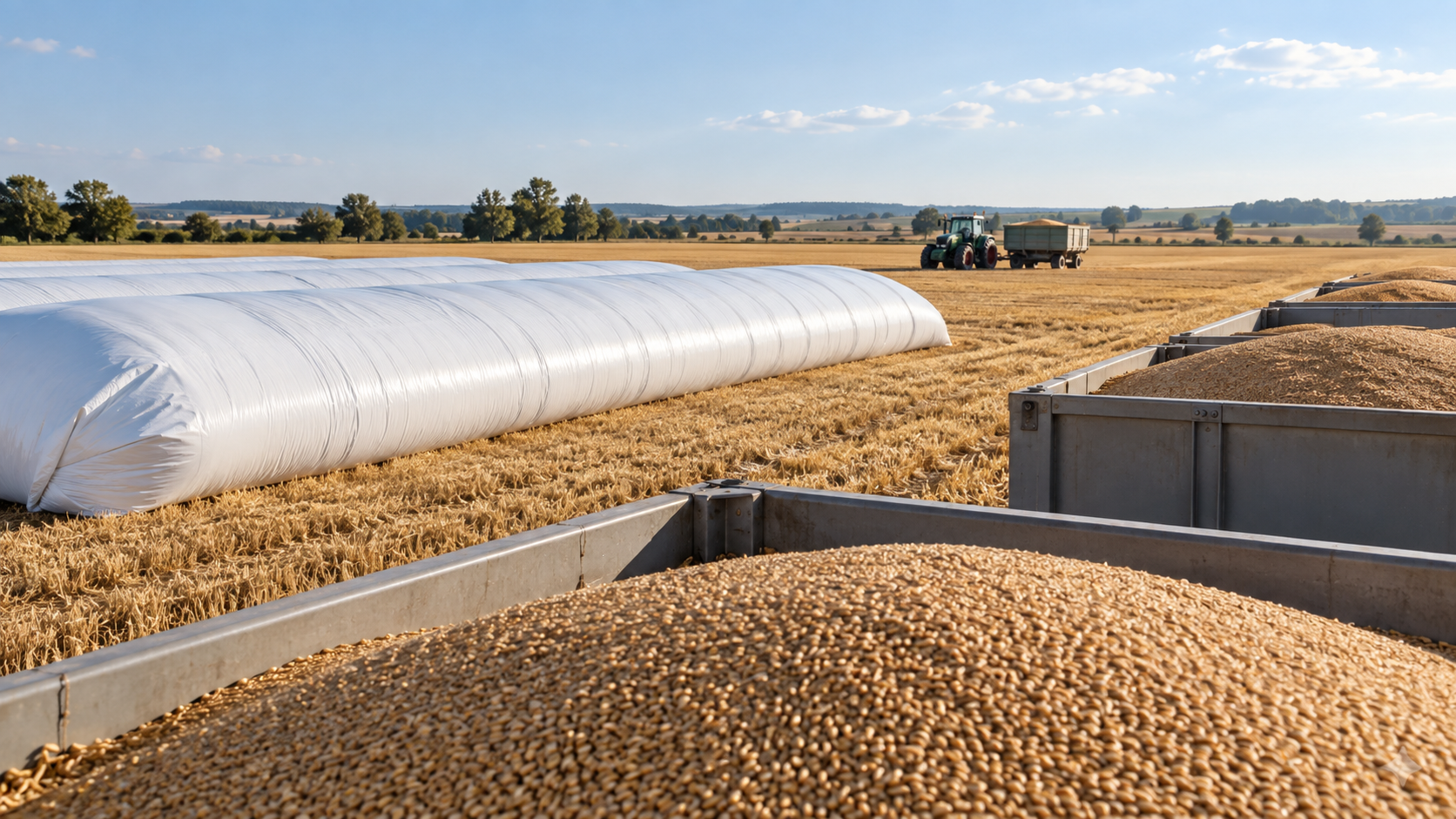
Temporary storage protects the harvest, but does not replace secure transport and export routes. · JournalPlus / AI-generated symbolic image
Help for farms – and for the market
The second part of the project targets the next sowing. Small farms often have fewer financial reserves than large agricultural corporations. If they cannot sell the current harvest, or receive lower prices for it, they lack money, seed and inputs for the coming season. Support during this transition can therefore prevent a one-off shock from weighing on production for several years.
For Ukraine, what is at stake is income, tax revenue and supply. Internationally, the effect is more indirect. The country supplies wheat, maize, barley and vegetable oil to numerous markets. Fewer losses in storage can stabilise the available supply. But that does not guarantee lower world market prices: those also depend on harvests in other regions, exchange rates, energy prices, transport capacity and political decisions.
What the Swiss contribution does not solve
Three million francs is a limited sum measured against nationwide agricultural and export infrastructure. The measure cannot protect ports, create security guarantees for ships, or fully replace destroyed large-scale facilities. Temporary storage, too, requires monitoring, materials, staff and, later, working onward transport.
Precisely for that reason, the contribution should be treated neither as a solution to the Ukrainian export crisis nor as a symbolic trifle. It finances a clearly limited task for which an existing FAO structure exists. Whether the aid works can be checked against concrete figures: how much capacity is created, how many farms are reached, how much of the harvest remains marketable, and does the next sowing succeed?
Food security begins before the port
Public debate often focuses on ships, ports and international agreements. Those factors determine whether large volumes reach the world market. But the journey begins earlier. Without secure storage, a farm loses room to negotiate and may have to sell quickly on unfavourable terms.
The Swiss contribution therefore addresses a barely visible but plausible bottleneck. Its success will not be measured by whether it ends the geopolitical conflicts over the Black Sea routes. What matters is whether Ukrainian farms can protect their harvest, finance the next season and wait for a secure transport route.


