Trump threatens Cuba at the UN – delegation leaves the chamber
A sharp speech and empty seats shaped the Cuba moment at the UN General Assembly. Politically, what matters is what Washington lets follow the words.
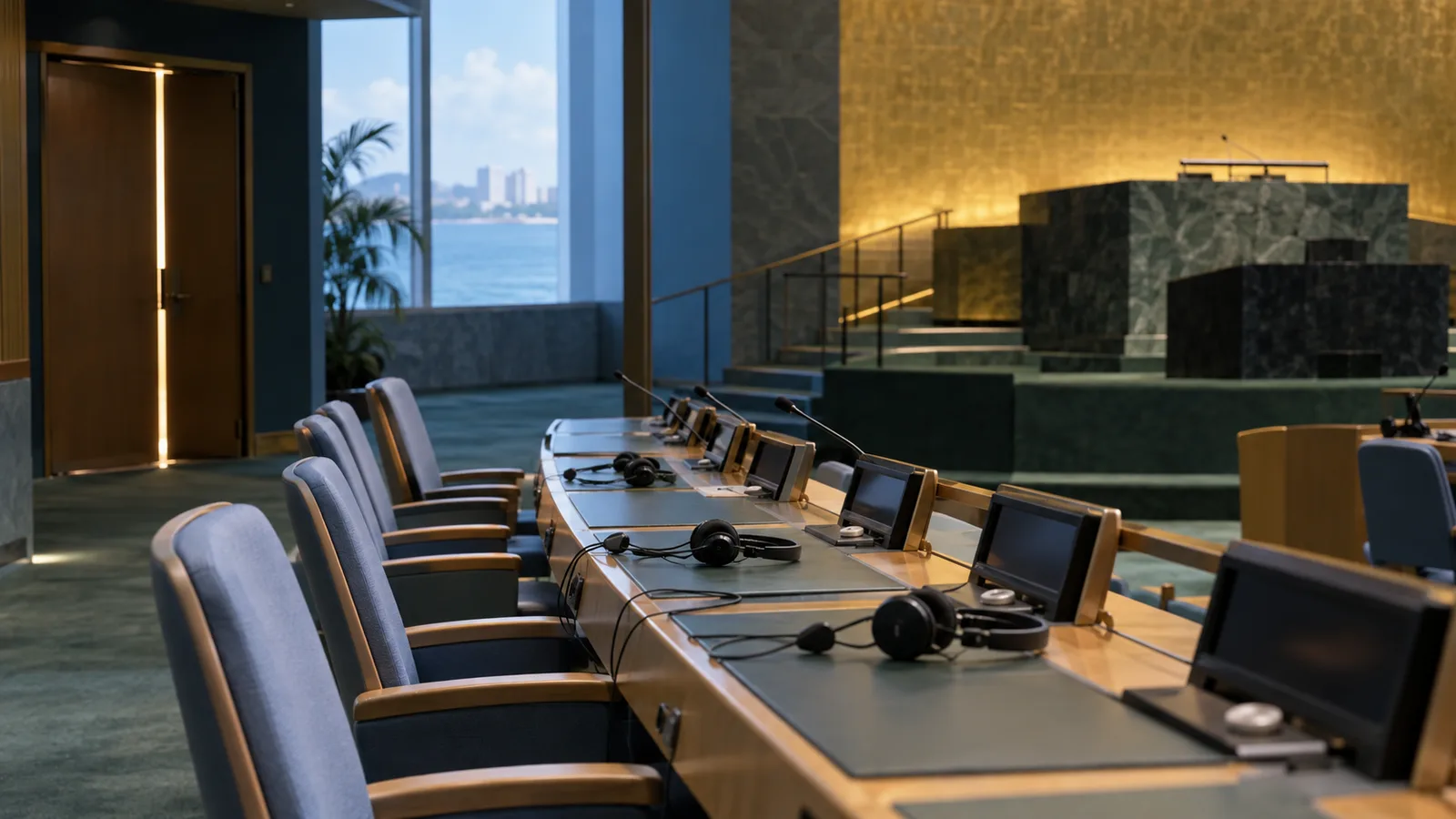
The appearance lasted only a few minutes, but the image stuck: while US President Donald Trump called Cuba a failed state before the UN General Assembly and predicted the collapse of its political system, members of the Cuban delegation left the chamber. The scene compressed a decades-long conflict into a single gesture. Yet it offered less clarity about Washington's future policy than the dramatic words suggest.
Trump's statement is, first of all, a political forecast. It neither proves that a change of government is imminent nor names a verifiable timetable. The delegation's walkout, too, was a diplomatic protest – not a break in relations and not evidence of a new level of escalation.
A threat without a worked-out roadmap
In his speech, Trump portrayed Cuba as an economic and political failure. For Havana, such a portrayal is particularly sensitive, because the communist leadership attributes the economic crisis largely to US sanctions. Washington, for its part, justifies its pressure with human rights, political repression and security interests.
The speech did not make clear, however, which new measures the United States intends to take. That is the decisive point. Between a sharp formulation before an international audience and a changed policy lie legal, diplomatic and domestic political steps. Without a decision, an executive order or an officially announced negotiation, the speech remains above all a signal.
The walkout as a calculated response
Delegations regularly leave international meetings to visibly reject a speech. The Cuban reaction was therefore not merely spontaneous but part of the diplomatic toolkit. The protest produced images that both governments can use for their respective audiences: Trump as a determined opponent of the regime, Havana as a state that refuses public humiliation.
For the UN, the episode is nevertheless revealing. The general debate is meant to bring opposing positions into one place. A walkout makes the conflict visible, but it does not prevent the speech and does not change any resolution. It is communication about the conflict, not a resolution of it.
What is at stake for the Cuban population
Daily life in Cuba is marked by energy shortages, supply problems and emigration. The causes are politically disputed. US sanctions restrict trade and financing; at the same time, critics of the Cuban government point to mismanagement, missing economic freedoms and political control. Anyone who attributes the crisis exclusively to one side therefore falls short.
A further tightening of American pressure could narrow Cuba's economic options even more. Whether it would also force political change is a different question. The long history of the embargo shows that economic pressure can weaken a regime without bringing about a swift change of power. It can also hit the civilian population and trigger new migration.
Europe and Switzerland are affected too
For Switzerland, the significance lies less in direct power politics than in its diplomatic and humanitarian interests. It maintains relations with both states and monitors the effects of sanctions, migration and the supply situation. Swiss companies doing business with Cuba must also examine not only Swiss law but the reach of American sanctions and payment channels.
The UN appearance thus marks a political sharpening, but not yet a turning point. Whether Trump's announcement grows into a new strategy can only be measured by concrete decisions: additional sanctions, diplomatic contacts or a changed migration policy. Until then, the evening's strongest news remains the image of the protest – and the wide gap between a prediction of doom and a workable plan.