West Nile Virus: 232 Cases in Greece, Switzerland Calm
First Local Case in Ticino Confirmed in 2025 – What Travellers Need to Know
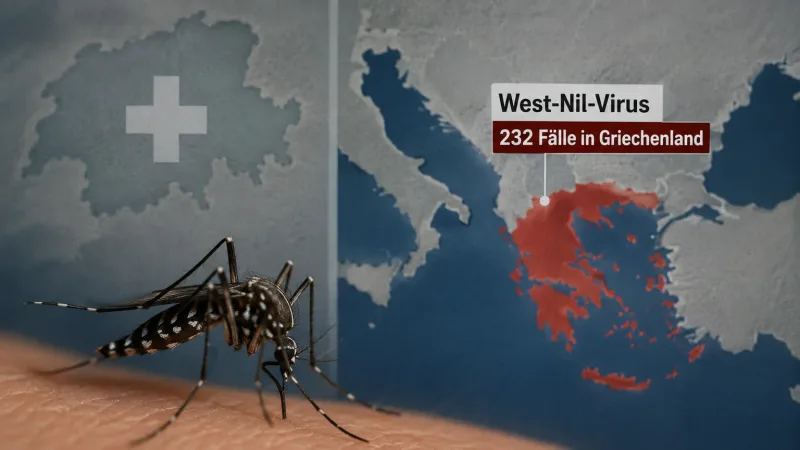
The West Nile Virus continues to spread in Greece. According to the Greek public health organisation EODY, 232 infections were registered in the current transmission season up to August 26. 19 people died after an infection. 75 new cases were added within one week.
The number of reported cases has more than quintupled since the end of July. At that time, 42 cases were registered; a week ago, it was 157. The Attica region, around Athens, is particularly affected. However, the virus was also detected in other parts of Greece. EODY expects further cases to emerge in the coming weeks.
Many Severe Cases Affect the Nervous System
Of the 232 confirmed cases, 165 individuals developed symptoms affecting the central nervous system. These include encephalitis, meningitis, and acute flaccid paralysis. Another 67 patients had a milder course or no neurological symptoms.
The 19 deaths were recorded among individuals over 65 years old. In total, 73 patients were recently hospitalised, 26 of them in intensive care units.
How is West Nile Virus Transmitted?
The West Nile Virus is primarily transmitted by mosquitoes. Birds serve as an important reservoir for the virus. Humans and horses can become infected through the bite of infected mosquitoes but are not considered relevant sources for further transmission by mosquitoes.
Most infections are asymptomatic or cause only mild symptoms. A small proportion of infected individuals develop severe neurological complications. The risk for this is particularly elevated in older people.
There is no specific treatment for West Nile Virus. Therefore, the most important protection is to avoid mosquito bites as much as possible. This includes appropriate insect repellents, protective clothing, and measures to reduce mosquitoes in the environment.
Attica Particularly Affected
The epicentre of the current outbreak is in Attica. According to EODY, cases have now been identified in 61 municipalities, 18 regional units, and five regions of Greece. In addition to Attica, affected areas include Thessaly, Central Macedonia, the Peloponnese, and Central Greece.
Authorities have also classified further areas as risk regions. Virus circulation has also been detected in horses. EODY points out that the number of reported cases may still increase retrospectively, as several days can pass between symptom onset, diagnosis, and official reporting.
Also Detected in Switzerland
The West Nile Virus has now also been detected in Switzerland. In 2022, the virus was first found in indigenous mosquitoes in the canton of Ticino. This indicated local circulation of the pathogen.
In 2025, authorities in Ticino also confirmed the first locally transmitted human case by mosquitoes in Switzerland. Until then, only individual imported infections in travellers were known in Switzerland.
The Federal Office of Public Health (BAG) monitors the development and points out that the West Nile Virus is increasingly spreading in Europe. Transmission is seasonal, primarily between spring and autumn, with a peak typically in August and September.
What Does This Mean for Travellers?
For travellers to Greece, personal mosquito protection is paramount. Especially during the summer months, care should be taken to avoid mosquito bites as much as possible.
Anyone who develops fever or other unusual symptoms after staying in an affected area should mention their travel history during a medical examination. This applies particularly to neurological symptoms.
The current outbreak in Greece does not mean a comparable situation is expected in Switzerland. However, the first locally transmitted case in Ticino shows that the virus can also circulate here under suitable conditions. The BAG monitors the development together with the relevant partner authorities.
Sources
- Nau.ch / Keystone-SDA: West Nile Virus in Greece: Number of Infections Rises, August 27, 2026
- Greek Public Health Organisation EODY: Weekly Epidemiological Reports on West Nile Virus, August 26, 2026
- Federal Office of Public Health: West Nile Virus (WNV)
- Federal Office of Public Health: West Nile Virus Action Plan 2026