135 million for Ukraine projects: Why Switzerland bets on companies
The Federal Council has approved eight more Swiss private-sector projects. The approach can rebuild infrastructure faster – but its impact depends on transparent criteria and local roots.

Ukraine's reconstruction will not begin only once the war possibly ends. Power grids, water infrastructure, transport and municipal services have to be repaired continuously. Switzerland wants to make an impact not only through classic humanitarian aid and government programmes, but also through private-sector projects. The Federal Council has now approved eight further projects by Swiss companies worth a total of 135 million Swiss francs.
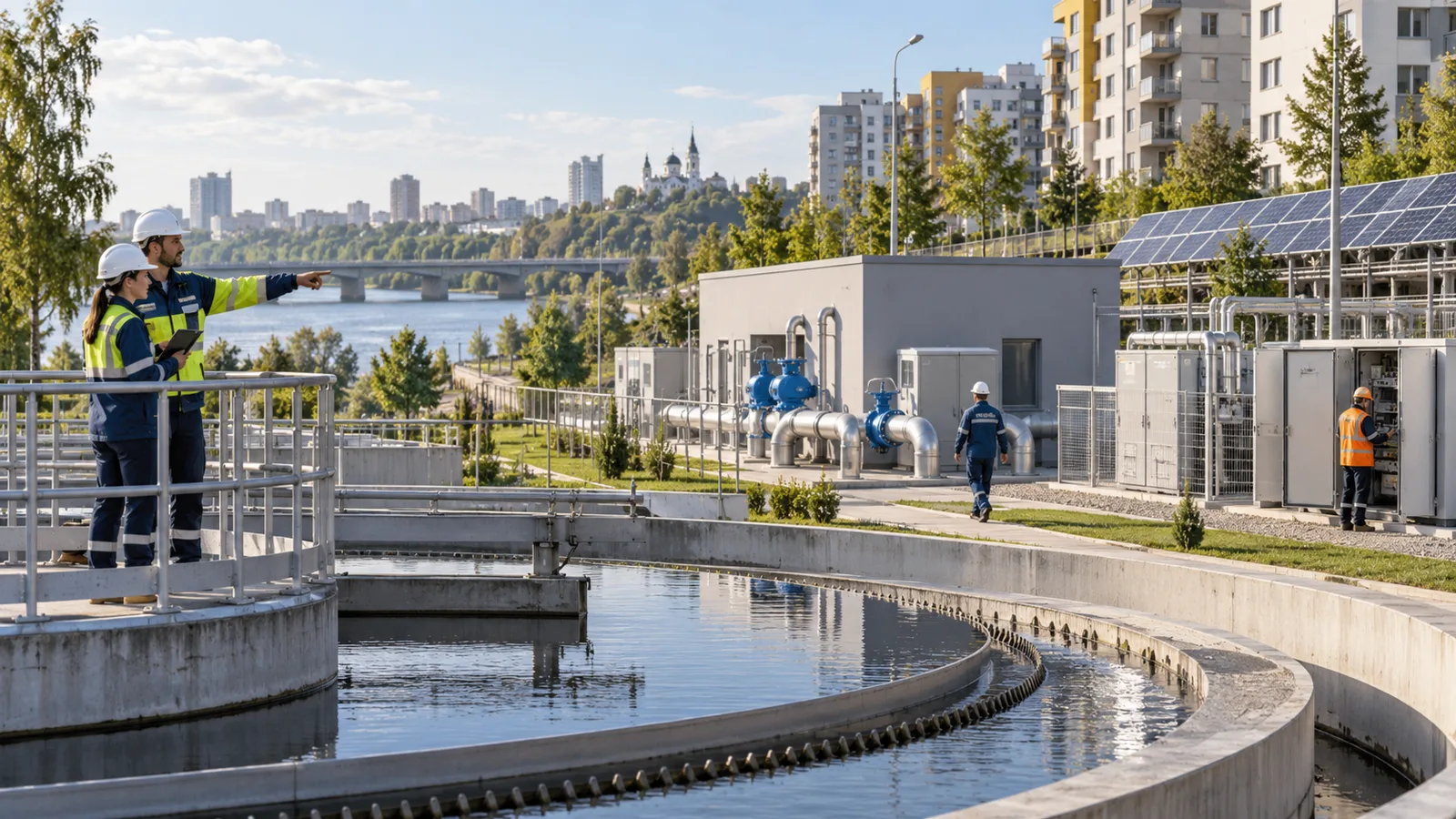
The selection is part of a programme intended to make Swiss know-how usable for reconstruction. According to the State Secretariat for Economic Affairs (SECO), the projects cover areas such as energy, public transport and water supply. Without a functioning basic supply, cities can neither operate economically nor see people return for good.
What the Confederation funds – and what it does not
The approved projects are not about general export promotion. The Confederation contributes to projects that are meant to make a concrete contribution to reconstruction and are carried out by Swiss companies. State support lowers risks or makes possible investments that would otherwise hardly come about under wartime conditions.
Swiss firms have technologies and experience in certain niches, for instance in energy efficiency, water treatment or mobility solutions. When such products meet local needs, cooperation can improve infrastructure and at the same time create jobs and know-how in Ukraine.
The approach, however, is more demanding than a conventional contract. In a war zone, the security situation, destroyed networks, administrative procedures and financing are risks. Projects therefore have to be planned robustly: with Ukrainian partners, realistic maintenance concepts and financing that keeps working after installation.
The benefit must be visible locally
Reconstruction funds are under particularly close scrutiny. The decisive question is whether public financing creates added value that the market alone would not deliver. The selection criteria should be transparent: What impact is expected? Which local partners are involved? How are environmental, social and integrity risks assessed? Who monitors progress, costs and operations?
Local value creation is central as well. Successful reconstruction projects are not those that merely process a Swiss delivery. They train skilled workers, involve Ukrainian companies, build maintenance capacity and strengthen municipal operators.
A role between aid and economic policy
Development cooperation, foreign economic policy and security policy meet directly in reconstruction. Private technical solutions complement government programmes and humanitarian aid. The public sector must safeguard impact, fairness and long-term benefit.
135 million Swiss francs is a substantial commitment, but measured against Ukraine's total reconstruction needs it is only one building block. Its value will not be measured in approvals, but in whether after a few years water flows, power grids are more stable and cities can operate the facilities themselves.
Sources
- SECO: Further private-sector projects for Ukraine: https://www.seco.admin.ch/de/newnsb/4XKhPgvW0rYD
- FDFA: Switzerland's cooperation with Ukraine: https://www.eda.admin.ch/de/ukraine
- World Bank: Ukraine – reconstruction needs: https://www.worldbank.org/en/country/ukraine/brief/rdna4
- Ukraine Recovery Conference: https://www.urc-international.com/


