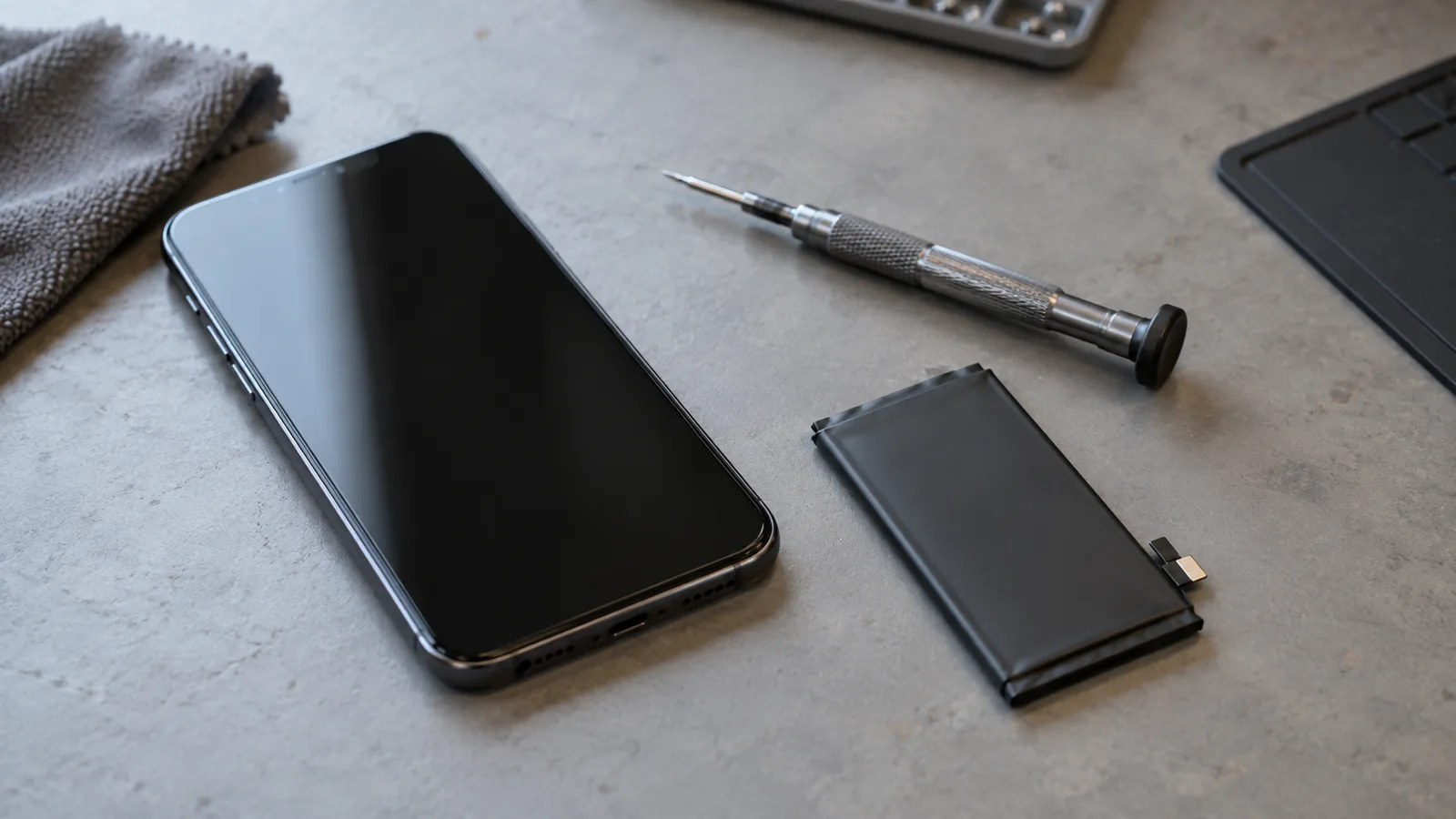
Buying a smartphone: why repairability belongs in the comparison
When buying a device today, repairability and durability can also be compared. The energy label shows more than power consumption.
In the shop, two new smartphones often look remarkably similar. Both have large displays, several cameras and enough storage for everyday use. The difference that can prove decisive a few years later is less conspicuous: how much effort does it take to replace a broken part? And is a repair still worth it once the battery weakens?
Anyone comparing devices on Saturday now has an additional source of information. Since 1 July 2025, the new energy label has applied in Switzerland to smartphones and slate tablets newly placed on the market. The Swiss Federal Office of Energy (BFE) states explicitly that the label makes properties visible beyond energy consumption. The labelling is therefore far more than a pointer to the next electricity bill.
One letter does not answer every question
Energy efficiency is stated on a scale from A to G. Alongside it are battery runtime, resistance to repeated drops, repairability and protection against the ingress of moisture or particles, among other things. These details must not be merged into a single overall grade. A device can score well on one property and be less convincing on another.
Two battery figures in particular are easily confused. Runtime per charge concerns use until the next recharge. Durability in charge cycles, by contrast, describes how long the battery retains its capacity under the specified test conditions. A phone with long runtime is therefore not automatically the one whose battery holds up best after years of use.
The standardised values are intended above all for comparison. Personal use, network connection and settings can differ from the test conditions. Nobody should therefore read a figure in hours as an exact promise for their own everyday life. Their value lies in allowing different models to be viewed on a common basis.
Repairability becomes visible
The European Commission explains the repairability classes from A to E, with A the best class. They are based on an index with several parameters. According to the BFE, Swiss regulations adopt the corresponding European requirements. Anyone examining an offer can therefore ask more targeted questions, instead of inferring repairability only from a manufacturer's advertising claim.
The ecodesign rules include, for example, requirements for long-lasting batteries: at least 800 charge and discharge cycles with 80 percent of the original capacity remaining. For important spare parts, availability requirements apply for up to seven years after the model stops being sold on the EU market. The supply of operating system updates is regulated as well; the Commission names at least five years from the end of placing the last unit of a model on the market.
These are different deadlines and reference points in each case. "Five years" therefore does not simply mean five years from your personal receipt. For a specific model, it is worth asking what support period the manufacturer actually guarantees and where that commitment is documented.
What is missing from the label
High repairability is no guarantee of a cheap repair. The price of spare parts, labour costs and the specific damage remain decisive. A replaceable display can be technically easy to access and still cost an amount that affects the personal decision. Asking about typical battery and display repairs before buying is therefore a sensible complement to the standardised labelling.
Nor does the label alone answer whether a new device is needed at all. Anyone whose only complaint about their current phone is declining runtime can first consider having the battery professionally checked. Whether that pays off also depends on software support, condition and price. No blanket recommendation for every old phone can be derived from this.
A comparison over several years
A simple sequence helps with the purchase decision: first define the functions actually needed, then compare durability and repairability, and finally obtain concrete service details. The lowest sale price and the lowest cost over several years are not necessarily the same thing. Without reliable information on service life, however, an exact total cost calculation would be only apparently precise.
The new labelling thus shifts the question in the shop. Alongside "What can the phone do today?" comes "What can I do with it when something breaks?" The camera remains important for good pictures. For a long device life, the less spectacular repair information may matter more.
Sources
BFE: Telephones and tablets · BFE: Fact sheet on requirements and the energy label · European Commission: Smartphones and tablets · EU: Consumer guide to labelling


