
Conversion Practices: Switzerland Considers Stricter Rules
Between Cantonal Bans, Professional Regulations, and Protection Gaps
Attempts to deliberately change or suppress a person's sexual orientation or gender identity are not a relic from a distant past. Studies and personal accounts show that so-called conversion practices also occur in Switzerland. The Federal Council rejects such practices and recognizes that they can cause significant psychological suffering. It remains unclear whether current law is sufficient, or if explicit federal regulation is needed.
The term does not refer to a single recognized therapy. It encompasses various religious, psychological, or pseudomedical actions based on the idea that a non-heterosexual orientation or a trans identity must be corrected. Professional organizations reject this fundamental assumption. Affected individuals report feelings of guilt, anxiety, depression, and damaged trust in counseling or pastoral care, among other issues.
The Law Protects – But Not Equally Clearly Everywhere
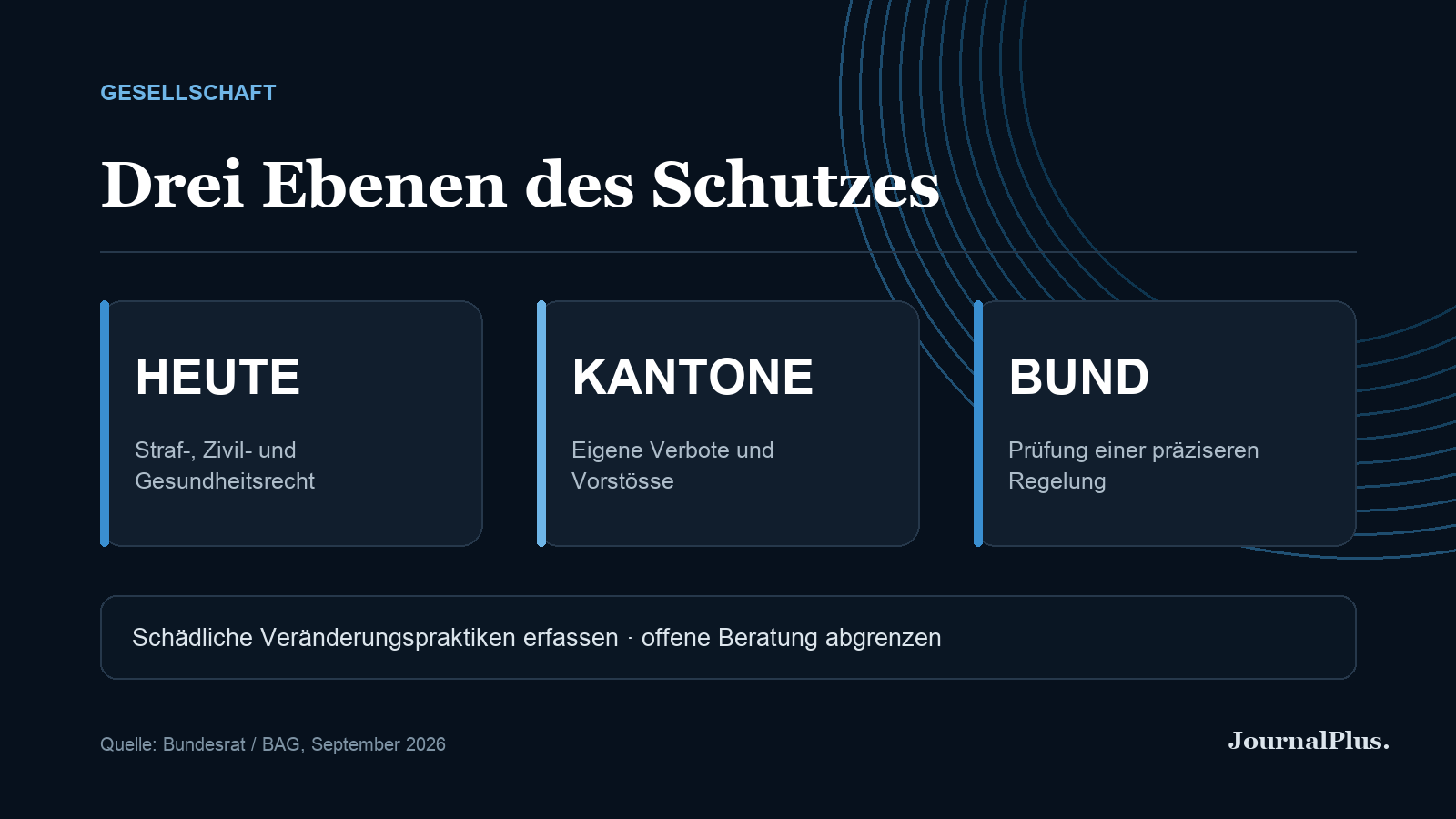
According to the Federal Council, criminal law, civil law, health law, and professional duties of care already offer broad protection. Coercion, bodily harm, or inadmissible promises of healing can be prosecuted today. Minors benefit from additional protection. Nevertheless, the legal situation is not always easy for affected individuals to understand, especially since practices can also occur outside traditional health professions.
Some cantons have therefore taken action or are discussing bans themselves. This creates political pressure but carries the risk of a patchwork of regulations. An action should not be easier simply because it is offered across a cantonal border. The Federation therefore wants to examine more closely what a more precise national regulation could look like.
The Delimitation Must Be Careful
An effective standard requires a clear definition of the prohibited goal. Measures intending to eliminate, change, or suppress a specific orientation or identity should be forbidden. This must be distinguished from open psychological or pastoral support, where a person can discuss relationships, identity, faith, or uncertainty without a predetermined outcome.
This distinction is important. A rule that is too narrow allows circumvention; one that is too broad could unsettle serious counseling. Therefore, the goal, method, power imbalance, and consent are crucial. Particular caution is needed with minors or dependent persons, as familial, religious, or social pressure can shape seemingly voluntary consent.
More Than a Criminal Law Issue
A ban alone does not automatically reach people. Affected individuals must know where they can turn confidentially. Healthcare professionals, schools, youth services, and victim support centers need clear information. Professional associations, in turn, can enforce standards and identify problematic offerings early.
The data basis also remains important. A study in the cantons of Vaud and Geneva examines manifestations, actors, and experiences of affected individuals. Such research can show whether legal gaps truly exist and which prevention offers work. Individual testimonies prove suffering, but do not allow for a reliable estimate for all of Switzerland.
What This Means for Switzerland
The debate touches on two values that belong together in a liberal society: personal freedom and protection from harm. Freedom of religion and therapeutic freedom do not grant anyone the right to treat people with pressure or false promises of healing. Conversely, the state should not dictate for which personal issues someone may seek counseling.
A good Swiss solution would therefore be neither symbolic nor vague. It would clearly encompass harmful conversion practices nationwide, especially protect minors, meaningfully interlink professional and criminal law, and finance low-threshold assistance. The measure is not how loudly the political debate is conducted. What is decisive is whether affected individuals find protection sooner and serious professionals know where the line is drawn.