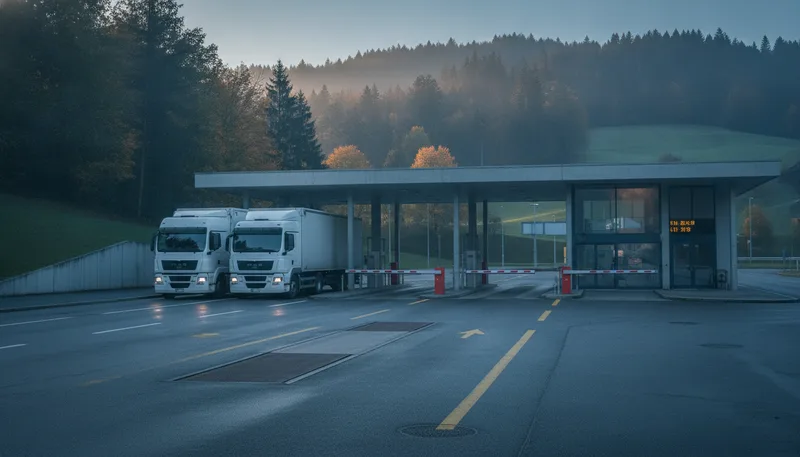
Customs goes digital – but nothing changes at the border yet
The Federal Council has sent the implementing ordinances for the customs law reform to consultation. The package is meant to harmonise and digitalise procedures, but it is not yet a new regime in everyday practice.
At the Swiss border, processing is to become more digital, more uniform and simpler over the long term. For now, however, this is not a new set of rules that travellers or importing companies must follow overnight. On 14 October 2026, the Federal Council first opened the consultation on the ordinance package of the customs law reform. The invited circles have until 28 January 2027 to comment.
The draft is the next step in a full revision that has been under way for years. On 20 June 2025, Parliament passed two new laws: the FOCBS Enforcement Tasks Act and the Customs Duties Act. No referendum was held against these drafts. The question now is how these legal bases should be shaped in practice and in the ordinances.
What the package covers
At the centre is a new FOCBS Enforcement Tasks Ordinance. As a framework ordinance, it is to set out how the Federal Office for Customs and Border Security, or FOCBS, levies duties and controls cross-border goods and passenger traffic. The federal government names less administrative effort for businesses, harmonised procedures and end-to-end digitalisation as its goals.
In addition, the existing Customs Ordinance is to be replaced by a new Customs Duties Ordinance. Several duty acts are to be fully revised or amended: tobacco tax, beer tax, motor vehicle tax, mineral oil tax and alcohol. Through the framework ordinance and its annexes, the draft also touches other areas such as value-added tax, the CO₂ levy, volatile organic compounds and the control of precious metals.
That sounds like a broad restructuring, but it does not mean customs is reinventing its tasks. According to the FOCBS, the tasks themselves and the division of responsibilities between the Confederation and the cantons remain unchanged. What is being reorganised above all are procedures, data flows and the legal basis for simplified, largely automated processes. The reform is closely tied to the DaziT programme, with which the FOCBS is modernising its systems.
What this means for private individuals
For people crossing the border, it is particularly important to distinguish between legislative work and the law in force. The consultation changes neither today's allowances nor the obligation to declare goods correctly. Nor does it yet give a conclusive answer on how individual future digital procedures in travel will look. Anyone shopping or travelling must continue to follow the provisions and information currently in force from the FOCBS.
The significance may be different for companies that regularly import, export or move goods through the country. They should examine the drafts and explanatory notes, because technical interfaces, reporting channels, transitional rules or enforcement details can affect day-to-day operations. For this purpose, the Federal Chancellery has published explanatory reports alongside the ordinance drafts. A consultation exists precisely to take up such questions before the final enactment.
What is certain – and what remains open
What is certain is the start of the consultation on 14 October and its deadline of 28 January 2027. The political framework is also certain: the new laws separate customs duty law from general enforcement law and are intended to create the basis for simplification and digitalisation. The FOCBS stresses that the full revision, now completed at the legislative level, is being continued at ordinance level.
What remains open, by contrast, is the definitive content of the ordinances after the consultation. Likewise, the published release names no general date on which the overall package enters into force. From the start of the consultation, therefore, neither a new date for border formalities nor an immediate change in duties can be derived.
The often-used shorthand that "customs is going digital" also needs context. Digitalised procedures can have different consequences for particular goods transports, declarations or controls. Which processes will be converted first, which technical requirements apply and which transitional periods are planned will only emerge from the final law and its implementation.
The fair reading of the announcement is therefore this: the federal government has opened the last major stage of rule-making, not yet reached the finish line. For businesses, this is the moment to contribute details. For the general public, it is for now a modernisation project without an immediate new travel rule.


