
Dementia in Switzerland: 166,300 affected — and still major data gaps
Ahead of World Alzheimer's Day, the figures deserve a closer look. New studies are meant to show what patients and their families actually need.
A visit at the weekend shows only a slice of everyday life. Anyone who accompanies a person with dementia often organises far more than that shared hour. How much support this requires cannot be read off a national figure for the number of people affected. Ahead of World Alzheimer's Day on 21 September, the gap between a familiar order of magnitude and what is actually known about care becomes clear.
The Federal Office of Public Health (FOPH) estimates that around 166,300 people in Switzerland will be living with dementia in 2026, with roughly 35,800 new cases per year. These are estimates, not a complete count of all diagnosed individuals. The caveat matters: a figure that looks precise can otherwise convey more certainty than the data basis allows.
The same figure is not a second confirmation
For the current prevalence figures, the FOPH refers to Alzheimer Switzerland. When the same estimate appears both at a federal agency and at the specialist organisation, this does not amount to two independent surveys. The match initially shows only that the same knowledge base is being used. What matters for classification is its origin, not the number of websites on which it appears.
Alzheimer Switzerland assumes that women make up around two thirds of those affected. According to the estimates, about 8,200 people with dementia are younger than 65. That would make the notion that the disease affects only the very old too narrow as well. Such population figures, however, cannot determine an individual person's risk of developing the disease.
Nor is the problem simply a complete absence of information. The FOPH notes that no comprehensive systematic data have been collected so far. Existing health statistics can nevertheless be used. According to the federal office, work by Obsan shows that those affected can be identified in existing databases and that treatment trajectories can be examined by linking data.
Care remains invisible in the figure
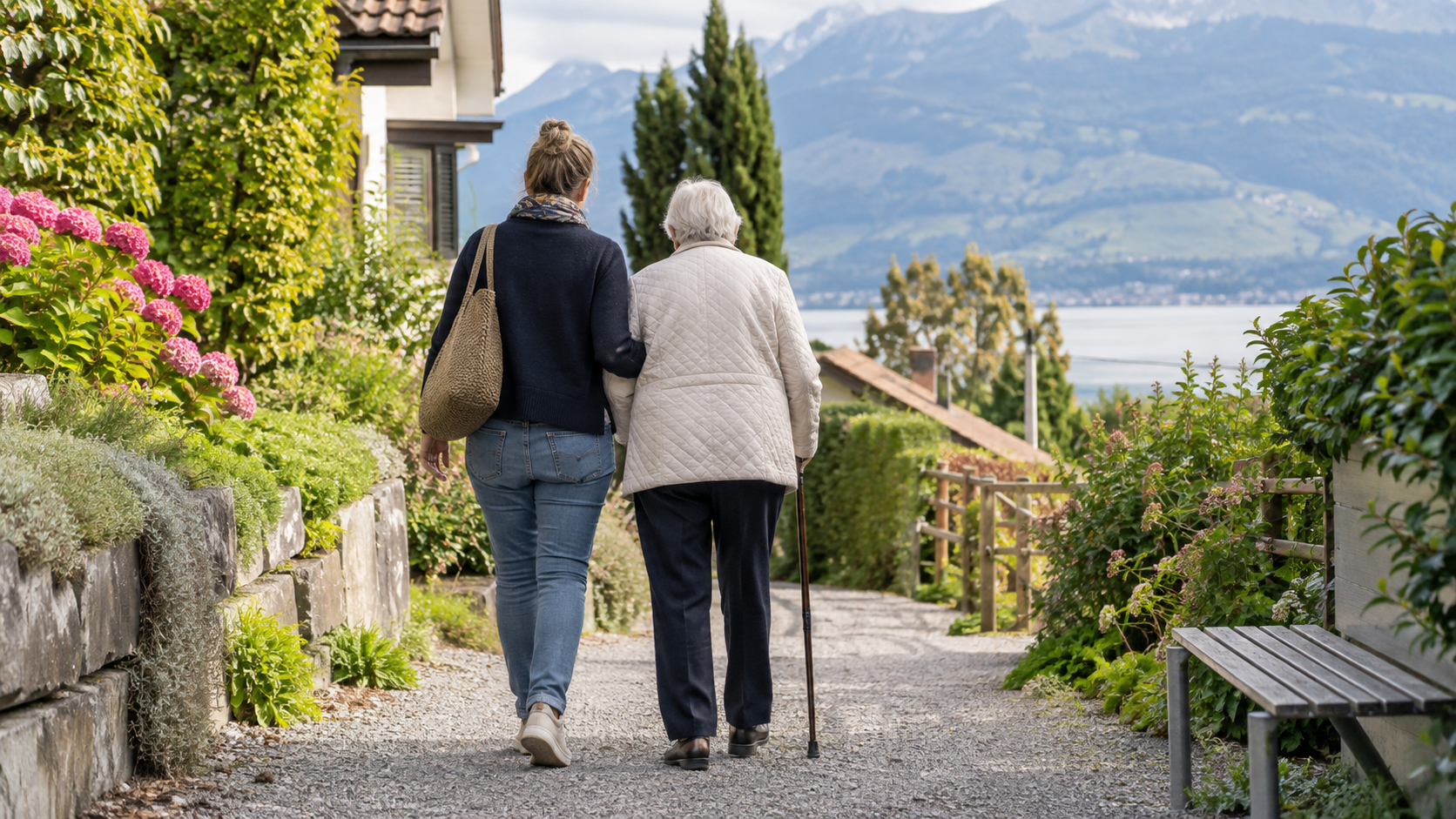
Such data mainly describe contacts with the care system. The question of how everyday life at home can be organised goes beyond that. What help is needed? Which services are used, and which are missing? And which tasks do relatives take on without this resulting in medical treatment or an invoice? These questions are just as important for planning as the number of people who are ill.
Alzheimer Switzerland is therefore conducting two national studies together with the Zurich University of Applied Sciences (ZHAW). One part updates the 2012 survey of relatives on needs, burdens and gaps in care. Interviews with relatives and with people with dementia are also planned. The second part examines the societal costs and updates the earlier cost study.
The publicly offered survey is aimed at relatives who currently care for or look after a person with dementia. The project page does not yet report any results and still describes the project as in development. No new burden rates or already proven care gaps of a particular magnitude can be derived from it today. The study is meant to deliver such answers first.
The billions come from a different year
With costs, too, the year is decisive. The frequently cited 11.8 billion Swiss francs in economic costs refer to 2017 and come from a study published in 2019. They are not a calculation for the current year 2026. The FOPH also points out that larger cost studies arrive at different results.
For political debates, that makes a difference. An old order of magnitude can illustrate the significance of the problem. But it cannot readily be used to quantify current expenditure or today's financing needs down to the franc. A new estimate must show which types of costs were recorded and which assumptions it works with.
Knowing better, helping in a more targeted way
In November 2025, the Federal Council adopted a report on improving the financing of dementia care. It addresses ways to align care and social policy instruments more closely with those affected and their relatives. The task is thus politically named. Which concrete support is missing in which place, however, remains a question that must be answered with data as up to date as possible.
For the weekend before the awareness day, a different look at the headline figure is therefore appropriate. Behind it stand very different life situations. Good care does not begin with repeating an estimate often. It begins with understanding more precisely what help people need — and whether that help actually reaches them.
Sources
FOPH: Dementia – facts and figures · FOPH: Data basis and care report · Alzheimer Switzerland: Dementia in Switzerland · Alzheimer Switzerland and ZHAW: new dual study · German Alzheimer Society: World Alzheimer's Day


