
Fewer Children, Older Switzerland: The Silent Reckoning
Why the Record-Low Birth Rate Extends Beyond Family Policy
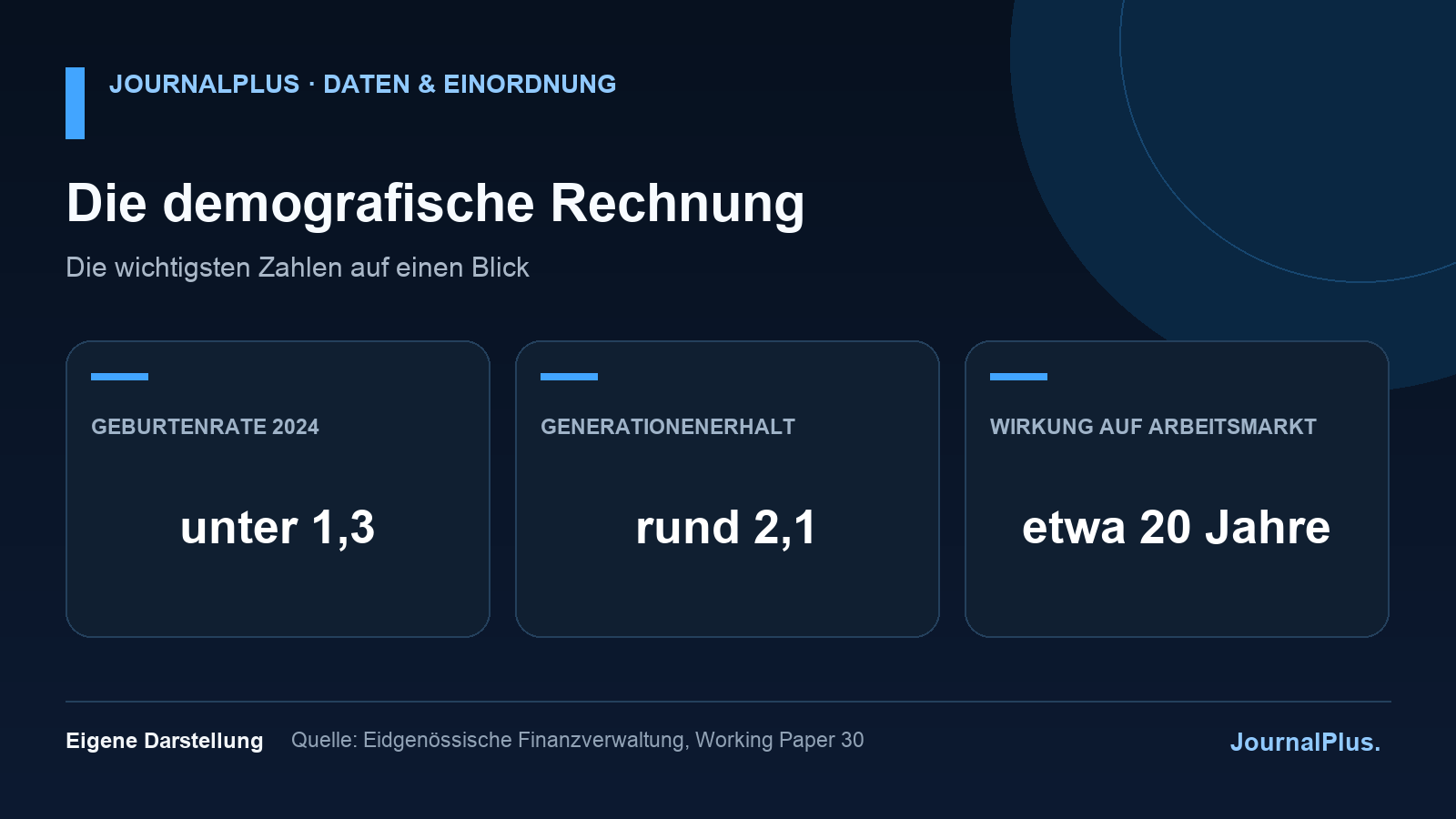
Since 2025, Switzerland has had more people of retirement age than under 20 for the first time. This is due to higher life expectancy and a birth rate that fell below 1.3 children per woman in 2024 for the first time. Approximately 2.1 children per woman would be needed long-term to mathematically sustain a generation.
A new working paper from the Federal Finance Administration classifies this development from a fiscal policy perspective. It is not a forecast of sudden collapse. It describes a slow shift, the consequences of which will spread over decades across the labor market, AHV, healthcare system, taxes, and investments.
Consequences Begin in the Labor Market
Fewer births later mean fewer people of working age. The domestic labor supply grows slower, while more older individuals claim old-age benefits and healthcare services. Without higher productivity, longer working lives, or immigration, the shortage of skilled workers may worsen.
For public budgets, this development affects both sides. Slower economic growth curbs taxes and social security contributions in the long term. Simultaneously, age-dependent expenditures rise. This can increase competition for financial resources among education, infrastructure, or climate protection. This is not a bill families alone should settle; it concerns the architecture of the entire state.
Why People Have Fewer Children
Research cites no single cause. Direct costs for childcare, housing, and education play a role, as does lost earned income. Additionally, work-life balance, short parental leave, tax disincentives for second earners, and a continued unequal distribution of unpaid work contribute.
Changed life plans are equally important. People start families later, demands on parenthood have increased, and a childless life is more socially accepted. This expresses personal freedom. The state must not derive an obligation for private life decisions from this.
Money Alone Does Not Solve the Problem
Many countries rely on parental leave, allowances, subsidized childcare, or tax relief. Such measures can significantly alleviate the burden on families and increase labor force participation. However, federal research shows that their effect on the birth rate usually remains small or temporary. Individual baby bonuses are therefore not a sustainable demographic policy.
More promising are reliable packages covering the entire childhood phase: affordable childcare, predictable work models, fair taxes, and sufficient family-friendly housing. Their value should not only be measured by whether the birth rate increases. They can also reduce poverty, improve equal opportunities, and enable parents to live and work as they wish.
What This Means for Swiss Citizens
Even a rapid rise in births would only ease the labor market approximately two decades later. Switzerland must therefore adapt simultaneously: better utilize the potential of women and older workers, strengthen continuing education, promote productivity, and enable labor-market-oriented immigration. Moreover, reforms in old-age provision and healthcare costs are becoming more urgent.
For families in everyday life, a national indicator matters less than whether childcare is available, housing is affordable, and employment is compatible. For politics, the lesson is: children are not a fiscal policy resource. Those who strengthen families should improve their freedom and lived reality. Those who want to stabilize public finances must build systems that also function with permanently low birth rates.
Companies also have a role. Predictable part-time models, return opportunities after a family break, and fair career opportunities for both parents help determine the indirect costs of raising a child. Such working conditions do not replace public family policy, but they can prevent the desire for employment and the desire for children from unnecessarily excluding each other.