More Goods Through the Alps, But Rail Loses Share
Traffic is increasing, but Switzerland's modal shift policy faces growing pressure.
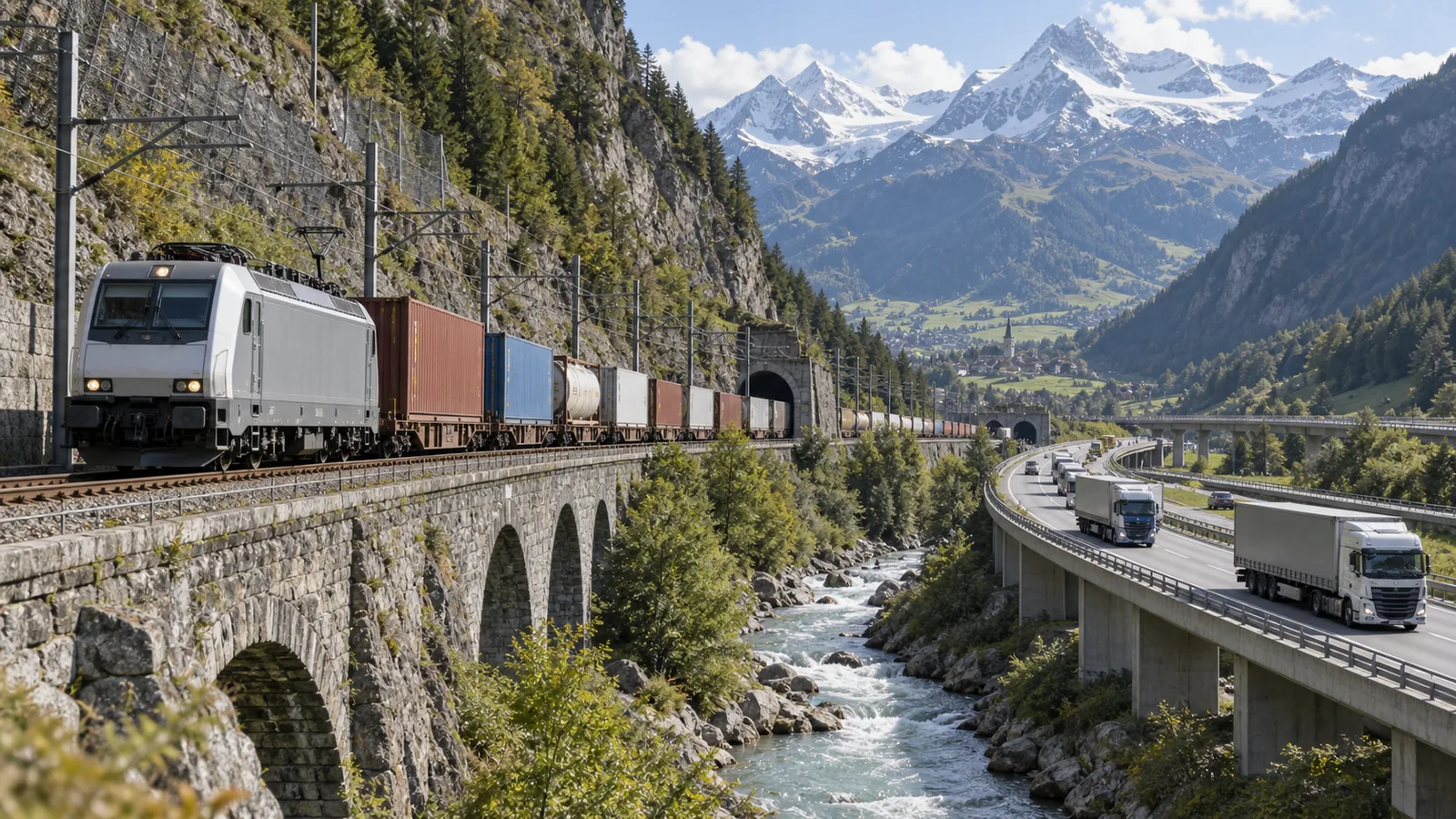
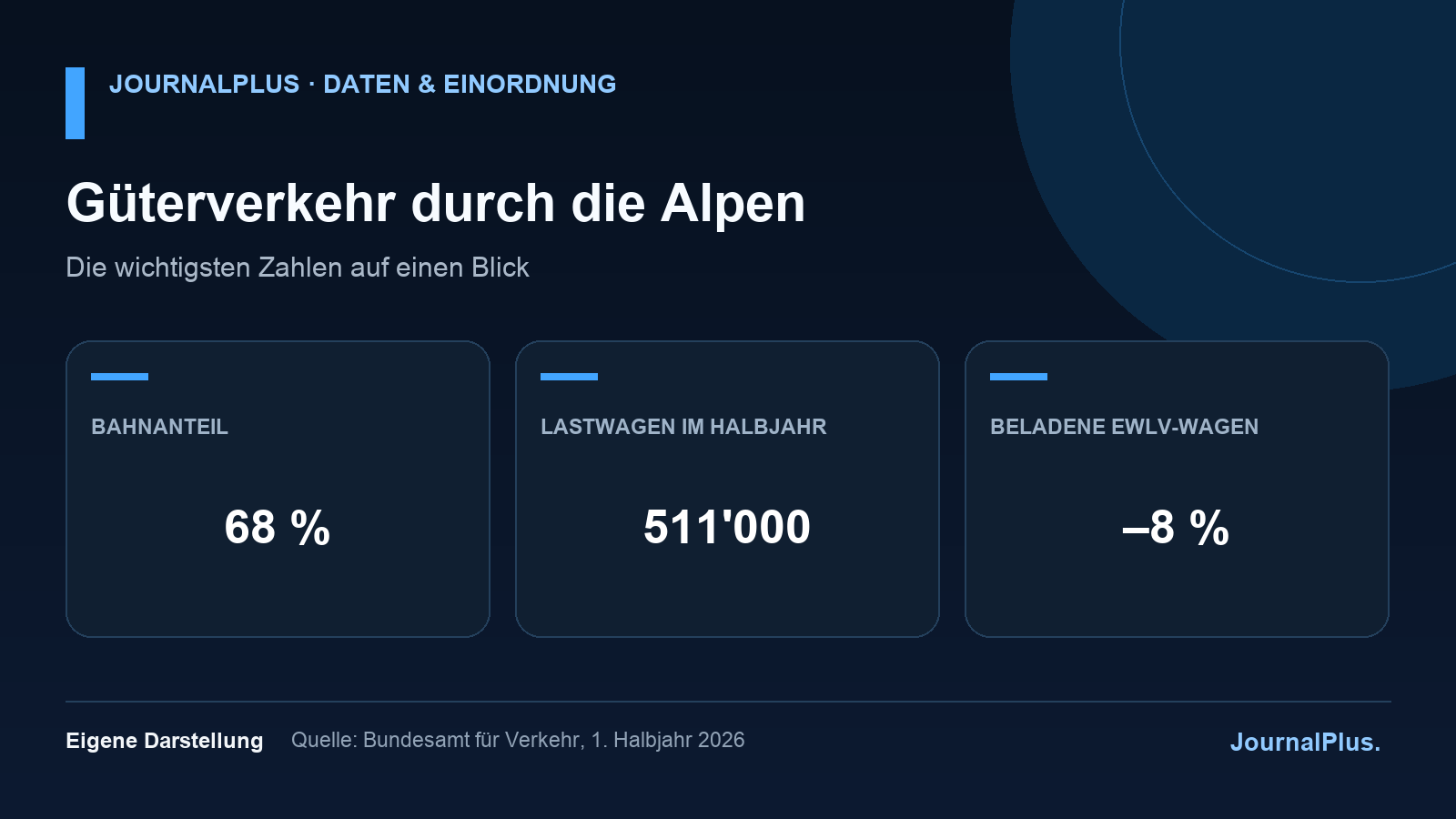
Rail transported more goods through the Swiss Alps in the first half of 2026, yet it lost market share. Its volume increased by 3.1 percent compared to the previous year. However, road traffic grew significantly faster. The rail share of total trans-Alpine freight transport thus dropped by 0.9 percentage points to 68 percent.
According to the Federal Office of Transport (BAV), approximately 511,000 trucks crossed the Swiss Alpine passes in six months, about seven percent more than in the same period last year. If this trend continues, the number of crossings in 2026 could exceed the one-million mark for the first time in a while. This is politically sensitive: the Federal Constitution requires shifting freight transit from road to rail.
Growth Masks Relative Decline
At first glance, an increase in rail transport is good news. However, the crucial factor for the modal shift policy is not just the absolute volume, but also the ratio to road transport. If the overall market grows and trucks increase faster, pressure on roads, residents, and the environment rises despite additional freight trains.
Switzerland is not starting from scratch. With approximately two-thirds rail share, it remains high in comparison to other Alpine countries. This is the result of the New Rail Alpine Transversal (NEAT), the performance-related heavy vehicle fee, and the promotion of combined transport. Precisely for this reason, the multi-year loss of market share is a warning signal: the expensive infrastructure can only fulfil its purpose if international freight trains operate predictably.
The Bottleneck Is Often Abroad
Construction sites and a lack of reliability on approach routes in Germany are particularly burdensome. A train delayed or rerouted before Basel can disrupt personnel, locomotives, and slots across the entire network. Freight forwarders react to unpredictable transit times by using roads – even if rail transport per tonne would be more environmentally advantageous.
The BAV expects noticeable relief only around 2030. Money alone does not solve the coordination problem. Coordinated construction plans, reliable international corridors, and sufficient alternative capacities are necessary. Switzerland cannot mandate these, but it can exert pressure in European bodies and link its funding instruments to measurable quality targets.
Domestic Transport Also Weakens
The decline in single wagonload transport is even more pronounced. In this system, individual freight wagons from different companies are collected and assembled into trains. In the first half of the year, eight percent fewer loaded wagons were transported. SBB Cargo recorded a loss of 12 million Swiss francs in this segment, despite 40 million Swiss francs in compensation.
This network is important for industrial companies outside major terminals. If it disappears, transport often shifts to trucks. The federal government has therefore supported single wagonload transport since early 2026, demanding modernization with the goal of becoming more economically viable in the medium term. The central question is which connections are economically important – and which services the state wants to permanently commission.
What This Means for Switzerland
More trucks do not automatically mean daily traffic jams. However, in the long term, they increase maintenance needs, noise, and accident risks on transit routes. For consumers, a reliable supply is also crucial. A modal shift policy that makes supply chains more expensive or unpredictable loses acceptance.
The sensible answer is therefore neither a blank cheque for rail freight transport nor a retreat to road transport. Funding must improve reliability, capacity utilization, and actual modal shift. The new semi-annual report shows: Switzerland possesses the infrastructure for strong rail freight. It must now ensure that the system functions as a cross-border chain.
Companies require comparable performance data: punctuality at the border, cancelled trains, duration of diversions, and costs per shipment. If these values are regularly published, it is possible to distinguish whether additional funds solve structural problems or merely cover ongoing losses. Precisely this transparency is needed for the modal shift policy to remain politically sustainable.