First IBM Quantum Computer Arrives in Switzerland
Why the Lugano Facility is Important – and Why a Breakthrough is Not Yet Guaranteed
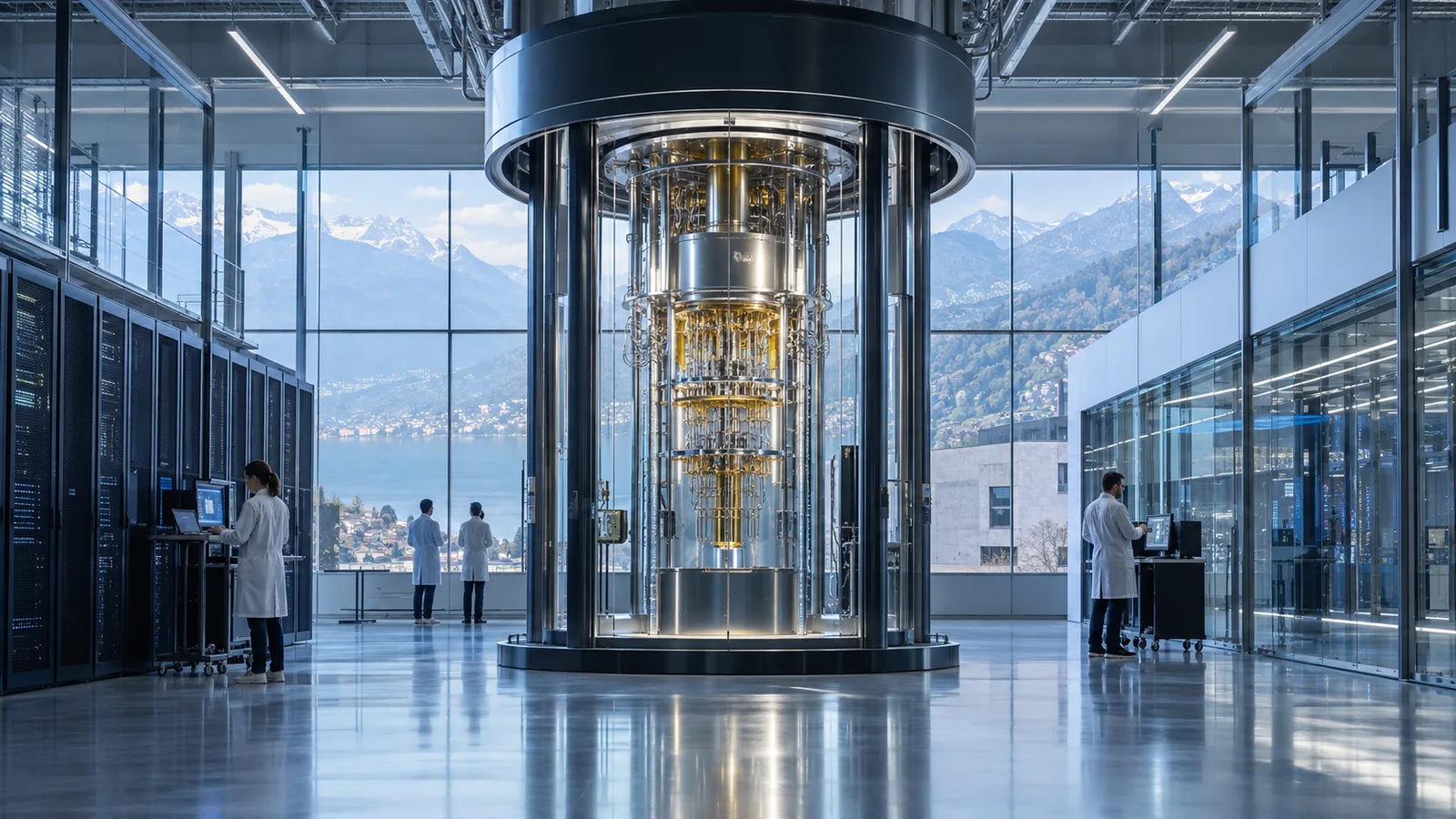
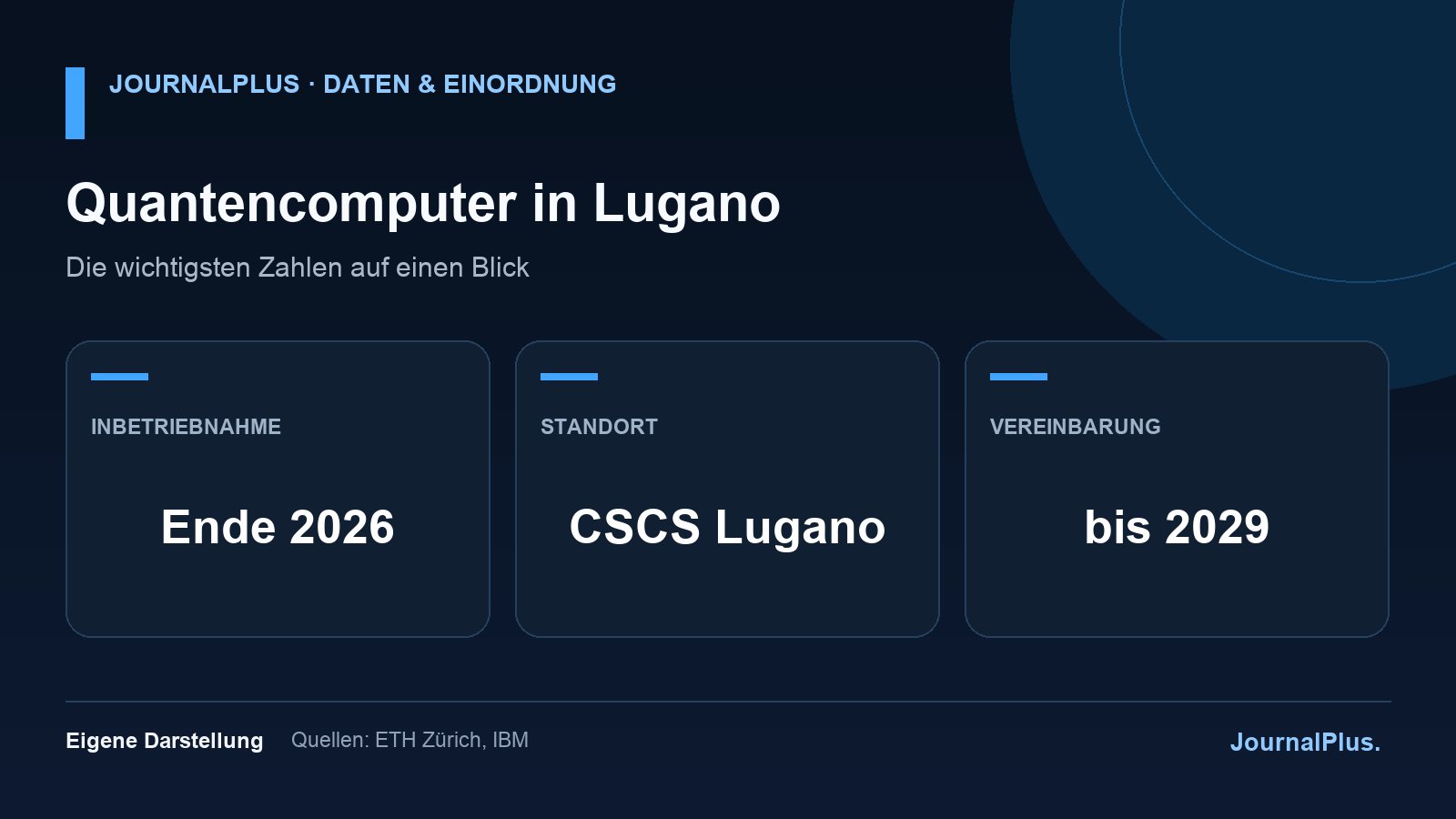
Switzerland will receive its first dedicated IBM quantum computer. An IBM Quantum System Two, featuring a Nighthawk processor, is scheduled to become operational by late 2026 at the National Supercomputing Centre CSCS of ETH Zurich in Lugano. The facility will be located in close proximity to the “Alps” supercomputer. This adjacency is more crucial than the futuristic label: many realistic applications will combine classical high-performance computers and quantum processors.
The project is financed as part of an offset agreement between the defense contractor Lockheed Martin and the Federal Office for Armaments armasuisse. IBM will install, maintain, and operate the system. ETH and CSCS will provide power, cooling, and security, and decide on the allocation of computing capacities. The collaboration is initially set until 2029.
What Makes a Quantum Computer Different
A normal computer processes bits as zeros or ones. Quantum computers utilize qubits, whose states can superpose and become entangled. This opens new computational paths for certain mathematical problems. Particularly interesting applications include simulations of molecules and materials, optimization problems, and specific processes in chemistry, physics, and financial economics.
This does not mean that email, spreadsheets, or artificial intelligence will move to quantum machines tomorrow. Current systems are sensitive, error-prone, and only useful for selected tasks. Whether they achieve a practical advantage over the best classical methods for a specific industrial problem must be demonstrated in each case. Therefore, a quantum computer is not an exceptionally fast laptop, but a highly specialized research instrument.
Initial Gain Lies Primarily in Expertise
Researchers, startups, and companies will gain access to the new innovation center via ETH, and to IBM cloud systems even during installation. This shortens the path between theory and experimentation. Those wishing to develop algorithms, understand errors, or test hybrid applications can do so in the future with their own on-site infrastructure and expertise.
For Switzerland, this is primarily a talent project. Quantum computing combines physics, mathematics, computer science, and engineering. Such specialists are scarce. A system in Lugano can educate students, facilitate cooperation between universities, and help companies distinguish between robust applications and marketing promises. Ticino also gains significance as a research location.
The Strategic Aspect of the Facility
Quantum computing represents both security and industrial policy. Future powerful systems could threaten currently used encryption methods. Conversely, the technology promises advances in sensor technology, materials, and industrial optimization. The fact that a US corporation operates the machine and an armaments deal enables its financing therefore raises legitimate questions about access rules, intellectual property, and long-term dependency.
Transparent allocation criteria and broad use by Swiss universities are crucial. Equally important is to simultaneously advance quantum-safe encryption. The Swiss Financial Market Supervisory Authority has already alerted financial institutions to risks posed by quantum computers and the necessary migration to new cryptographic standards.
What This Means for Switzerland
For the average Swiss citizen, little will change in everyday life in 2026. The benefit is indirect: better research, qualified jobs, and the opportunity for Swiss companies to learn early where quantum technology truly creates added value. The state should not measure success by spectacular demonstrations, but by trained specialists, publicly verifiable research results, and applications that demonstrably surpass classical methods.
The facility is therefore neither a miracle cure nor merely a prestige object. It is an expensive learning platform in a strategic field. Whether a sustainable advantage emerges from it will not be determined solely by the number of qubits, but by how openly, critically, and productively Switzerland utilizes the infrastructure.
Success monitoring therefore includes publicly known criteria: Which institutions gain access? How many projects lead to published results, patents, or new companies? And what proportion of the computing time is dedicated to independent basic research? Such key figures protect the project from exaggerated expectations and make it visible whether the benefit extends beyond individual partners.