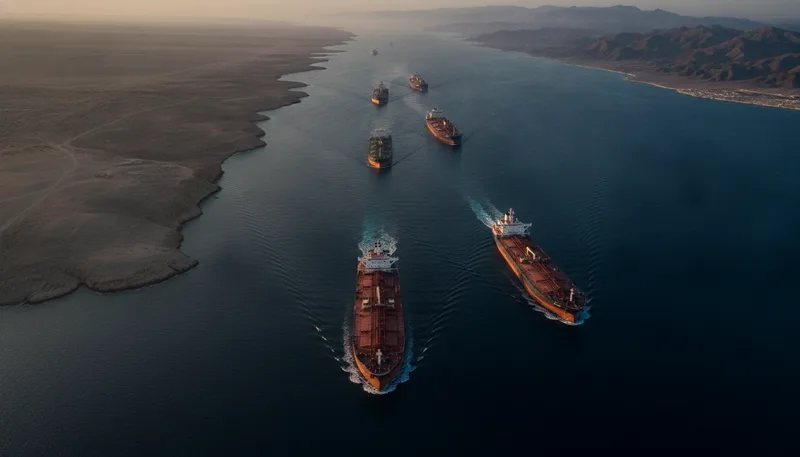
Hormuz: pipelines cannot replace the strait – Switzerland's stakes
Saudi Arabia and the UAE can reroute oil. But their alternative routes fall far short of the volumes passing through the strait.
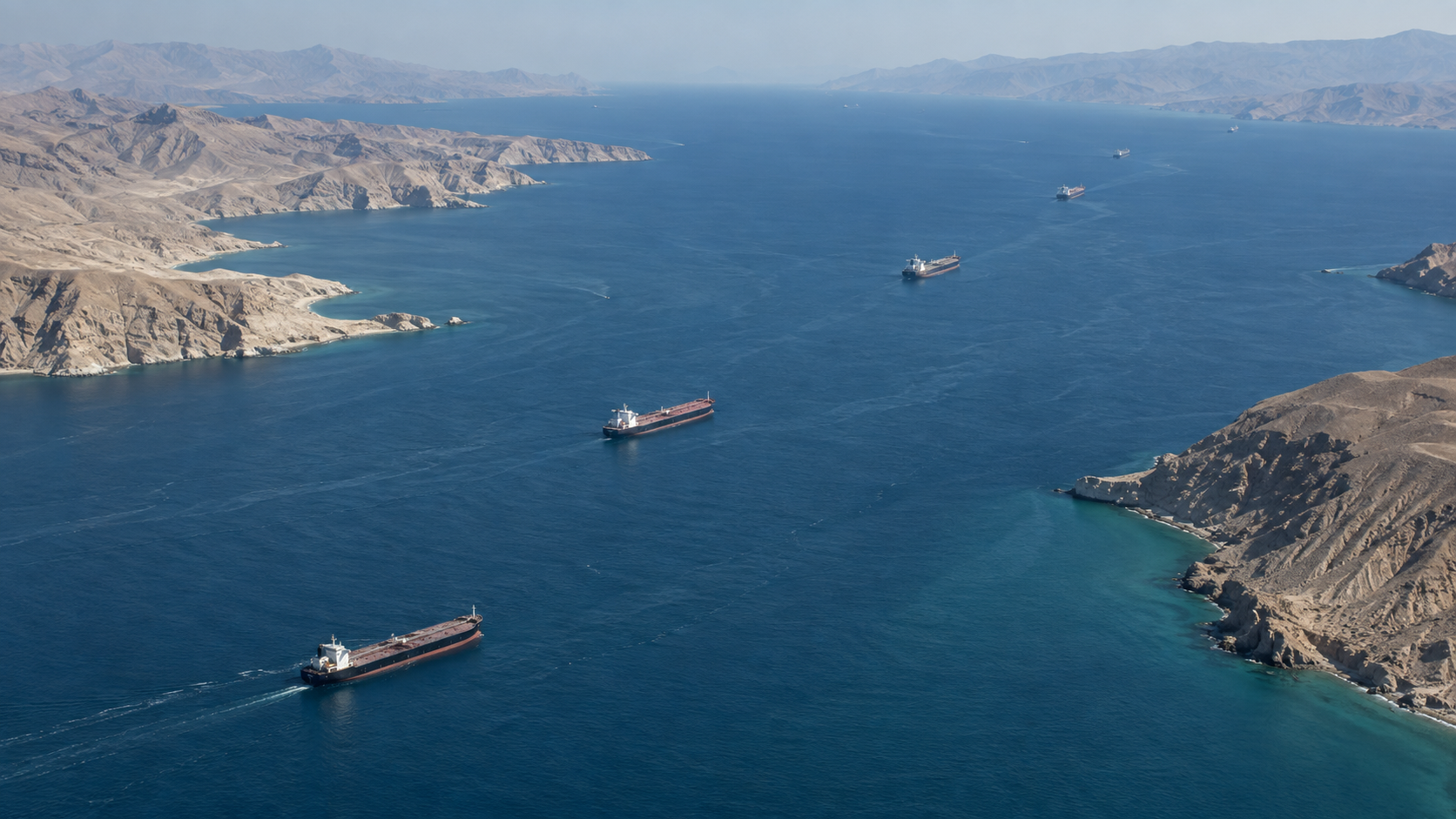
When the Strait of Hormuz is discussed, it is not about a single sea route that can easily be bypassed when needed. The strait connects the Persian Gulf with the Gulf of Oman and is a central hub for oil and liquefied gas. Pipelines in Saudi Arabia and the United Arab Emirates can indeed carry part of the crude oil volume to other ports. But they are not a complete substitute.
The scale becomes clear from the comparison: in 2025, according to the International Energy Agency, an average of almost 20 million barrels of oil and oil products per day were transported through Hormuz. That corresponded to roughly a quarter of global seaborne oil trade. For alternative routes via Saudi Arabia to the Red Sea and via the UAE to the port of Fujairah, the IEA estimates available capacity at 3.5 to 5.5 million barrels of crude oil per day. Even at the upper end, the larger part of the previous volume therefore has no equivalent rerouting option.
The gap is more than an arithmetic exercise. Ports along the alternative routes must handle the additional volumes, tankers must be rescheduled, and supply chains must function under strain. The IEA explicitly points out that the logistics of a large-scale rerouting have not been robustly tested. On top of that, the Iranian Jask route is, in the IEA's assessment, currently not a viable export alternative.
The situation is even more difficult for gas. Almost all LNG exports from Qatar and the UAE pass through Hormuz. In 2025 they accounted for just under a fifth of global liquefied gas trade. A crude oil pipeline cannot replace these volumes. Tankers and specialised infrastructure are also indispensable for refined products such as petrol, diesel or jet fuel. A bottleneck at Hormuz can therefore affect energy prices, transport costs and supply chains worldwide, even if a large share of the direct oil flows goes to Asia.
What does that mean for Switzerland? On 30 September, Switzerland's National Economic Supply reported that shipping traffic through the Strait of Hormuz remained restricted. For October, the availability of goods in mineral oil products was secure. However, the federal government assessed petrol and diesel as tense and very tense respectively; for jet fuel, the situation could become more acute from mid-October. These statements are a snapshot, not a forecast for the coming months.
For households, the key difference is this: secure supply does not necessarily mean stable prices. Compulsory stocks are meant to bring physical volumes onto the market in a severe disruption. In principle, however, they are released through normal trade channels and at current market prices. Anyone who drives a car, orders heating oil or plans a flight can therefore feel price swings without an immediate shortage at the petrol station.
Panic is nonetheless out of place. The federal government holds reserves, imports do not automatically stop altogether in a crisis, and experience shows that consumption also falls when supplies are tight. What is accurate, however, is this: pipelines are a buffer, not a lifeline for every outage. For Switzerland, what counts is therefore not only whether a pipeline exists somewhere, but whether global transport routes, ports and energy markets as a whole function reliably again.