Housing crisis: what Vienna and Paris do differently
Some European cities buy land, build without a profit motive and regulate rents. These models do not work overnight – and transfer only partly to Switzerland.
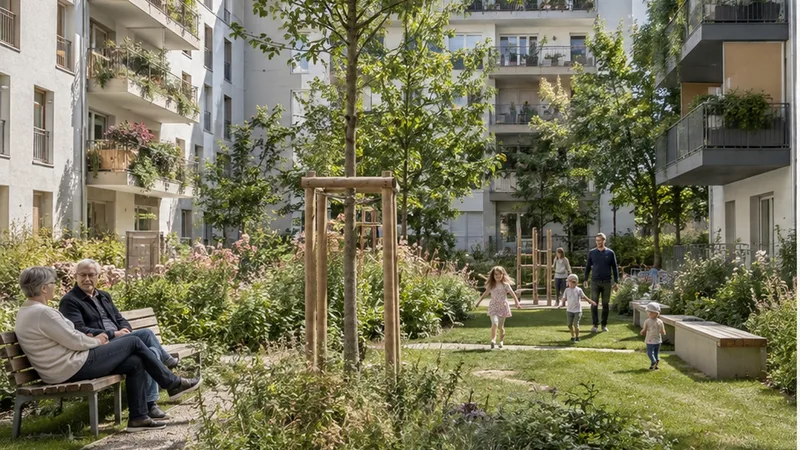
Europe's housing crisis produces simple recipes: build more, cap rents, expropriate large companies or convert empty buildings. But comparing the cities that succeed shows something else. Affordable housing usually emerges from a mix of land policy, public or public-benefit ownership, financing and allocation rules – built up over decades.
Vienna and Paris embody two distinct paths. Vienna has a large stock that is partly withdrawn from the market. Paris is trying, in an already extremely expensive market, to counter the trend with purchases, regulation and new ownership models. Both examples offer ideas for Switzerland, but no solution ready to be copied.
Vienna benefits from a century's head start
The City of Vienna owns around 220,000 municipal dwellings and there are roughly 200,000 cooperative dwellings. A large share of the supply is thus tied in the long term to rules that do not follow the highest market rent alone. The decisive advantage lies less in a single rent cap than in the sheer size of the stock.
This model cannot be rebuilt in the short term. It rests on decades of land ownership, financing and continuous construction activity. Access in Vienna is not barrier-free either: subsidised and municipal dwellings are subject to conditions on age, principal residence, residence status and income. Scarcity does not disappear as a result; it is distributed according to political criteria.
Since September 2026, Vienna has also been using a new points system. It takes into account, for example, high housing costs, a separation, a threatened loss of housing, care responsibilities and accessibility. This makes visible that even a large public stock has to organise fair selection.
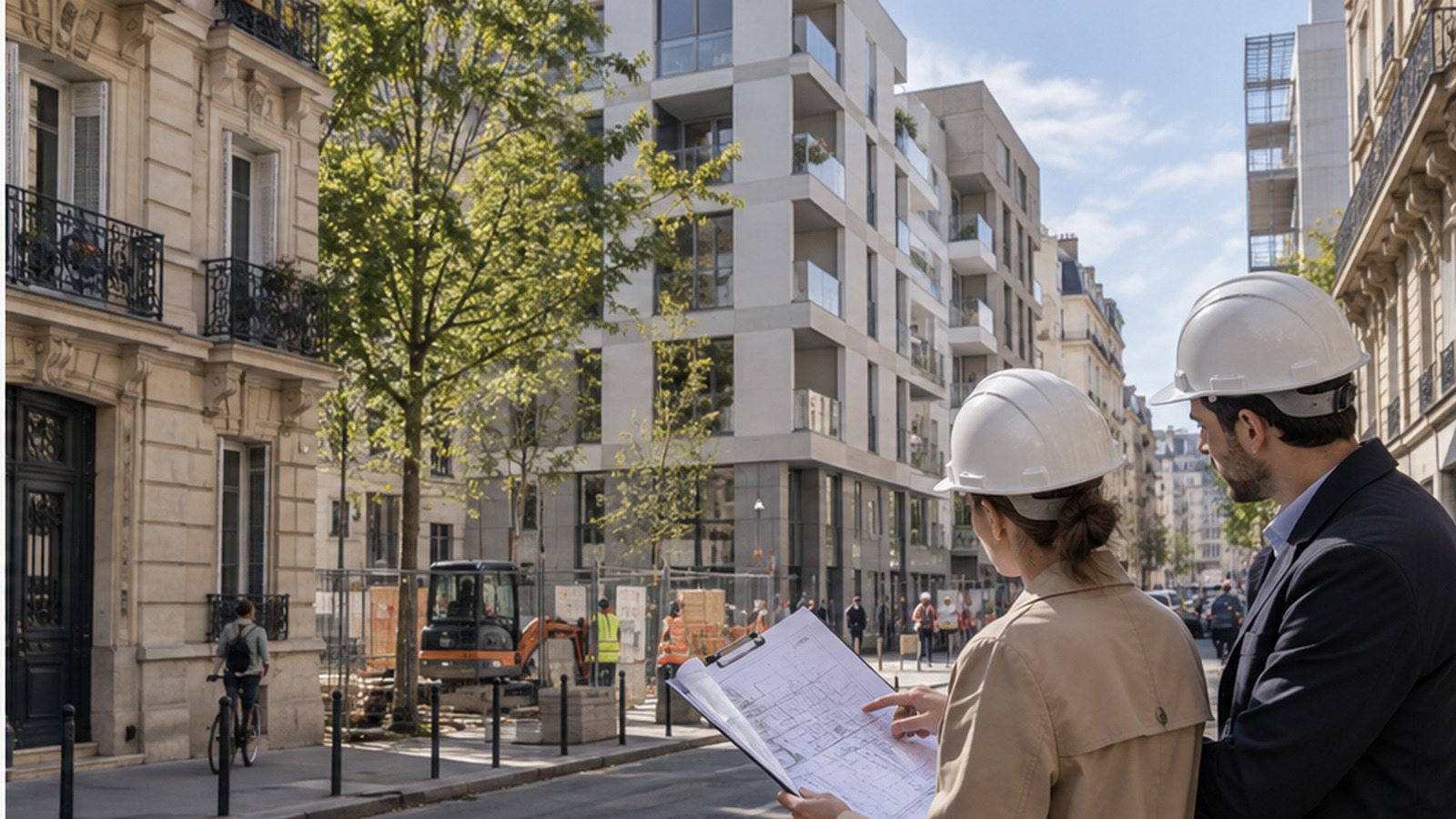
Paris buys time and land
Paris is pursuing a more aggressive strategy in a high-priced market with scarce buildable land. The city has stated that the share of social housing reached around 25 per cent in 2025. At the same time it wants to keep developing public and affordable housing stock. The 2026 budget provides funds for construction, acquisition and renovation.
One instrument is the municipal «Foncière du logement abordable». It is to buy entire buildings and offer flats at rents below those of the private market. Another model separates land from buildings: under the «Bail réel solidaire», the land remains with a public-benefit body while households buy only the building. The purchase price falls as a result, but income limits and resale restrictions apply.
Paris also regulates private rents and uses pre-emption rights. The city reports contained rent increases. These figures, however, come from municipal assessments and must be read alongside avoidance reactions: landlords can let furnished, short-term or outside the regulated segments. Regulation therefore requires enforcement and a sufficient alternative supply.
Berlin shows the limits of big promises
Berlin represents a third way: political pressure on large property groups. The 2021 referendum called for the socialisation of extensive property portfolios. Its implementation has remained contested in legal and political terms. The example shows that a strong ballot result does not quickly create housing. Valuation, compensation, legislation and legal risks can take years.
The lesson is not that ownership policy has no effect. It is that timing matters. An acquisition changes the stock but does not initially create a single additional home. New construction increases supply but requires land, permits, infrastructure and construction capacity. Rent rules protect households but can lengthen waiting lists without new construction.
What matters for Swiss cities
In Switzerland, the share of public-benefit housing is around four per cent nationally. According to the Federal Office for Housing, their average rents are eight to 20 per cent lower depending on the comparison used. In some cities the share is higher, but the starting point remains far from Vienna's.
The transferable idea is therefore not «copying Vienna». Swiss cities can lease land under building rights, keep municipal land, finance cooperatives, require a share of affordable housing when land is rezoned, and speed up approval procedures. The effect emerges when these instruments span several legislative terms.
No city has a fast switch
Vienna shows the strength of a large public-benefit housing stock. Paris shows how land policy and acquisitions create room for manoeuvre in an expensive metropolis. Berlin shows how slow major interventions in ownership can be.
For Switzerland this yields an uncomfortable consequence: housing policy acts with a long time lag. Those who start only at the height of a crisis can protect households in the short term but do not immediately replace the missing stock. The main lever is therefore continuity: securing land, building affordably for the long term and enabling new supply in parallel.
Sources
- City of Vienna: municipal housing and subsidised dwellings
- City of Vienna: new allocation system from September 2026
- City of Paris: housing policy and 2026 budget
- City of Paris: Foncière du logement abordable
- Federal Office for Housing/Federal Statistical Office: public-benefit housing construction 2024
- DW: ideas against Europe's housing crisis