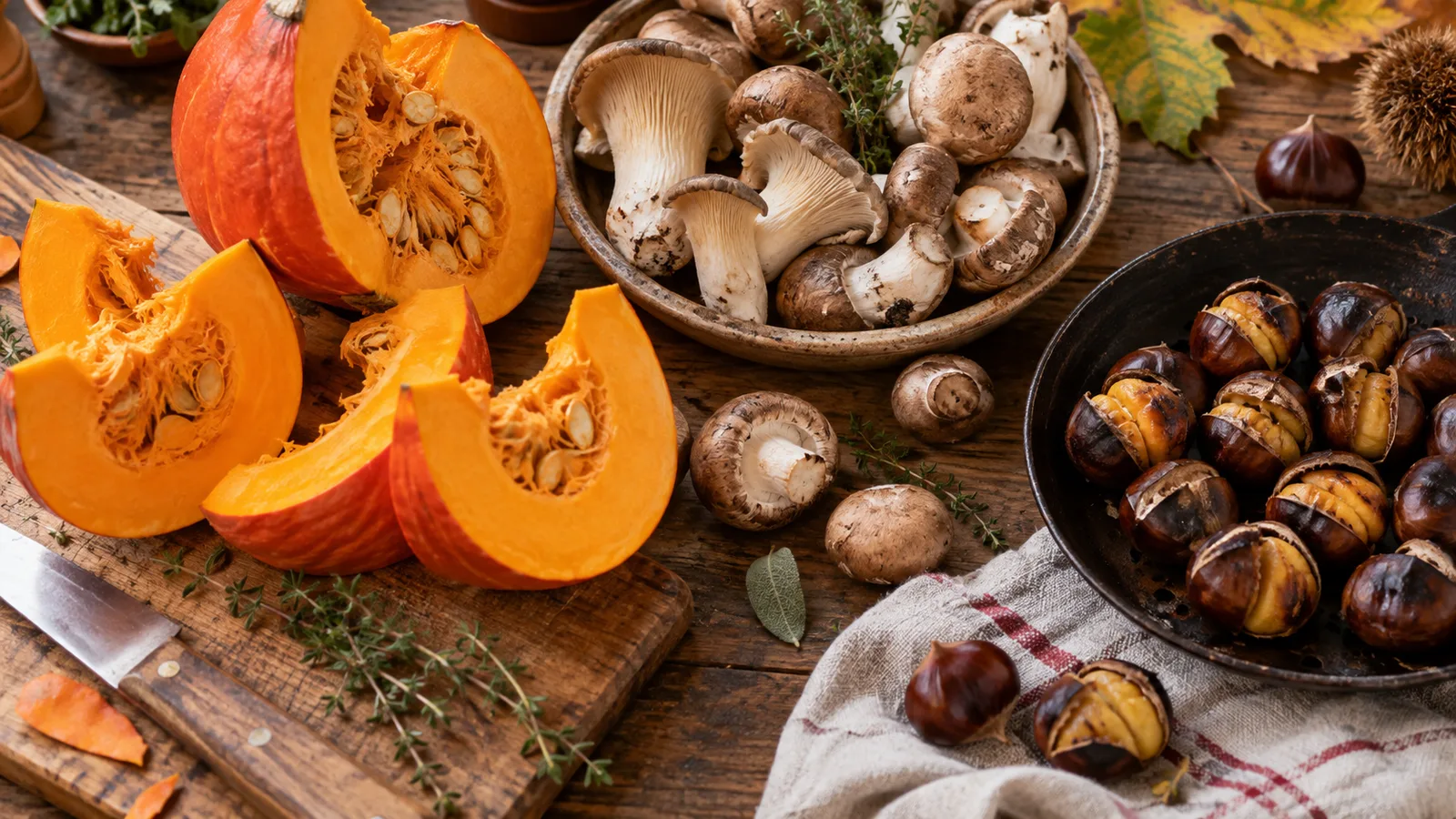
Pumpkin, mushrooms and chestnuts: healthy – but for very different reasons
The orange fruit vegetable, edible mushrooms and sweet chestnuts share a season, but hardly a nutritional profile. Variety, portion size and preparation are what count.
In autumn, pumpkin, mushrooms and chestnuts sit side by side on market stalls and menus. Nutritionally, however, they are not variations on the same theme. Pumpkin is a water-rich fruit vegetable, edible mushrooms form a biological group of their own, and chestnuts are starch-rich nuts. Anyone who lumps them together as a "superfood" overlooks the most important differences.
Pumpkin: plenty of volume, different values depending on the variety
Relative to its volume, pumpkin usually delivers little energy. Orange varieties contain carotenoids, from which the body can partly form vitamin A. The exact content varies greatly with variety, ripeness and preparation. Hokkaido, butternut and muscat pumpkin are therefore not nutritionally identical.
A light vegetable quickly becomes an energy-dense dish once plenty of cream, coconut milk, butter or cheese is added. That is not automatically unhealthy; it does, however, change the claim. A pumpkin soup is not low in calories merely because of its colour. Seeds and pumpkin seed oil, by contrast, are nutrient-rich but contain fat in concentrated form and therefore more energy than the flesh.
Mushrooms: light, aromatic – and not a meat substitute in themselves
Cultivated edible mushrooms such as button mushrooms or oyster mushrooms contain a lot of water and comparatively little energy. They bring aroma and, depending on the species, fibre, B vitamins and minerals. Their protein content does not automatically make an ordinary portion an equivalent substitute for pulses, eggs, dairy products, fish or meat. What matters is the meal as a whole.
Here, too, the kitchen shapes the outcome: mushrooms soak up fat when fried, cream sauces raise energy and saturated fat, and heavily salted ready meals often deliver more salt than expected. When well cooked through, many edible mushrooms are easier to digest than raw.
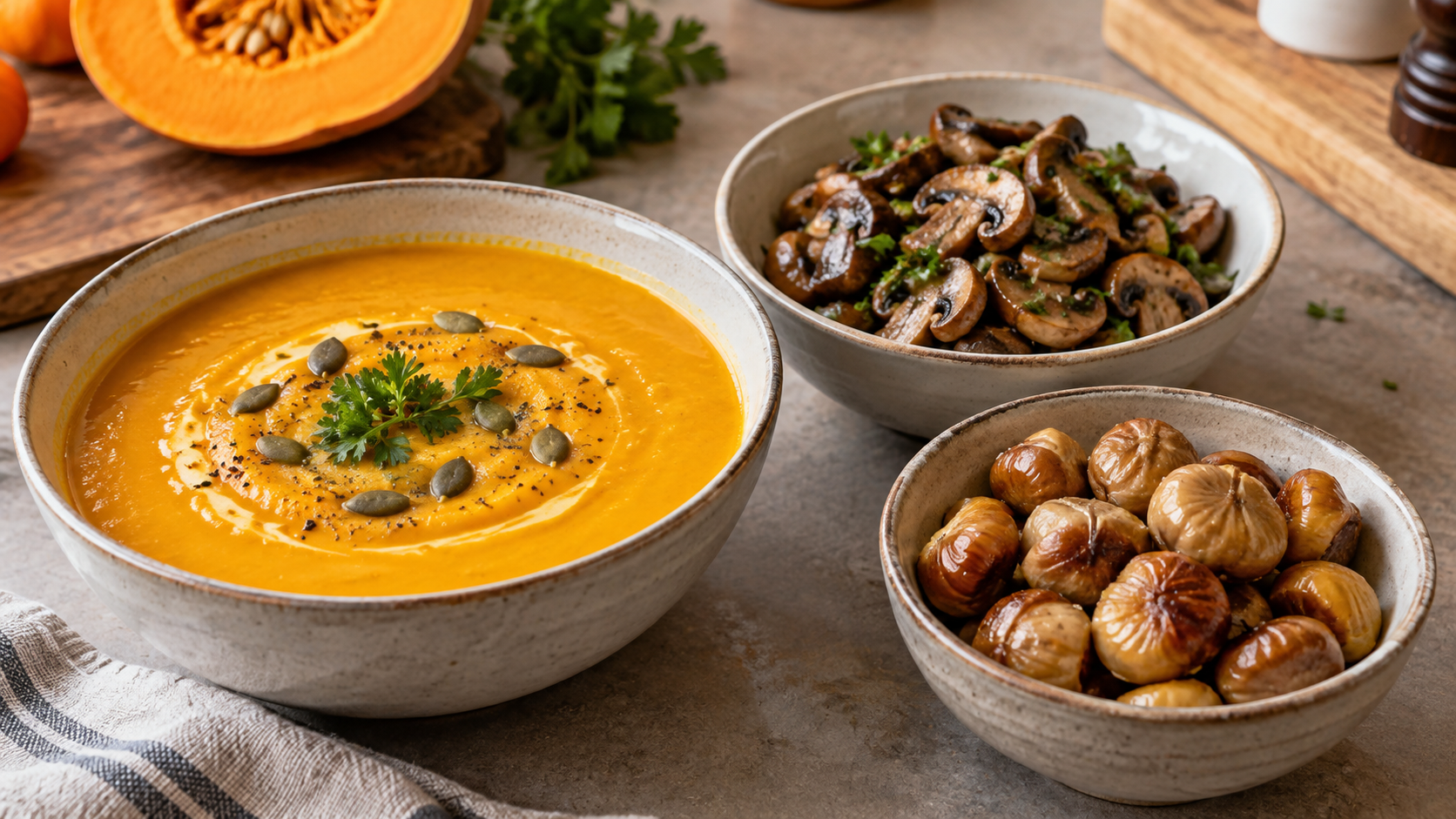
Preparation and portion size help determine how balanced an autumn dish is. Image: JournalPlus / AI-generated symbolic image.
Chestnuts: the starchy exception among nuts
Sweet chestnuts contain considerably more carbohydrates and less fat than almonds, walnuts or hazelnuts. In their role they resemble a starchy side dish rather than a nut. A portion of roasted chestnuts can therefore partly replace bread, potatoes or rice – it is not merely a small nut decoration.
Chestnuts provide fibre and are naturally gluten-free. It does not follow that every chestnut product is light. Vermicelles, glazed chestnuts or sweet purées often contain added sugar and are served with cream. To judge the fruit, one has to distinguish between roasted chestnuts and dessert.
"Strengthens the immune system" is too simple
None of the three foods prevents colds on its own. A varied diet supports the normal functioning of the body, but individual vitamins or plant compounds cannot be seriously sold as a protective shield. The Federal Food Safety and Veterinary Office (BLV) recommends that adults follow a varied diet with plenty of vegetables and fruit, wholegrain and potato products, and suitable protein sources. Pumpkin, mushrooms and chestnuts can fill various gaps within it.
In practice that means: think of pumpkin as the vegetable portion, mushrooms as an aromatic addition and chestnuts as a carbohydrate source. Combined with pulses, egg, a dairy product or another protein source, the result is more likely to be a complete main meal.
With wild mushrooms, safety comes before nutritional value
Self-collected mushrooms are a special case. Photos, apps and internet forums are no substitute for reliable identification. Toxic species can resemble edible ones, and with some poisonings severe symptoms appear only after a delay. The association of official mushroom inspection bodies runs inspection points; if poisoning is suspected, Tox Info Suisse is responsible on the emergency number 145.
The healthiest autumn choice is therefore not a winner picked from three foods. It is the fitting use: vegetable volume from pumpkin, aroma from mushrooms, filling starch from chestnuts – and a preparation that suits the rest of the plate.
Preparation plays its part
The health value does not end with the raw product. Pumpkin delivers volume and beta-carotene with little energy, but in a heavily sugared soup or a dessert it can become a side note. Chestnuts contain more starch and energy, yet also fibre and minerals; they are more a filling side dish than a snack without reference to quantity. Mushrooms deliver little energy, but with plenty of butter or cream they become considerably richer. For all three the same applies: a varied meal with vegetables, a protein source and a suitable portion says more than the label "superfood".