
Respiratory viruses 2025/26: why no single pattern fits
The FOPH report on the 2025/26 season shows different timing patterns for influenza, Covid-19 and RSV. For prevention and care, that difference is decisive.
The 2025/26 respiratory season cannot be explained with a single curve. The annual report from the Federal Office of Public Health (FOPH) describes an influenza wave that started as early as November and peaked around the turn of the year. SARS-CoV-2 and respiratory syncytial virus (RSV), by contrast, followed their own timing patterns. Anyone who lumps all three pathogens together under the umbrella term “cold season” therefore misses the decisive point: for doctors’ practices, hospitals and care facilities, the peaks in demand do not necessarily occur at the same time.
Three pathogens, different trajectories
According to the FOPH report, SARS-CoV-2 was mainly active in autumn, while RSV reached its peak later in winter. Influenza can cause severe illness, particularly in older people, pregnant women, people with chronic conditions and small children. RSV is especially relevant for infants as well as for older people and those with pre-existing conditions. Covid-19, in turn, remains on the radar all year round, even though its activity changes with the seasons.
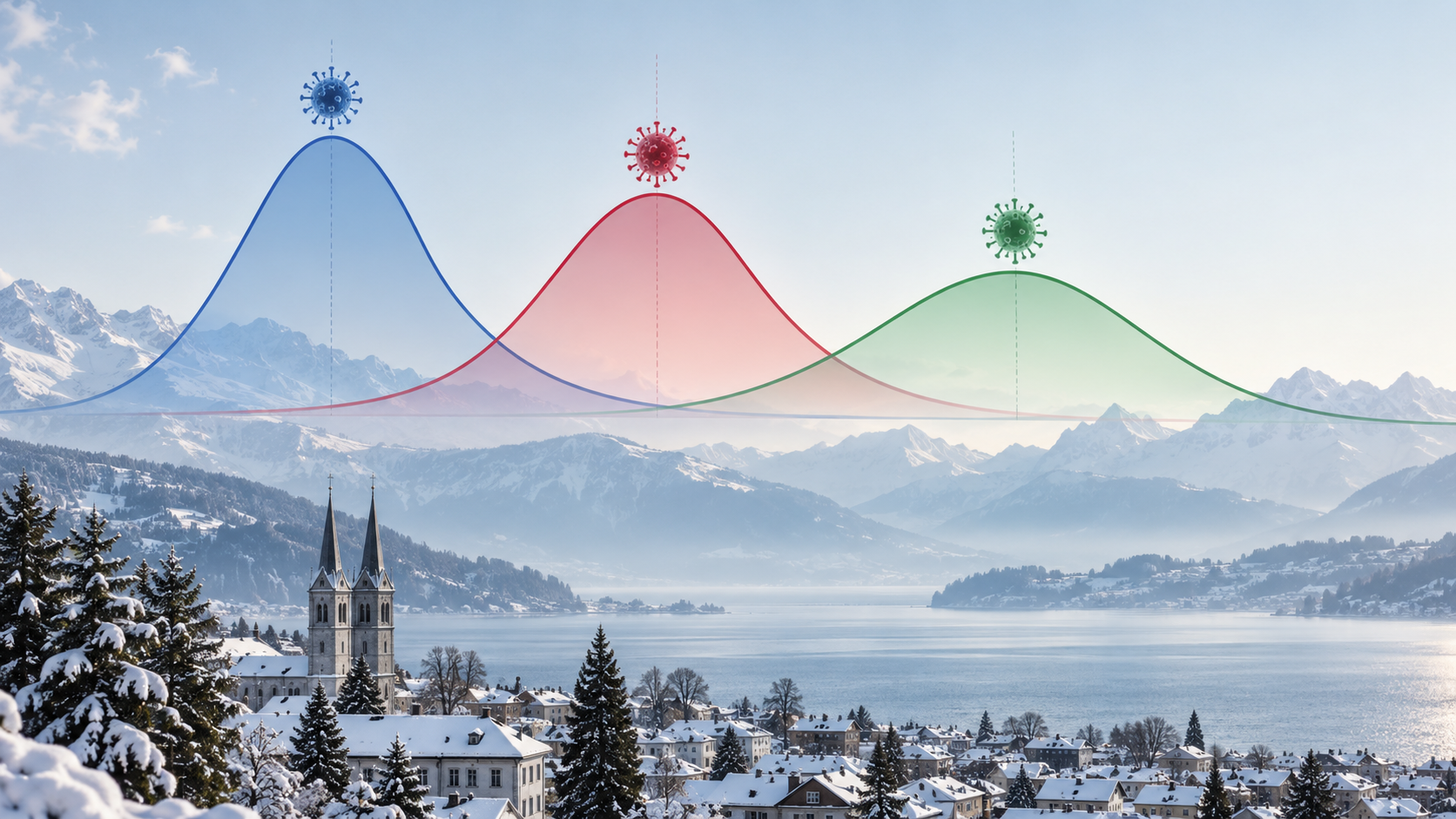
This staggered timing has practical consequences. Staff planning, testing capacity and protective measures must remain flexible. A declining influenza curve does not automatically mean that the entire respiratory burden is over. Conversely, a high number of positive laboratory results does not directly show how many people in the general population have fallen ill.
What the data actually measure
The FOPH combines several surveillance systems. These include laboratory results, reports from primary care and other epidemiological indicators. These systems illuminate the same situation from different angles: laboratory data show which pathogens are found in the samples tested; consultation data reflect how many people seek medical help for typical symptoms.
None of these series is a complete count of all infections. Testing behaviour, doctor visits and reporting practice all influence the measured values. Many cases remain invisible, especially when illness is mild. The value of surveillance therefore lies less in an ostensibly exact total number than in identifying trends, turning points and unusual shifts.
An early influenza wave is not yet a causal analysis
That influenza began early is a robust finding of the report. Why it circulated earlier than expected cannot, however, be deduced from that alone. Weather, travel patterns, existing immunity, virus variants and population behaviour may interact. Anyone who declares a single factor to be the cause goes beyond what the data support.
For prevention, the timing is nonetheless relevant. Vaccination campaigns and information for risk groups must reach people before transmission rises sharply. An early wave shortens that window. At the same time, individual decisions — for example about vaccination or about protecting particularly vulnerable relatives — should be based on medical advice and the current FOPH recommendations, not on a retrospective season curve alone.
What this means for Switzerland
Switzerland has a dense healthcare system, but not unlimited reserves. If different pathogens cause high consultation and hospitalisation numbers one after the other, the strain can stretch over months. Especially in primary care and in care institutions, continuous assessment of the situation is therefore more important than the search for the one “peak” of the season.
The distinction is also useful for individuals. Similar symptoms usually do not allow a reliable self-diagnosis. With severe symptoms, shortness of breath or increased personal risk, medical advice is called for. In everyday life, well-established measures remain sensible: stay at home when ill, ventilate indoor spaces regularly, pay attention to hand hygiene, and take extra care in close contact with particularly vulnerable people.
The most important insight from the FOPH report is therefore not a ranking of viruses. It is that a season can consist of several epidemics offset in time. Good preparation therefore does not begin with a blanket forecast, but with the ability to keep interpreting new data and to adapt measures to the actual course.


