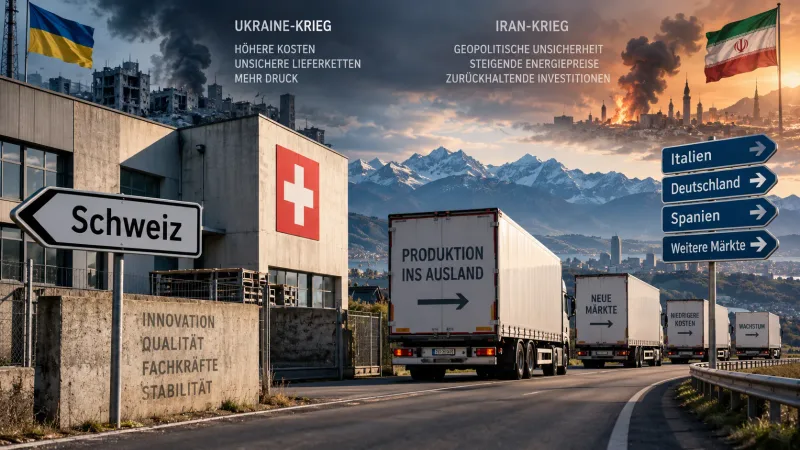
Swiss Post to Cut Up To 110 Jobs – Declining Mail Pressures Group
Mainly management and support roles will be eliminated by end of 2027. Swiss Post remains profitable, but traditional letter business shrinks.
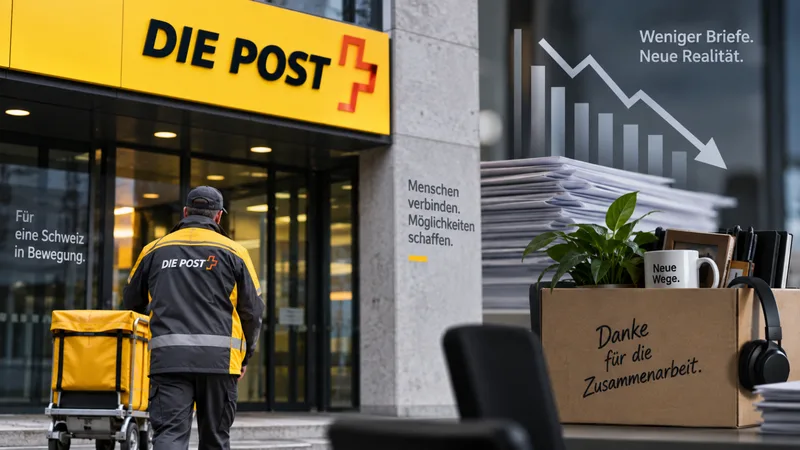
Letters Continue to Lose Importance
The core of the problem lies not in a short-term slump, but in a long-term structural change. Fewer and fewer people and companies send letters. Communication and payment transactions are increasingly shifting to digital channels.
In the first half of 2026, Swiss Post's letter volume decreased by 5 percent, according to its own figures. Over ten years, the decline is already 38 percent. At the same time, large parts of the infrastructure remain: letters must still be sorted, transported, and delivered – even as the number of consignments falls.
The result is an economic problem: the costs of basic services are becoming increasingly difficult to finance through traditional letter volumes.
Swiss Post Still Makes a Profit
The job cuts are therefore not synonymous with an acute corporate crisis. In the first half of 2026, Swiss Post achieved an operating profit of 173 million Swiss francs. In the same period of the previous year, this figure was 118 million Swiss francs.
The improved result also shows that the group can partially offset the decline in the letter business with other areas. These include the parcel business and PostFinance.
The challenge is therefore less about whether Swiss Post still earns money today. The crucial question is rather how it can finance its basic services in the long term, if a traditional core business continues to shrink.
Savings Focus on Areas Least Impacting Customers
This is precisely where the new savings program begins. Swiss Post primarily aims to reduce costs in areas that, according to their statement, have no direct impact on customers.
Therefore, management and support functions are affected. Employees in delivery, in branches, and in customer services should not be affected by the current cuts.
Swiss Post describes the measures as a contribution to securing its financial self-sufficiency in the long term. The federal government-owned group wants to continue financing public services without taxpayer money.
“We are responsible for ensuring that Swiss Post remains relevant, efficient, and financially self-sufficient in the future.”Pascal Grieder, Group CEO of Swiss Post
Postage Also Increases
In parallel with the job cuts, Swiss Post will again increase prices for letters starting January 1, 2027. A standard A-Post letter will then cost 1.40 Swiss francs instead of 1.20 Swiss francs. For a B-Post letter, 1.10 Swiss francs will be charged instead of 1 Swiss franc.
Swiss Post also justifies the price adjustment with the long-term declining letter volume and rising costs for transport, sorting, and delivery. The goal is to continue ensuring basic services without taxpayer money.
The group is thus pursuing several paths simultaneously: higher prices, more efficient internal processes, growth in other business areas, and lower internal costs.
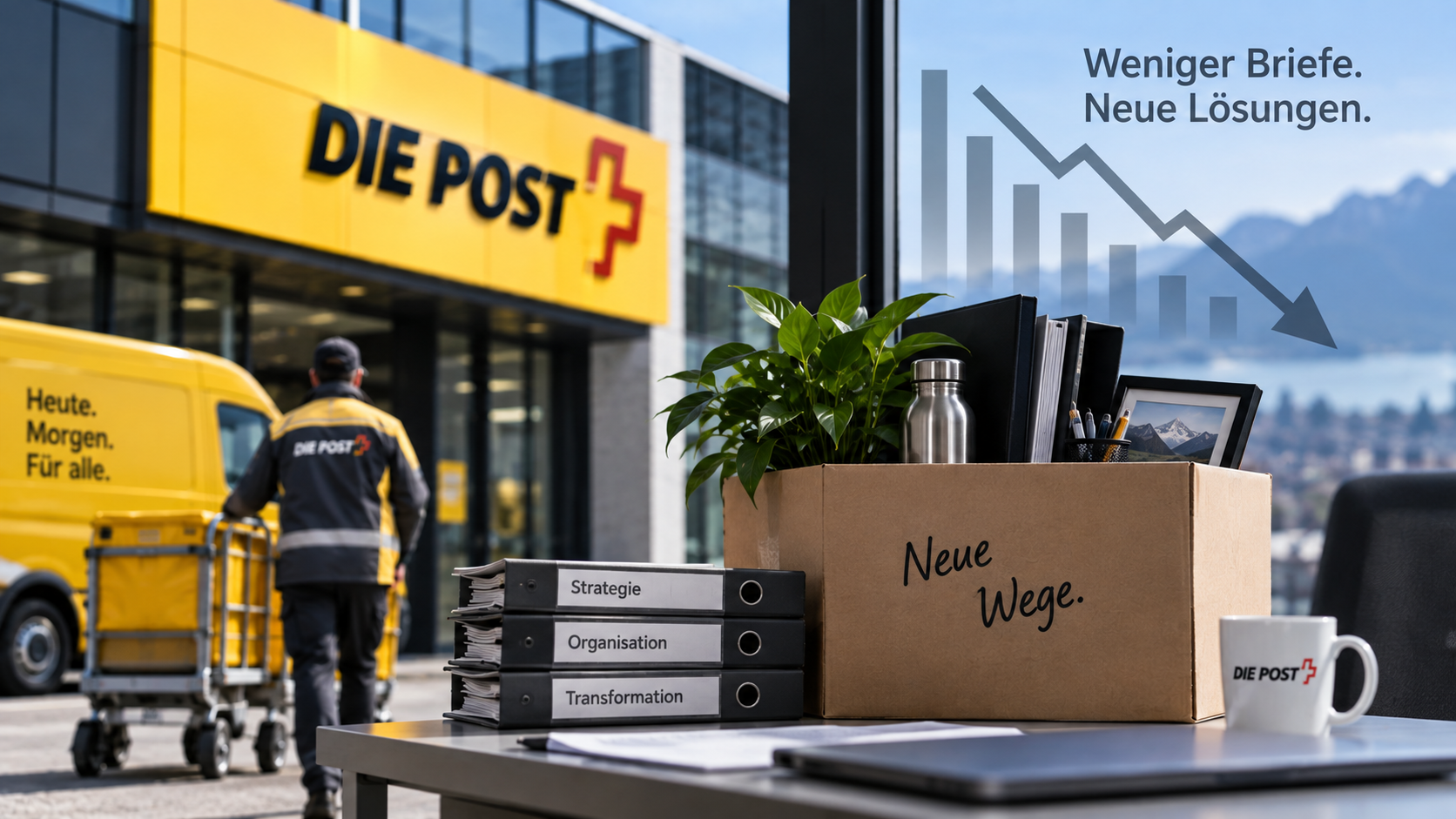
Up to 110 Positions – Not Necessarily 110 Redundancies
The figure of 110 is an upper limit. The exact number of employees who will actually lose their jobs is not yet determined.
Swiss Post aims to absorb part of the cuts through natural fluctuation and ordinary as well as early retirements. Where redundancies become necessary, the reduction will occur within the framework of existing social partnership agreements and the social plan.
Swiss Post has not yet specified which concrete organizational units and locations will be affected.
Staff Associations Criticize the Cuts
The Syndicom union and the Transfair staff association criticize the measures. They also view the cuts against the backdrop of other restructurings at Swiss Post.
Transfair warns against allowing redundancies to become the norm during reorganizations. Staff associations demand, among other things, stronger efforts in retraining, further education, and internal re-employment.
The criticism also targets the justification for the cuts: Swiss Post significantly increased its operating profit in the first half of 2026. From the perspective of the staff associations, the question therefore arises how much costs actually need to be reduced and where within the group savings are possible.
Current Cuts Are Not Isolated
Swiss Post already realigned its IT organization this year. Initially, about 60 positions in Switzerland were mentioned there. After the subsequent consultation process, Swiss Post anticipated a maximum of 40 deleted positions and 20 changes to employment contracts in August.
The current cut of up to 110 positions is distinct from that. Together, however, the measures show that Swiss Post is adapting its internal structures to a changed business model.
The company faces a fundamental conflict of objectives: basic services must continue to be guaranteed nationwide, while Swiss Post must adapt its costs to a business environment where traditional letters yield less and less revenue.
The Real Challenge Lies Long-Term
Current figures do not indicate a group on the verge of an immediate financial crisis. Operating profit has risen, while other business segments are offsetting part of the decline in the letter business.
However, the structural trend is clear: if letter volume continues to fall, it will become more difficult to finance the existing infrastructure and statutory basic services with current revenues.
Swiss Post is therefore trying to keep the consequences as far away from customers as possible. Whether higher prices, new business segments, and internal savings will be sufficient in the long term depends on how quickly the traditional letter business continues to shrink.
For Swiss Post, This Marks a Restructuring, Not a Crisis Year
Against this background, the reduction of up to 110 jobs is less a sign of an immediate financial collapse than of a large state-owned company adapting to permanently changed demand.
Swiss Post continues to earn money. At the same time, its traditional core business loses volume year after year. Exactly this combination explains the current job cuts: the group must reduce costs today so that basic services remain financeable even when significantly fewer letters are sent.
How many redundancies will actually be necessary and whether further restructurings will follow should become clear by the end of 2027.