Switzerland's Religious Landscape: No Religion Is the Biggest Group
Since 1970, the share of people with no religious affiliation has risen from 1 to around 36 percent. At the same time, the BFS data show that affiliation, belief and practice are not the same thing.
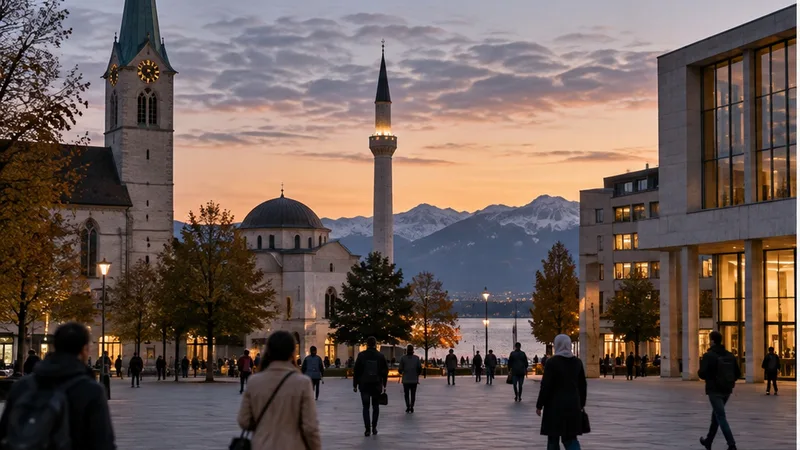
In 1970, Switzerland's religious landscape was almost split in two. Around 49 percent of the population were Reformed, about 47 percent Roman Catholic. Only around one percent stated no religious affiliation. More than five decades later, the confessionally shaped Switzerland has become a markedly more secular and more diverse society.
The latest overview from the Federal Statistical Office (BFS) combines censuses, the structural survey and the survey on language, religion and culture. For 2023 it shows: 31 percent of the permanent resident population aged 15 and over belonged to the Roman Catholic Church, 19 percent to an Evangelical Reformed national church and around 36 percent to no religion. Other Christian communities accounted for 6 percent; Muslim communities and those emerging from Islam also for 6 percent.
The biggest shift lies outside the churches
The most striking shift is the rise of people with no religious affiliation. Their share grew from around one percent in 1970 to eleven percent in 2000 and to around 36 percent in 2023. Since 2022, this group has been larger than the Roman Catholic population.
At the same time, the two large national churches shrank at different rates. The BFS puts the decline of the Catholic community over roughly five decades at a good third. The Reformed community lost around 60 percent of its former share. This is more than a series of church departures: generational change, immigration and the passing on of religious affiliation within families also shape the long-term structure.
The data demonstrate the change, but they do not supply a cause for every possible explanation. People who turn their back on a church do so for different reasons. In the 2024 BFS survey, people who had given up their religion most frequently cited a missing or lost faith (28 percent) and rejection of statements made by their religious community (26 percent). Taxes or financial contributions were cited by 12 percent.
Pluralisation is more than secularisation
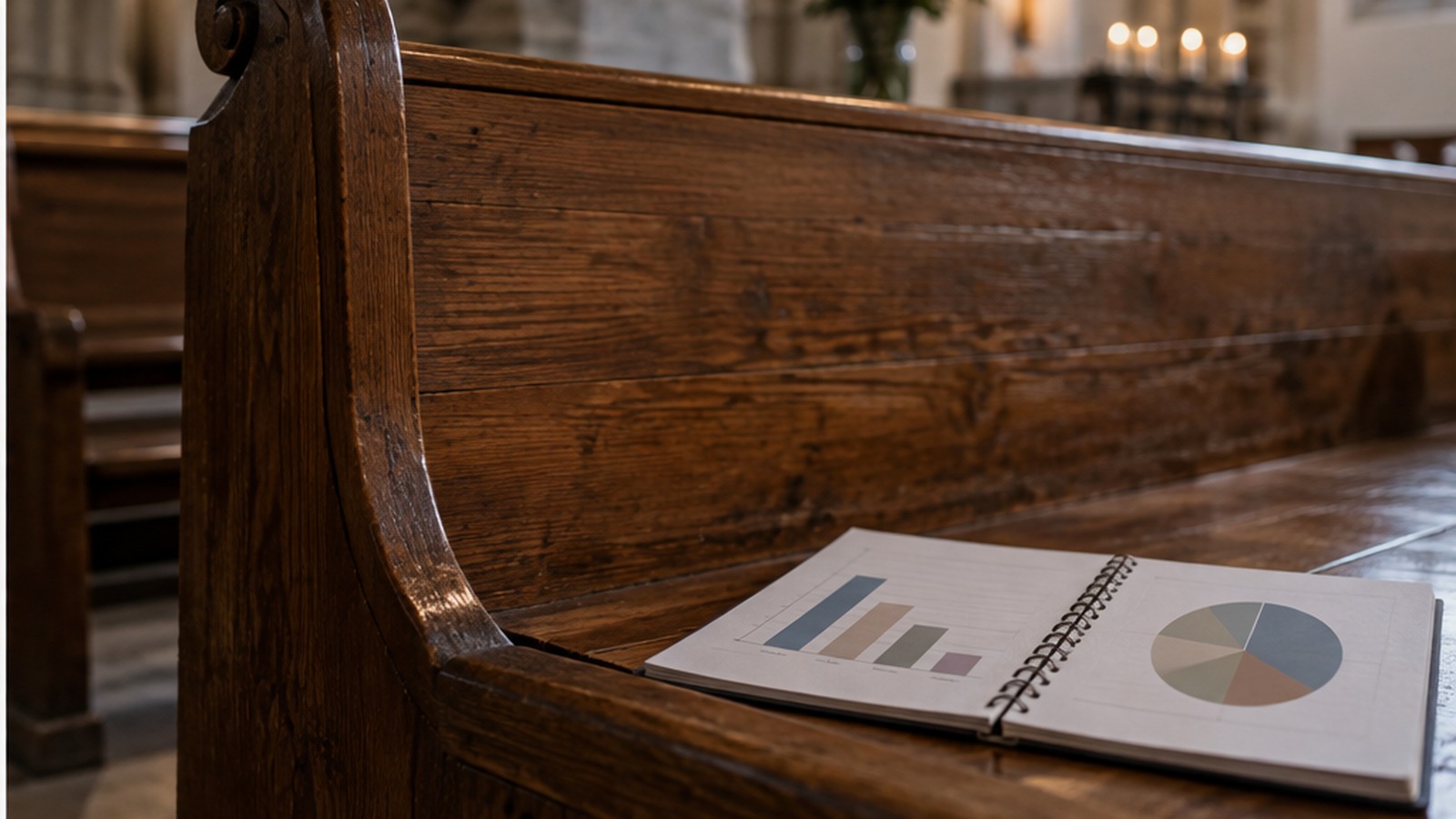
While the national churches lose share, it is not only the group without a religion that is growing. According to the BFS, Muslim communities rose from 0.2 percent in 1970 to 4 percent in 2000 and around 6 percent today. Other Christian and further religious communities complete the picture. Switzerland is therefore becoming more secular and more plural at the same time.
This development is relevant for politics and institutions. Recognition under public law, religious education, chaplaincy in hospitals and prisons, or the use of religious buildings were long shaped in an environment dominated by two large churches. Falling membership shares do not automatically resolve these questions, but they change the weights.
Affiliation is not the same as belief
The statistics must not be read as a measure of faith. A formal or self-reported religious affiliation says little about how often someone prays, attends services or understands themselves in spiritual terms. Conversely, people with no religious affiliation can hold religious or spiritual ideas.
The 2024 survey shows this clearly. 49 percent of the population took part in a religious service or a religious event never in the twelve months before the survey; in 2019 the figure was 34 percent. At the same time, in 2024 a total of 53 percent described themselves as religious, spiritual or both. 47 percent saw themselves as neither religious nor spiritual.
Within the religious groups, too, the differences are large. Age, personal biography and migration history are linked to practice and affiliation. Such correlations must not, however, be treated as a simple cause.
A break in the measurement method
The long comparison has a methodological limit. Until 2000, the figures rest on censuses; since 2010 they come from samples of the structural survey and refer to the permanent resident population aged 15 and over in private households. Small changes are therefore less robust than the decades-long trend.
This trend is clear: religious affiliation is losing importance as a taken-for-granted characteristic, while the spectrum of ways of life is becoming broader. For churches and the state, this does not follow a single political answer. Rather, the data require that affiliation, belief and social role be distinguished more precisely in future.