Tigray and the Red Sea: Why the Risks Must Be Assessed Separately
The UN reports new fighting in northern Ethiopia. A direct war over the Red Sea is not documented – but regional tensions and trade risks remain relevant.
The situation in northern Ethiopia has deteriorated again. In late September, the UN Secretary-General reported intensified fighting in and around Tigray, the occupation of three airports and a spread of violence into neighbouring areas. This is a serious humanitarian and regional crisis. What is not documented, however, is the far-reaching claim that the Tigray conflict has already spread directly to the Red Sea.
For a sober assessment, three risks must be kept apart: the fighting and its consequences for civilians in northern Ethiopia, the tensions between Ethiopia, Eritrea and Egypt, and the separately existing insecurity on key shipping routes in the Red Sea. They influence one another politically. But they are not the same event.
What is documented in northern Ethiopia
On 23 September, the United Nations warned of a rapidly deteriorating situation. It pointed to reports of intensified fighting in and around Tigray, the occupation of the airports of Mekelle, Axum and Shire, and a spread of hostilities into neighbouring regions. The UN called on all parties to de-escalate, to protect civilians and to allow unhindered humanitarian access.
A week later, the UN Resident Coordinator in Ethiopia stated that people who had already been displaced by earlier fighting were particularly at risk, while at the same time new displacements were occurring. Aid organisations reported substantial obstructions to their work between 2025 and 2026. According to the UN, armed groups seized at least ten humanitarian vehicles, only two of which were returned later.
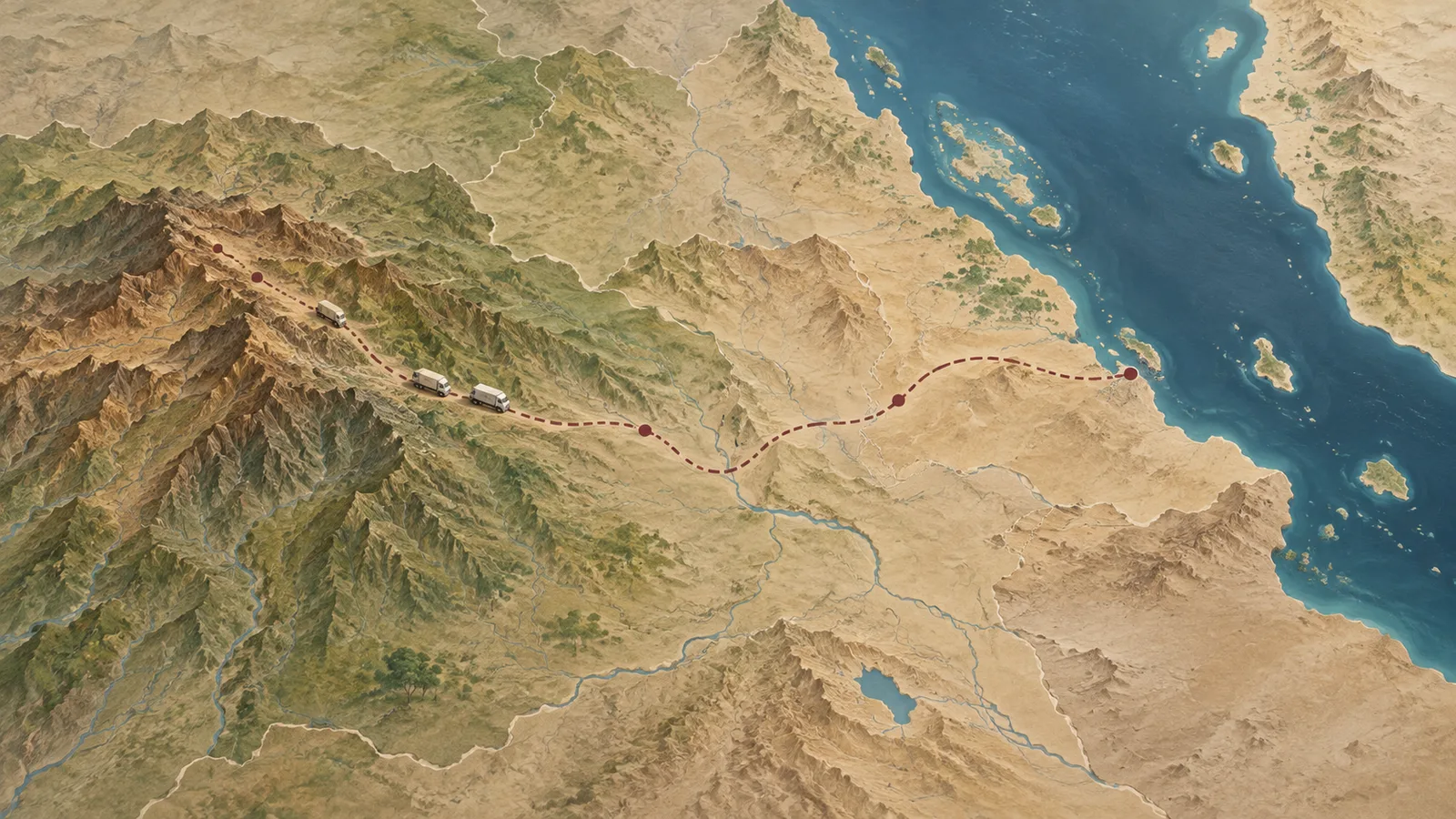
The everyday consequences are equally concrete: roadblocks, interrupted telephone and internet connections and cancelled flights hamper the supply of people in need. The UN also reported a drone strike on a truck carrying food aid for displaced people. Who was responsible is not conclusively attributed in the cited UN statements. That is precisely why reporting must not present suspicions as confirmed attribution.
Regional tension is not a confirmed joint front
At the same time, the African Union is observing heightened tensions between Ethiopia, Eritrea and Egypt. In its statement of 1 October, it called on all three states to exercise the utmost restraint, to keep communication channels open and to pursue diplomatic dialogue. Three days later, the organisation clarified that its appeal had followed diplomatic expulsions from the three capitals and was expressly not meant to assign responsibility to any neighbouring state.
That is an important pointer for journalistic assessment. There are regional tensions, and they can reinforce one another. But the official statements do not support a confirmed claim that the war in Tigray has already turned into a war over the Red Sea.
A joint communiqué issued by the African Union, the European Union and the UN on 20 September also treats the two issues separately: it expresses concern about the escalation in the Red Sea and at the same time supports dialogue and the implementation of the Pretoria Agreement between the Ethiopian government and the TPLF. The wording links the crises at regional level, but it does not assert a direct military causal chain.

Why the Red Sea still counts
The Red Sea remains significant for world trade. The UN trade body UNCTAD documented that security risks on the route have already led to detours via the Cape of Good Hope, longer transport routes and higher costs. From this, however, it cannot be concluded that every escalation of violence in Tigray immediately leads to a new disruption of shipping.
For import-dependent companies, concrete information on routes, insurance, freight capacity and inventories therefore matters more than sweeping alarmist terms. For consumers, an automatic forecast of rising prices would be unsound: whether a geopolitical crisis affects an individual product depends on the supply contract, the transport route, existing stocks and available alternatives.
What Switzerland can take from this
For travellers, the situation is directly relevant. The FDFA advises against travel to Tigray and points to armed clashes, impaired transport routes and possible disruptions to air, internet and mobile connections. That is concrete safety information, not an abstract geopolitical debate.
For Switzerland as a humanitarian actor, access to protection and aid is the primary concern. Swiss cooperation in Ethiopia supports multilateral organisations such as the ICRC, UNHCR and the World Food Programme, among others. When roads, communications and aid transports fail, that access becomes the decisive question.
The defensible conclusion is therefore this: northern Ethiopia needs de-escalation and humanitarian access. The tensions in the Horn of Africa deserve attention. But anyone who compresses Tigray, relations with Eritrea and shipping in the Red Sea into a single narrative of war does not make the situation more understandable, but less accurate.
Sources
- UN: Statement by the Secretary-General on the situation in northern Ethiopia, 23 September 2026
- UN: Humanitarian situation in northern Ethiopia, 30 September 2026
- African Union: Call for de-escalation between Ethiopia, Eritrea and Egypt, 1 October 2026
- African Union: Clarification of the statement of 1 October 2026
- AU, EU and UN: Joint communiqué on the situation in the Horn of Africa and the Red Sea
- FDFA: Travel advice for Ethiopia
- UNCTAD: Review of Maritime Transport 2025