WHO recommends two Ebola vaccine candidates for Congo trial
The Oxford and Moderna preparations target the Bundibugyo virus. National authorisations are still pending; results are expected in early 2027.
Two vaccine candidates developed specifically against the Bundibugyo virus are to be tested in an ongoing trial in the Democratic Republic of the Congo. A group of experts convened by the World Health Organization (WHO) recommended their inclusion, the organisation announced on 4 November. National authorisations are still required. This does not constitute approval for general use.
They are ChAdOx1 from the University of Oxford and the Serum Institute of India, and mRNA-1469 from Moderna. The recommendation is based on preclinical and early clinical data. Whether the preparations actually protect against disease in the current outbreak is now to be examined under conditions in which people are exposed to the virus.
A known Ebola vaccine is not sufficient as proof
No vaccine against Bundibugyo has been approved so far. Ervebo, an already approved Ebola preparation, targets a different pathogen, the Ebola virus formerly known as the Zaire Ebola virus. Its protection cannot simply be transferred to Bundibugyo. Ervebo is therefore also being investigated in the Tumaini trial for its effect against this pathogen.
The trial began on 23 October in Bunia in Ituri Province with the vaccination of the first participant. According to the funding research coalition CEPI, it is a phase II/III trial. The Congolese Institut National de Recherche Biomédicale and the University of Antwerp lead and run it jointly; the country's Ministry of Health holds national leadership and oversight.
Contacts form the vaccination rings
Tumaini is designed as an adaptable platform. Several preparations can be investigated in parallel within the same trial framework. The researchers assess safety, immune response and protective effect. New candidates are selected according to a prioritisation procedure; changes to the trial protocol must be approved by the Congolese medicines authority ACOREP.
For the investigation, contacts of confirmed patients are enrolled in so-called vaccination rings. The WHO already reports four such rings, with more being prepared. Contacts of people who have died of Ebola are also recorded. This approach focuses research on people for whom infection is possible, instead of vaccinating an arbitrary population group.
CEPI also describes the inclusion of pregnant women and children aged twelve and over; with Ervebo, children from one year of age can take part. The age limits are therefore not the same for all candidates. An extension to younger children for certain preparations is still being discussed. The trial is intended to provide data for groups that were often under-represented in earlier studies.
What early studies can already examine
Health Canada authorised a phase I trial for Moderna's candidate on 30 July. This initially concerns safety in healthy participants, the appropriate dosage and possible side effects. It also measures whether the immune system produces antibodies against Bundibugyo. Participants are not infected with the disease-causing virus.
Such data are important but answer a different question than an efficacy trial during an outbreak. A demonstrable immune response does not yet mean that enough people are protected from the disease. Health Canada therefore stresses that further clinical trials are needed after the first phase before an application for marketing authorisation can be submitted. Even then, safety, efficacy and quality must be demonstrated.
Europe continues to assess the risk of infection separately
The outbreak remains a severe burden, particularly for the affected African regions. The European Centre for Disease Prevention and Control (ECDC) reported 10,532 confirmed cases and 5,126 associated deaths for the Congo on 3 November. The figures are based on data up to 1 November and are continuously reviewed and reconciled.
The ECDC continues to assess the risk for the general population in the EU and the European Economic Area as very low. It expects that possible imported cases will be identified and isolated quickly. This assessment is not a statement about the efficacy of the new vaccines and is not an independent Swiss risk assessment.
The WHO expects results from the vaccine trial in early 2027. Until then, the two new preparations remain the subject of research. Early care, contact tracing and isolation are not replaced by the recommendation.
Sources
- WHO: recommendation for two further candidates, 4 November 2026
- CEPI: launch and structure of the Tumaini trial, 23 October 2026
- Health Canada: authorisation of the phase I trial for Moderna
- ECDC: situation and risk assessment of 3 November 2026
- WHO: questions and answers on Ebola vaccines
- AFP: WHO recommendation for further vaccine trials
- Title image: Thorkild Tylleskar, WHO headquarters in Geneva
- Title image licence: CC BY-SA 3.0
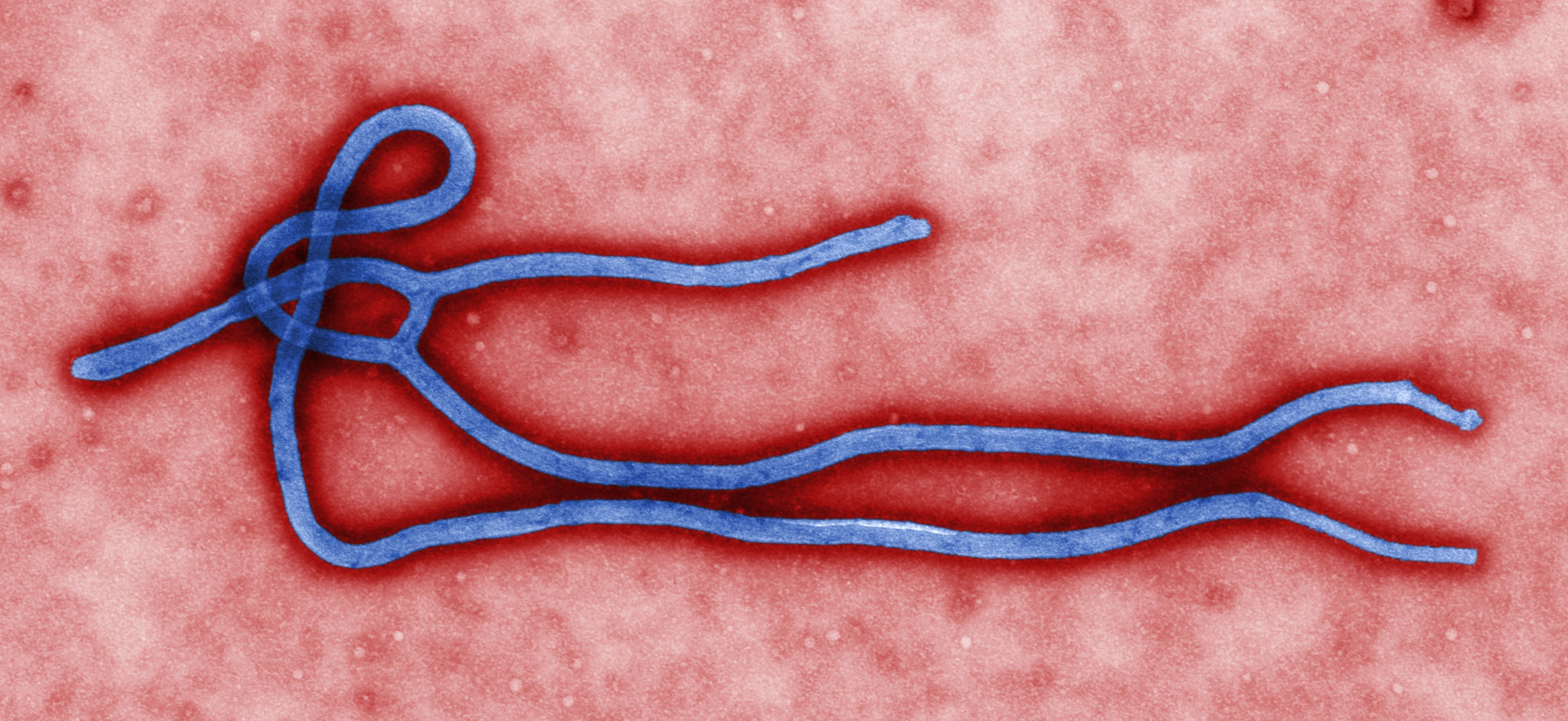
- Article image: CDC/Cynthia Goldsmith, Ebola virus particle, Public Domain