Xylitol and Heart Risk: What the New Study Really Shows
A Statistical Warning Is Not Yet Proof Against Sugar Substitute
Sugar-free is often quickly considered healthy in supermarkets. A new analysis questions this simple equation: individuals with particularly high xylitol levels in their blood experienced severe cardiovascular events more frequently in the following years. Xylitol, also known as birch sugar, is found in chewing gum, sweets, dental care products, and some low-carbohydrate foods.
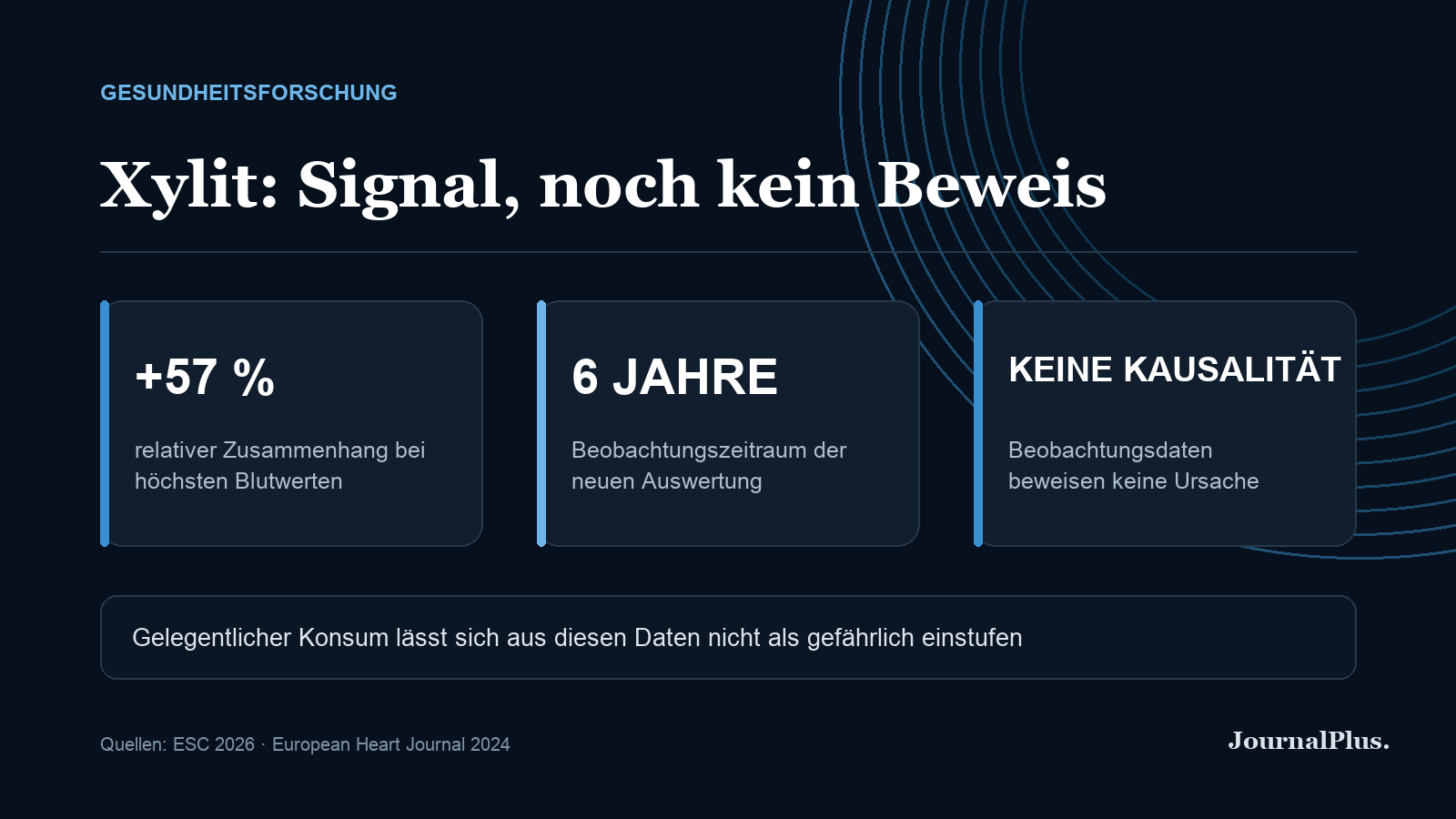
Data from large population groups was presented at the Congress of the European Society of Cardiology. People with the highest measured xylitol levels had a 57 percent higher risk for events like heart attack or stroke over six years, after statistical adjustment. A study already published in the “European Heart Journal” in 2024 also found a connection and indications that xylitol could influence platelet activity and blood clotting tendencies.
Correlation Is Not Causation
The 57 percent figure sounds dramatic, but it represents a relative risk. Without knowing the baseline risk, it does not indicate how many additional events actually occurred. Importantly, these are observational data. They show a statistical connection but cannot prove that ingested xylitol was the cause.
The body also produces xylitol itself. High blood levels could partly reflect metabolic processes or diseases that, in turn, increase heart risk. Researchers attempt to account for such differences statistically, but unknown influencing factors remain possible. Controlled long-term studies would be necessary to prove causality.
The Mechanism Is Plausible, but Still Open
Laboratory experiments and a small study with ten people showed temporarily high blood levels and increased platelet reactivity after xylitol consumption. This suggests a plausible biological mechanism. However, a group of ten people is too small to make statements about heart attacks in everyday life. Dosage, frequency, and individual pre-existing conditions require closer examination.
The product's form is also relevant. A sugar-free chewing gum delivers a different amount than a dessert where sugar has been largely replaced by xylitol. In larger quantities, xylitol can also cause bloating or diarrhea – an already known effect unrelated to the potential heart risk.
What Consumers Can Do
The data does not provide a reason to abruptly discontinue dental care products or medically recommended applications. Individuals who occasionally use xylitol-containing chewing gum cannot be classified as at risk based on these studies. People who consume large amounts of highly concentrated products daily should be more cautious – especially those with existing cardiovascular disease, diabetes, or an increased risk of thrombosis.
They can check the ingredient list, estimate daily intake, and discuss the topic during their next medical or nutritional consultation. "Sugar-free" should not be confused with "unlimited." At the same time, high sugar consumption remains a well-documented risk factor for overweight, diabetes, and dental damage; simply increasing sugar intake again would be the wrong response.
What This Means for Switzerland
Xylitol is approved in Switzerland as additive E 967. A single observational study does not automatically lead to a reassessment. However, relevant authorities should monitor the new evidence and, if necessary, review maximum quantities, warning labels, or the data basis. Manufacturers, in turn, can transparently state how much xylitol a serving contains.
For the Swiss public, a familiar but often uncomfortable recommendation remains: the overall dietary and risk profile is decisive, not a single ingredient. The study is a serious signal for further research. It is neither an acquittal for unlimited consumption nor proof that every xylitol-containing chewing gum endangers the heart.