China Focuses on Self-Sufficiency – Impact on Swiss Agri-Exports
Beijing aims to reduce reliance on agricultural imports. Switzerland feels the change.
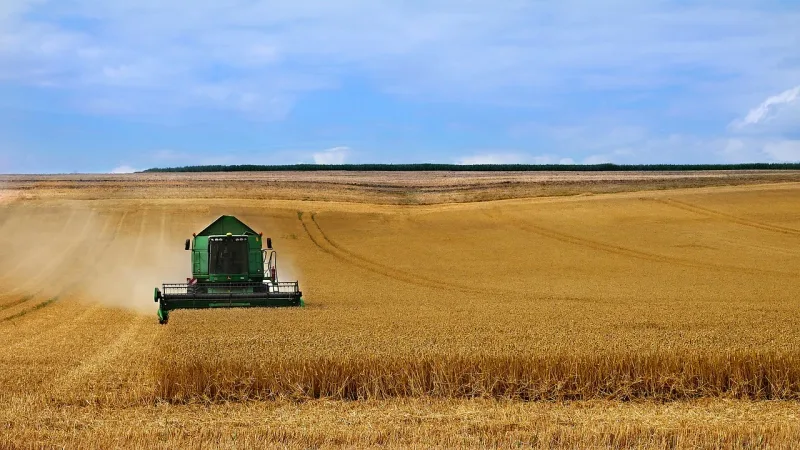
Beijing is pursuing a strategy to make its food supply more independent. The People's Republic of China has significantly expanded its grain production in recent years. At the same time, its reliance on imports has decreased. This has consequences for the global market. Swiss exporters also feel the changes, particularly concerning exports of cheese, chocolate, and dairy products. The structural shift in Chinese agricultural policy is a long-term process that will shape global trade.
One reason for this turnaround is trade conflicts with the USA. Beijing repeatedly faced pressure in recent years, having to circumvent tariffs on US soybeans and corn. The government drew conclusions: it massively increased agricultural subsidies. Investments flowed into irrigation systems, the cultivation of new varieties, and mechanization. In its new five-year plan, the Chinese leadership emphasizes food sovereignty as a central goal.
Why China Focuses on Domestic Production
The results are evident. China covers its own demand for wheat and rice almost entirely. The gap is significantly larger for soybeans: most of the soybeans processed in China still come from abroad. However, imports have slightly decreased in recent years. Reasons include changing demand for meat and the increasing use of alternatives like rapeseed or peas. The cultivation of oilseeds is intensifying in the eastern provinces. Securing food supply is a top priority for China, as emphasized by agricultural experts at the Chinese Academy of Agricultural Sciences.
This development impacts the global market. Countries that previously supplied large quantities to China are now seeking new buyers. Brazil and Argentina are pushing into other markets. This increases competitive pressure and can alter global prices for staple foods. For Europe, this presents opportunities but also risks: local farmers face additional competition. Furthermore, the European Union is also re-evaluating its subsidy and trade policies. The new conditions compel all market participants to adapt.
Global Agri-Trade in Flux
Switzerland is a relatively small player in agricultural trade. Its exports to China focus on premium products. Cheese, chocolate, and milk powder are sought after; Swiss-made baby food enjoys a good reputation. These products are less price-sensitive than bulk commodities. Therefore, a decline in Chinese staple food imports hardly affects Switzerland directly. More importantly, demand for high-quality food in China is growing. Switzerland Global Enterprise continues to assess China as an attractive market, despite the changing demand structure.
The Free Trade Agreement with China, which came into force in 2014, facilitates market access. Nevertheless, the agricultural sector remains sensitive. Technical trade barriers and certifications slow the flow of goods. The Federal Council closely monitors Chinese agricultural policy. In its agricultural policy, Switzerland focuses on quality over quantity. The industry is reacting: companies are investing in local production facilities and building partnerships with Chinese trading platforms. This strategy appears to be successful. Export figures for cheese and chocolate remain stable despite the uncertain global situation.
Swiss Specialties Remain in Demand
China's withdrawal from global agricultural trade would primarily affect developing countries reliant on exports. Switzerland advocates for open markets within the World Trade Organization. It supports food security projects in Africa and Asia. For the Swiss export industry, China remains an important, but not the only, market. Crucially, companies must flexibly adapt their strategies. The transformation in Chinese agricultural production is not a short-term phenomenon but a structural process. Switzerland should diversify its trade relations while simultaneously leveraging opportunities in the Chinese market.