Iran's UN Trip: What Lies Behind the US Shopping Rules
The delegation may travel to the General Assembly in New York. The shopping rules are older – and more narrowly drawn than talk of a shopping ban suggests.
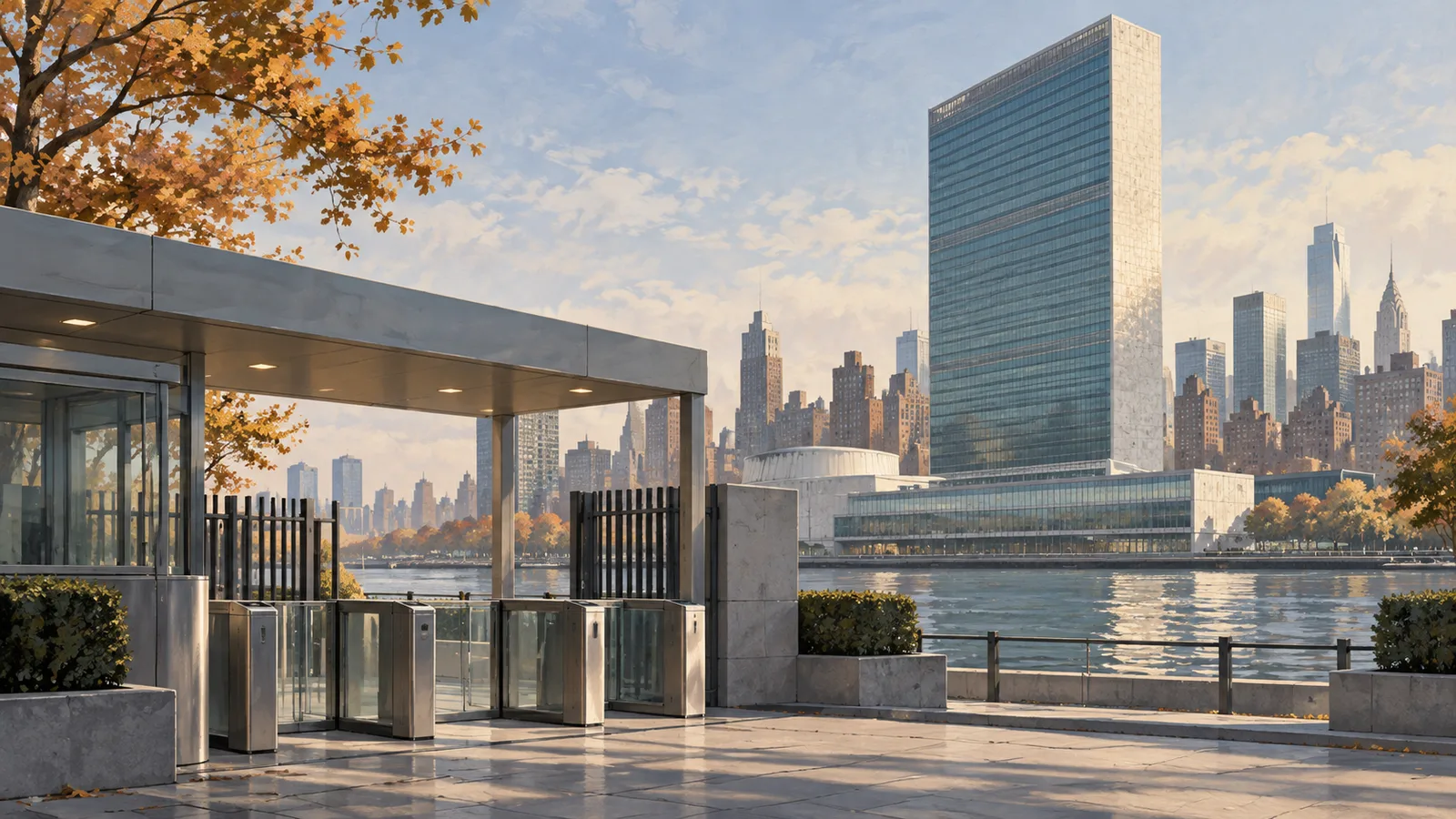
Iran's leadership may travel to the UN in New York – despite the war with the United States. Washington has allowed a core delegation to take part in the high-level week of the General Assembly, Reuters and AP reported on 17 September, citing the US State Department. According to their sources, President Masoud Pezeshkian and Foreign Minister Abbas Araghchi are among them. At the same time, the department announced travel and shopping restrictions.
The combination looks contradictory: access to the world organisation, but hurdles when shopping. In fact, two different sets of rules lie behind it. One is meant to enable diplomatic work. With the other, the US controls certain purchases by foreign representatives. Anyone speaking of a new blanket «shopping ban» omits important distinctions.
UN access is not a political invitation
The 1947 Headquarters Agreement between the UN and the US obliges American authorities not to obstruct access to the headquarters, among others for representatives of member states. Section 12 states explicitly that this rule applies regardless of the relations between the governments concerned and Washington. Under Section 13, required visas are to be issued free of charge and as promptly as possible.
Admitting a delegation therefore means neither political rapprochement nor approval of its government. It first of all enables participation in the work of an international organisation. That explains why representatives of an adversary state, too, can come to New York.
Unlimited freedom of movement does not follow from this, however. The agreement permits visas that are geographically restricted to the UN grounds, their immediate surroundings and necessary transit routes. Whether individual conditions obstruct protected diplomatic activity is a further question. An entry permit alone does not answer it.
The shopping rule dates from 2025
The legal basis of the shopping restrictions can be read more precisely than the current headline. An order issued by the US State Department on 18 September 2025, published on 23 September, requires prior authorisation for certain transactions. It covers the Iranian UN mission, its members, Iranian government representatives travelling for UN purposes and their family members.
Covered are both memberships in warehouse clubs such as Costco or Sam's Club and the purchase of goods from such stores. Defined luxury goods come on top. According to the order, third parties may also not provide the covered services contrary to these requirements. It is therefore a prohibition without prior authorisation, not an absolute ban on all purchases.
A separate definition lists, among other things, watches, handbags, jewellery, electronics and musical instruments. As a rule, a value of more than 1,000 US dollars before taxes per item applies. For private cars and other personal motor vehicles, the threshold is more than 60,000 dollars. The warehouse-club rule is to be distinguished from this: it is not limited to luxury items above these thresholds.
Washington wants to apply pressure – Tehran objects
The US State Department gave political reasons for the measures on 22 September 2025: government representatives should not use diplomatic travel to acquire goods that are not available to the Iranian population. In its statement at the time, it described the conditions as part of maximum pressure on Tehran. That is the US government's justification, not evidence of concrete luxury purchases planned by this delegation.
Iran objected even then. In a letter to the UN dated 23 September 2025, Ambassador Amir Saeid Iravani criticised the shopping restrictions as an interference with the privacy and dignity of the representatives. The geographic restrictions had also prevented participation in several meetings, he wrote. The document attests to Tehran's objections; it is not an independent ruling on the lawfulness of the measures.
What matters is whether diplomacy remains possible
For 2026, Reuters again reported restrictions and a smaller delegation than the previous year. The report, however, does not present complete current travel conditions. Earlier route restrictions therefore cannot simply be passed off as this year's requirement.
The distinction between bilateral policy and international cooperation is relevant for Switzerland as well. As a host state, it governs the privileges of foreign missions and international organisations through its own laws and agreements, as the FDFA explains. The US shopping rules are therefore not a practice that transfers automatically to Geneva.
The decisive test in New York is thus not access to an expensive watch. It is the question of whether the admitted delegation can actually carry out its diplomatic tasks. That is precisely the standard against which the concrete conditions must be measured.
Sources
- Reuters: Decision on the Iranian delegation, 17 September 2026
- AP: Visas for senior Iranian representatives, 17 September 2026
- UN/US: 1947 Headquarters Agreement, Article IV
- US State Department: Authorisation requirement for the Iranian mission, 2025
- US State Department: Definition of luxury goods, 2025
- US State Department: statement of 22 September 2025, documented by GlobalSecurity
- Iranian UN mission: letter of 23 September 2025, document A/80/402
- FDFA: Privileges and immunities, 1 February 2026