Montenegro's EU accession: 21 chapters are only a stage
At the Berlin Process, Montenegro's European path is in focus. The recent negotiating successes are documented – an accession date is not.
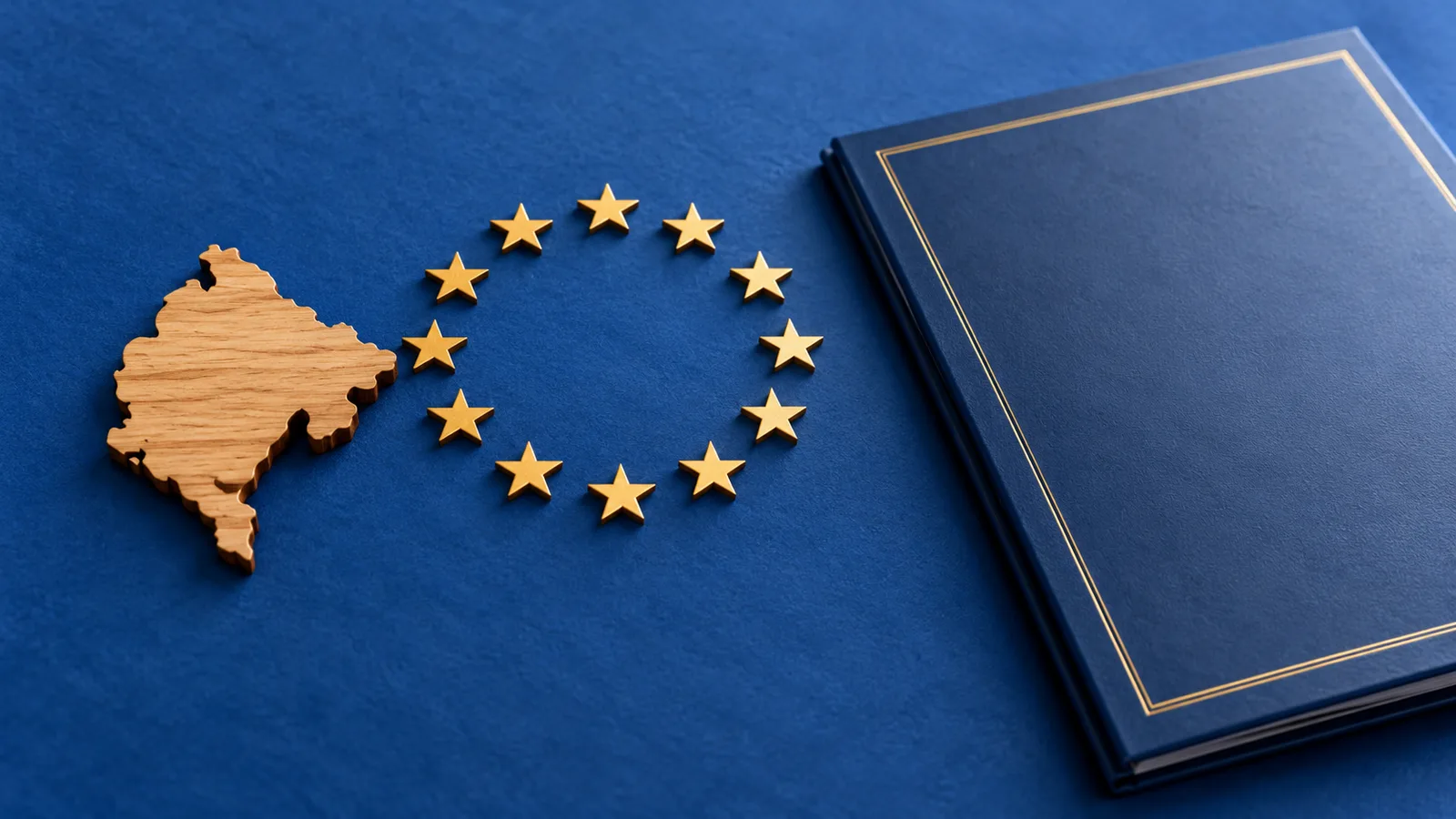
Montenegro is closer to its goal of EU membership than it was at the start of the year. On 12 October, the EU and the country provisionally closed three further negotiating chapters. According to the Council of the EU, 21 of the 33 opened chapters are now provisionally closed. At the summit of the Berlin Process on 22 October in Montenegro, this path is drawing fresh political attention. Membership has not been decided by it, however.
The distinction matters for any assessment: the Berlin Process promotes cooperation in the Western Balkans and the region's European perspective. It is not an accession conference and can replace neither the remaining negotiations nor the later ratification. Political support can move a procedure forward. It does not suspend its rules.
Three concrete advances instead of a completed accession
The most recent accession conference in Luxembourg covered economic and monetary policy, statistics, and social policy and employment. In the numbering used in the negotiations these are chapters 17, 18 and 19. The chapters on competition policy and the customs union had already been provisionally closed in July. What is at stake, then, are verifiable steps in adopting and implementing the common body of EU law.
The figure of 21 does not permit a mechanical countdown, however. Twelve open chapters do not mean that a fixed share of the remaining time could be calculated. The subject areas differ, and provisional closure remains tied to the overall result. The European Commission expressly states that the EU can return to chapters already dealt with if necessary.
For companies and citizens, it is also not decisive alone whether a law has been adapted to EU law on paper. Authorities and courts must be able to apply it. That is why alignment continues to be monitored during the negotiations. Provisional closure is evidence of progress within the procedure, not a guarantee that every reform already holds permanently.
What the government's timetable means
After the conference, Prime Minister Milojko Spajić said his government wanted to provisionally close all remaining chapters by the end of 2026. At the same time, preparation of institutional chapter 34 should advance. He would like to sign the accession treaty as early as possible in 2027. These statements come from the Montenegrin government and describe its ambition.
They do not amount to a jointly binding agreed date. Whether the goals are met depends both on the remaining requirements and on the decisions needed on the EU side. It would therefore be imprecise to derive a secured year of membership from an intended signing. Conclusion of negotiations, signature and entry into force are separate stages.

Why the summit still carries weight
The Berlin Process brings governments of the Western Balkans together with European partners. Montenegro holds the chairmanship in 2026. According to the hosts, 26 events took place under this chairmanship, 14 of them at ministerial level. Topics included the economy, internal affairs, agriculture and the environment. Science, civil society and youth were added.
Such cooperation can improve the practical preconditions for integration: more reliable contacts, joint projects and closer coordination among neighbours. Its value is not exhausted by the question of which country becomes an EU member first. Especially for states negotiating at different speeds, regional cooperation remains a task in its own right. The summit is therefore politically relevant without itself deciding formal accession.
In the end the treaty needs every contracting state
The EU procedure provides for an accession treaty once negotiations are successfully concluded. The European Parliament must give its consent; on the side of the member states, the prescribed joint decisions are required. All contracting states then ratify the treaty under their constitutional rules. Membership can begin only on the date laid down in it, provided these conditions are met.
For the Swiss economy and politics the development is worth watching, because the European legal and economic area would change. The current state of negotiations does not yet create new membership rights for Montenegro, however. Anyone planning business or investments must continue to check the rules in force at the time. The robust finding is this: Montenegro has reached considerable milestones. How close accession actually is will be decided by the reforms and decisions still outstanding.
Sources
- Council of the EU: state of accession negotiations with Montenegro
- European Commission: provisional closure of three chapters on 12 October 2026
- Government of Montenegro: goals of Prime Minister Spajić
- Government of Montenegro: programme and chairmanship of the Berlin Process
- Council of the EU: how enlargement works