Shells as a building material: Bari's results and open questions
An EU project is testing mixtures of shell powder and harbour sediments. For Switzerland, the value lies less in the hype than in the requirements for safety, circular economy and approval.
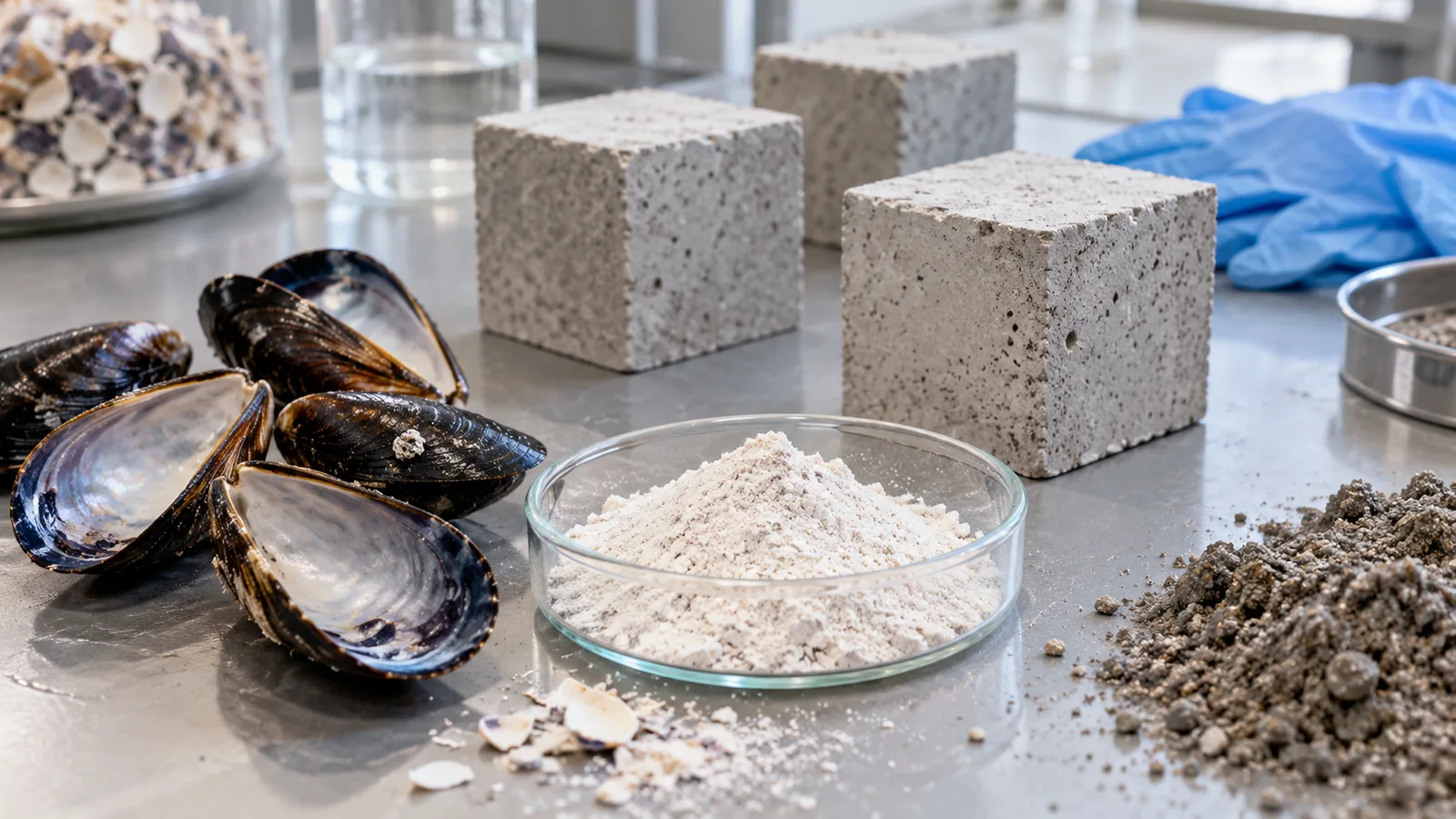
Seashells as a building material sound like a quick answer to a big climate problem. But the research in the southern Italian port city of Bari is more precise – and more interesting for Switzerland – than the catchy headline. What is emerging there is not simply a finished «cement made from shells». A European project is testing how two difficult material flows can be used together: seashells from aquaculture and sediments from harbour dredging.
The difference is decisive. These are mixtures in the development and demonstration phase, not an already generally approved substitute for conventional cement or concrete.
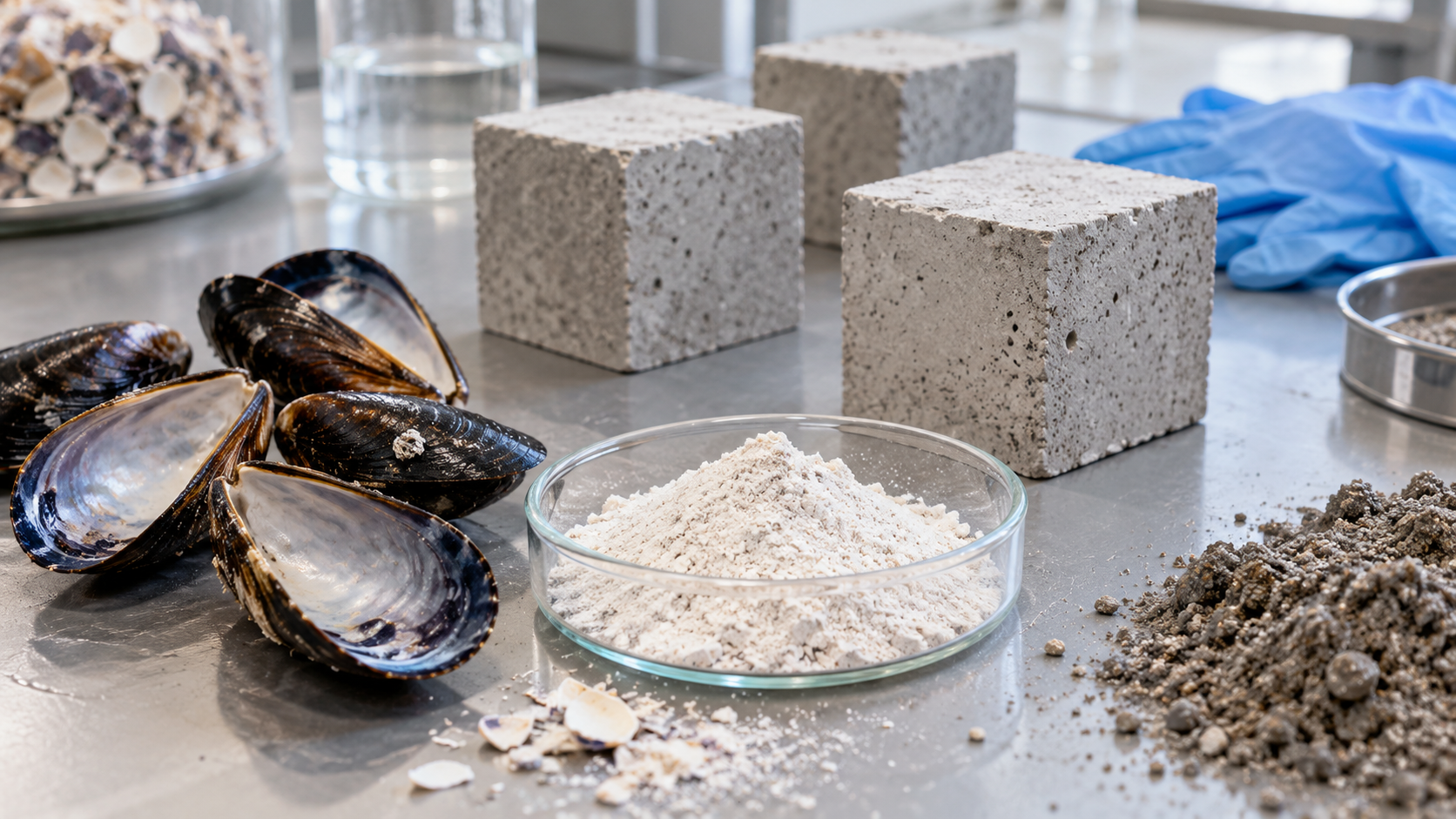
Two material flows, one materials question
The project is called GREENLIFE4SEAS – spelled out, «GREen ENgineering solutions: a new LIFE for SEdiments And Shells». It is coordinated by Politecnico di Bari, runs under the EU's LIFE programme from October 2023 to September 2028, and brings together research institutions, port authorities and companies from Italy and Greece.
The approach combines processed shell powder with dredged harbour sediments and binders. The official project page states the aim as demonstrating the technical feasibility, safety and economic viability of reuse. To that end, sediments must be characterised and, where necessary, treated or decontaminated. Only then can they be used as secondary raw materials in new materials.
Planned applications include paving stones for outdoor areas, breakwater blocks and stabilised masses for infrastructure projects. The project therefore deals not only with a new material but also with the processes for collection, processing and use.
What the research has shown so far
In February 2026, Politecnico di Bari reported promising laboratory results and several prototypes, including larger-scale models. These are intended for production and practical tests in the participating ports: Bari, Barletta, La Spezia and Piraeus. The European Climate, Infrastructure and Environment Executive Agency (CINEA) also describes a mobile approach intended to process and reuse shells and sediments close to where they arise.
That is a concrete step forward, but not yet proof of broad market use. Depending on the application, a construction product must demonstrate durability, technical suitability, safety and compliance with standards. The available primary sources do not show general approval for load-bearing buildings. Nor can a uniform CO2 value for all future applications be derived from them.
Between a successful prototype and a regularly used construction product, there are also practical questions: how consistent is the quality of the input materials? Which tests are needed for different applications? And can the processing be organised economically at sufficient scale? These questions determine whether a research project really turns into a robust material cycle for construction.
The project documents cite expected savings in the demonstration scenario, for example through less cement, less landfilling and shorter transport distances. Such figures are relevant for the trial, but they do not replace a full environmental assessment for each individual product and each site of use.
What this means for Switzerland
Switzerland does not have to wait for seashells from Bari to face the same fundamental question: under what conditions can secondary raw materials be safely integrated into construction processes? According to the Swiss Federal Office for the Environment (BAFU), building materials account for around ten per cent of Switzerland's greenhouse gas footprint. At the same time, around 60 to 70 million tonnes of materials flow into building and civil engineering each year.
Domestic regulation sets clear limits here. Swiss cement plants may use waste as raw material or fuel provided this does not increase pollutant loads in kiln exhaust gases and in clinker. For new circular construction materials, a possible CO2 advantage would therefore not be the only decisive factor. Equally important would be the origin and pollutant content of the input materials, technical durability, suitable approval and a verifiable environmental assessment.
That is precisely where the value of the Bari project lies. It shifts the question from «Can waste become a building material?» to «Under what measurable conditions is a circular building material safe, sensible and scalable?» For clients, authorities and residents in Switzerland, that is the more useful question.
Prove first, then promise
Circular economy in construction is not a free pass for every by-product. It is convincing when a material is technically reliable, creates no new environmental problems and offers a traceable advantage over primary raw materials. The prototypes from Bari are therefore a relevant practical test. Their success will not be measured by whether seashells make a good story, but by whether safety, durability and actual resource benefit can be robustly demonstrated.
Sources
- GREENLIFE4SEAS: project page https://greenlife4seas.poliba.it/en/ - Politecnico di Bari: laboratory results and prototypes, 11 February 2026 poliba.it/en/programma-europeo-greenlife4seas-promettenti-r… - CINEA: circular economy in aquaculture, 2 October 2026 cinea.ec.europa.eu/news-events/news/when-waste-turns-resour… - BAFU: Impacts of housing on the environment bafu.admin.ch/de/auswirkungen-des-wohnens-auf-die-umwelt… - BAFU: Cement plants https://www.bafu.admin.ch/de/zementwerke