Counter-drone defence: what Switzerland is actually building now
Between capability gap and build-up plan
When unidentified flying objects are sighted over sensitive locations, the term "blind flight" comes to mind. As a description of the situation across the whole of Switzerland, however, it is too coarse. The country has neither a seamless protective shield against every small drone nor a single body that processes every sighting nationwide. At the same time, it is not starting from zero: according to the Federal Department of Defence, Civil Protection and Sport (DDPS), first counter-drone systems are already in service. The Confederation has set out a build-up of detection, defence, training and procurement for the coming years.
The trigger is real. The DDPS reports an increase in drone flights over military and critical infrastructure in Switzerland. That does not mean, however, that every sighting is an attack or state-directed espionage. The most recent federal statement publishes neither a number of cases nor any attribution to perpetrators. That reticence matters: a drone can be flown innocently, negligently or deliberately. Intent and authorship cannot be seriously inferred from an observation alone.
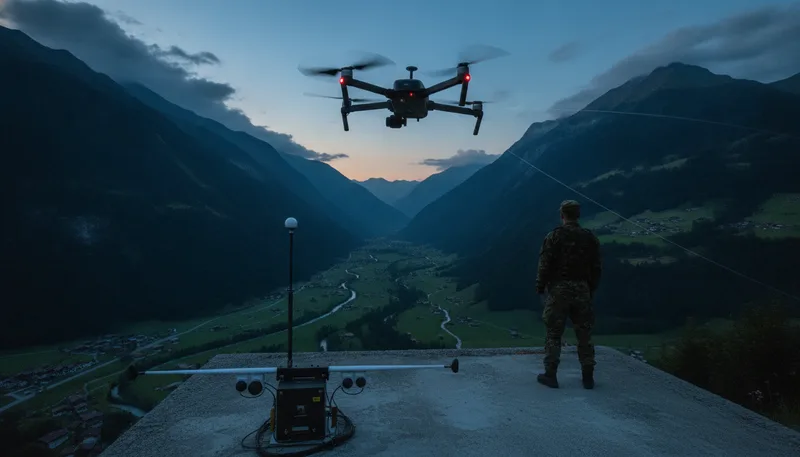
Even so, the technology is changing the security situation. Small drones are hard to detect and can be used for reconnaissance, disruption or attacks. Places whose failure would hit many people or essential services are therefore especially relevant: airports, energy installations, military sites and other critical infrastructure. An effective response is not simply a matter of bringing every flying object down. First it must be reliably established whether it really is a drone, where it is flying and what danger it poses. Only then do questions of proportionality, third-party safety and legal powers arise.
Building up technology and training
The Federal Council is therefore setting a broader focus. Its defence guidelines describe hybrid actions and stand-off attacks as particularly likely threats. By 2039, around 80 percent of armaments investment is to flow into defending against these likely threats. Counter-drone defence is one component alongside air defence, electronic warfare, protection of networks and resilience.
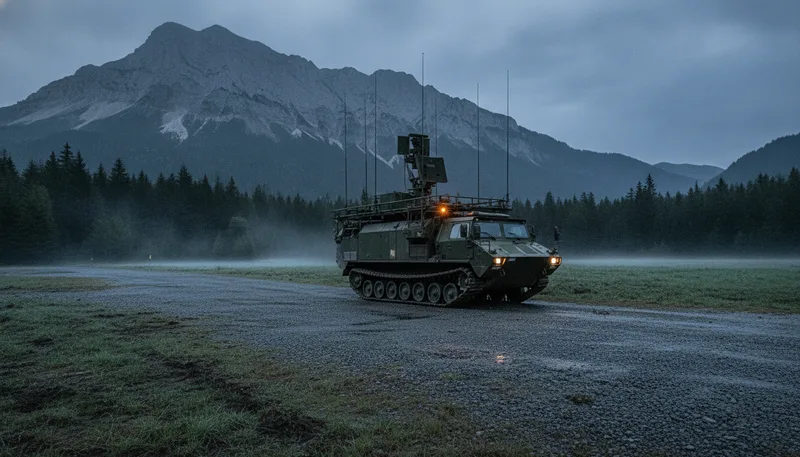
Concretely, a deployable, modular system against mini-drones is to be introduced step by step from 2028. It is to be able to detect, identify and neutralise flying objects. The published planning describes components such as sensors, command elements and effectors, but deliberately discloses no technical detail data. In parallel, a dedicated drone battalion is planned to cover reconnaissance, effect and defence. A dedicated recruit school and the Centre for Unmanned Systems are to bring expertise from the troops, universities, start-ups and industry together more quickly.
The timetable also reveals the gap: the central capability will not be available across the board tomorrow. The army therefore intends to procure systems in smaller quantities and shorter cycles. That is plausible given rapidly ageing drone technology, but it demands transparent priorities: which sites are protected first, which systems are interoperable, and how is their effectiveness tested under realistic conditions?
Technology alone does not settle responsibility
Responsibility matters at least as much. Today various authorities, offices and private infrastructure operators carry responsibility. The DDPS therefore runs an interdepartmental working group that is reviewing the legal basis and the competences. The parliamentary debate has also shown that interference with the radio spectrum or the use of physical countermeasures is not possible without weighing up legal and security considerations. A fast purchase alone does not solve this problem.
The sober conclusion is therefore this: Switzerland is not in total blind flight, but in a transitional phase. The Confederation has recognised the need and decided on a build-up. Whether effective protection emerges depends on three points: reliable situational pictures, legally secure response paths and procurement that keeps pace with technological development.
What the authorities must now clarify
Technical procurement is only one side of the problem. Equally important is how observations are passed on quickly and in a legally secure way between the army, police, infrastructure operators and civil aviation bodies. Only with such clear paths can a sighting become a robust situational picture and, where necessary, a proportionate response.