Newsroom
JournalPlus Redaktion

Arms Boom: Despite Record Spending, Weapons Remain Scarce
Global military spending reached a new high in 2025. According to calculations by the Stockholm International Peace Research Institute (SIPRI), approximately <strong>2.887 trillion dollars</strong> were spent globally on the military. This marked the eleventh consecutive increase. At the same time, weapons and ammunition are scarce in many places, and delivery times for complex systems are growing longer. This apparent contradiction can be explained: more money does not automatically mean more available weapons.

EU Enforces AI Rules: What Swiss Companies Must Consider Now
The EU AI Act is becoming enforceable in phases, while Switzerland is still developing its own framework. For export-oriented companies, waiting is therefore not a viable strategy.

First National Nutrition Study: What Swiss Children Really Eat
Most children and adolescents in Switzerland get enough energy and eat breakfast regularly. However, many consume too few fruits and vegetables, frequently drink sugary beverages, and reduce physical activity as they get older.

Sport Switzerland 2026: Activity Stagnates, Gyms Outpace Clubs
Over half the population exercises regularly, while almost one in six people are hardly active. For the first time, fitness centers have more members than sports clubs. The study examines the reasons behind these figures and why physical activity policy is more than just a matter of discipline.

Swiss Economy Grows Strongly, but Job Market Shows Warning Signs
A strong quarter does not guarantee a boom. Pharma exports and domestic demand drive growth, but rising unemployment, oil prices, and a strong franc cloud the economic outlook.

Health Insurance Premiums 2027: Forecasts Diverge Widely
Bonus.ch predicts an increase of 4.5 to 5 percent. The SMSR, however, deems an increase of no more than 2 to 2.5 percent adequate. Official premiums for 2027 will be announced in autumn.

Federal Research: How R&D Spending is Changing
How much does the Confederation spend on internal research? A new FSO time series details federal R&D expenditure from 2000 to 2025. Data indicates the Confederation plays a relatively small role in Swiss-conducted research. Much of its work focuses on key institutions, primarily Agroscope.

Federal Council Supports Immigration Levy – Only with High EU Immigration
The Federal Council supports a new option to financially limit EU immigration in emergencies. Companies could face a minimum 4000 franc levy for new EU workers. This would not be a general entry fee, but rather a measure if specific thresholds are exceeded and Switzerland activates the safeguard clause within the new EU agreement package. The Council of States will first review the proposal.

Cassis Prioritizes Dialogue in OSCE Chairmanship Despite Deep Divisions
The Organization for Security and Co-operation in Europe (OSCE) faces deep political division. Yet, its 57 participating states approved a 2026 budget, the first in five years. Federal Councillor Ignazio Cassis views this as a sign that cooperation is possible despite fundamental differences. Switzerland's OSCE Chairmanship stresses a simple message: states can talk, even without agreement.

ETH Zurich’s LIFE project: How it could search for alien life
ETH Zurich is developing LIFE, a space-observatory concept designed to study the thermal radiation of nearby rocky planets and search their atmospheres for potential biosignatures. Laboratory tests show both the progress made and the hurdles that remain.

ETIAS Launch: Who is Affected, and Why Swiss Travelers Usually Do Not Need to Act
ETIAS will become a requirement for travelers from 59 visa-exempt countries for short stays in 30 European nations, including Switzerland. Swiss citizens do not need to apply for ETIAS when traveling within the ETIAS area.

Electricity Prices 2027 to Fall, Relief Varies by Location
Many Swiss households can expect lower electricity bills in 2027. The exact savings will depend on the municipality, the local grid operator, and its energy procurement strategy.

Youth Under Pressure: Sleep Issues and Problematic Social Media Use Rise
In 2022, 28 percent of 15- to 24-year-olds reported sleep disorders. Seven percent of 11- to 15-year-olds showed problematic social media use. Girls are particularly affected.

Ukraine War Without End: What Status S Extension Means for Switzerland
Four years into the war, temporary reception becomes a long-term integration task. Municipalities, schools, businesses, and refugees require planning certainty.

Netanyahu Reportedly Ignored Abu Dhabi Warning on Hamas Attack
An investigation by two Israeli journalists claims the Prime Minister received a warning from the UAE President about a major Hamas operation approximately ten days before October 7, 2023. Netanyahu dismisses the account as a "lie."

SBB Timetable 2027: More Direct Trains to Italy – But Not Always More Comfort
From December 2026, two daily direct connections per direction are planned between Zurich and Venice, instead of one. France and night connections also benefit. However, travelers heading towards Ticino or Lake Constance need to check details carefully.

TARDOC: Health Insurers Announce Reimbursement Claims – Specialists Under Scrutiny
Switzerland implemented the new TARDOC outpatient tariff system on January 1, 2026. It aimed to correct a long-standing imbalance between primary care and specialized fields. Initial analyses by health insurers suggest this goal is only partially achieved. Compensation in some specialist areas is growing more than anticipated, while general practice medicine has not been strengthened as planned, according to the General Practitioners' Association and insurers. Concurrently, health insurers have identified billing patterns they intend to investigate further, announcing reimbursement claims for confirmed cases.
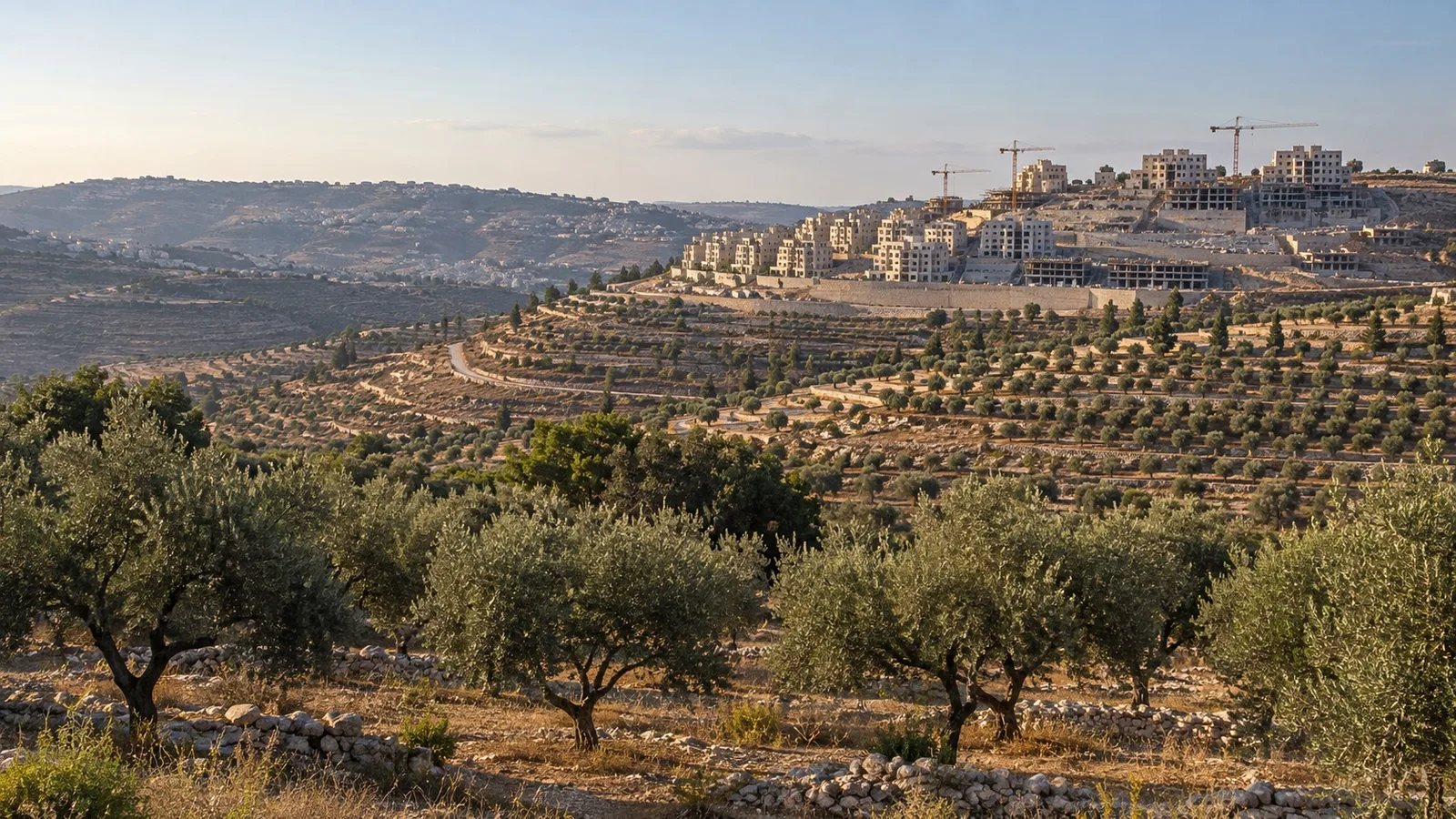
Israeli Settlements: Switzerland's Position on Trade Curbs
International pressure on Israel is growing due to settlement expansion in the occupied West Bank. On September 8, 2026, twelve nations, including Canada, France, and the UK, announced plans for national trade restrictions on goods from Israeli settlements, or support for European measures. This raises a key question for Switzerland: Will Bern adapt its trade policy?

Switzerland Stays Out of Copernicus, Forgoes Decision-Making
Switzerland will not join the EU's Copernicus Earth observation program for 2028-2034. The Federal Council cited financial reasons, estimating annual costs at 48 million Swiss francs. While Switzerland can access most raw data, it loses a say in program development and excludes itself from operational services and public contracts.
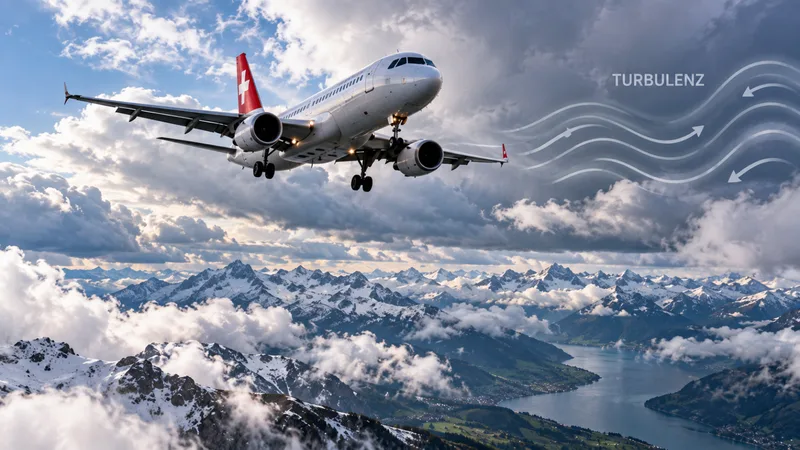
Is Climate Change Making Flights Over Switzerland More Turbulent?
Turbulence is common in air travel. Climate change might increase its frequency and intensity, particularly clear-air turbulence in cloudless skies. International research shows a trend. However, for Switzerland, it is still unclear if a measurable long-term trend exists in its airspace.
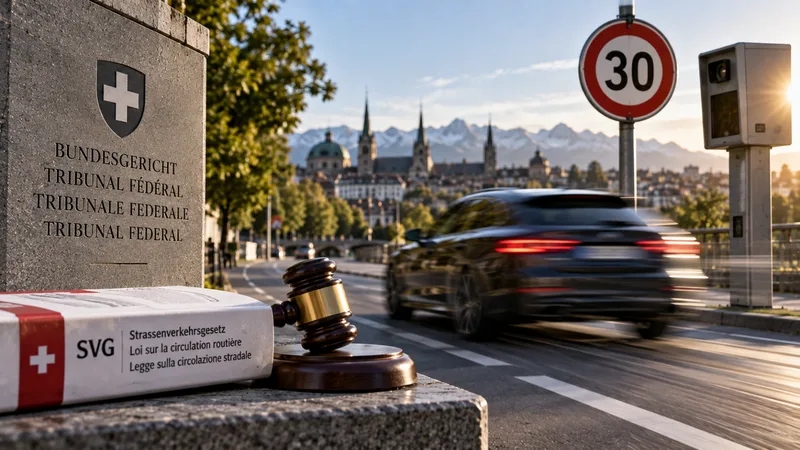
Federal Supreme Court Restricts First-Time Offender Privilege in Speeding Cases
The Federal Supreme Court clarified rules for fines in speeding cases. A prior conviction for a serious traffic violation is sufficient to exclude the first-time offender privilege, even if the previous offense was not a severe speeding violation. The ten-year period is crucial.

Mercosur Deal: Council of States Committee Requests 517 Million for Agriculture
The free trade agreement between EFTA states and Mercosur countries faces a new political round after the National Council's rejection. The Foreign Affairs Committee of the Council of States (APK-S) seeks to secure the proposal with additional agricultural measures. It requests 517 million Swiss francs for 2028-2033. Whether the agreement will gain a majority remains uncertain.
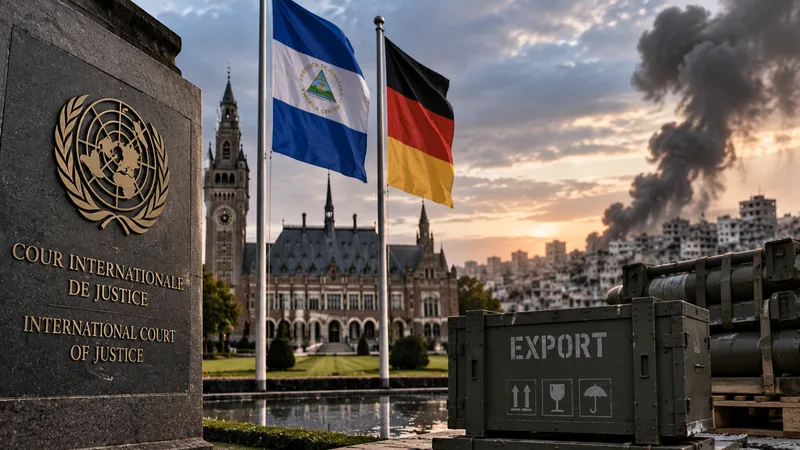
ICJ Examines German Arms Exports to Israel – Why Switzerland is Affected
The International Court of Justice (ICJ) in The Hague is considering a core issue: a state's responsibility when supplying arms to a country facing genocide convention violation claims. Nicaragua is suing Germany over its arms exports to Israel. The court is currently focused on jurisdiction, not the merits of the allegations. Germany questions the ICJ's authority to hear the case.

Food Initiative: What 70 Percent Self-Sufficiency Means for Switzerland
Switzerland currently produces slightly less than half of the food it consumes domestically. The Food Initiative seeks to increase this share to at least 70 percent within ten years. This involves reorienting agriculture towards plant-based foods while better protecting the environment, drinking water, biodiversity, and soil fertility. The Federal Council and Parliament reject the proposal.